
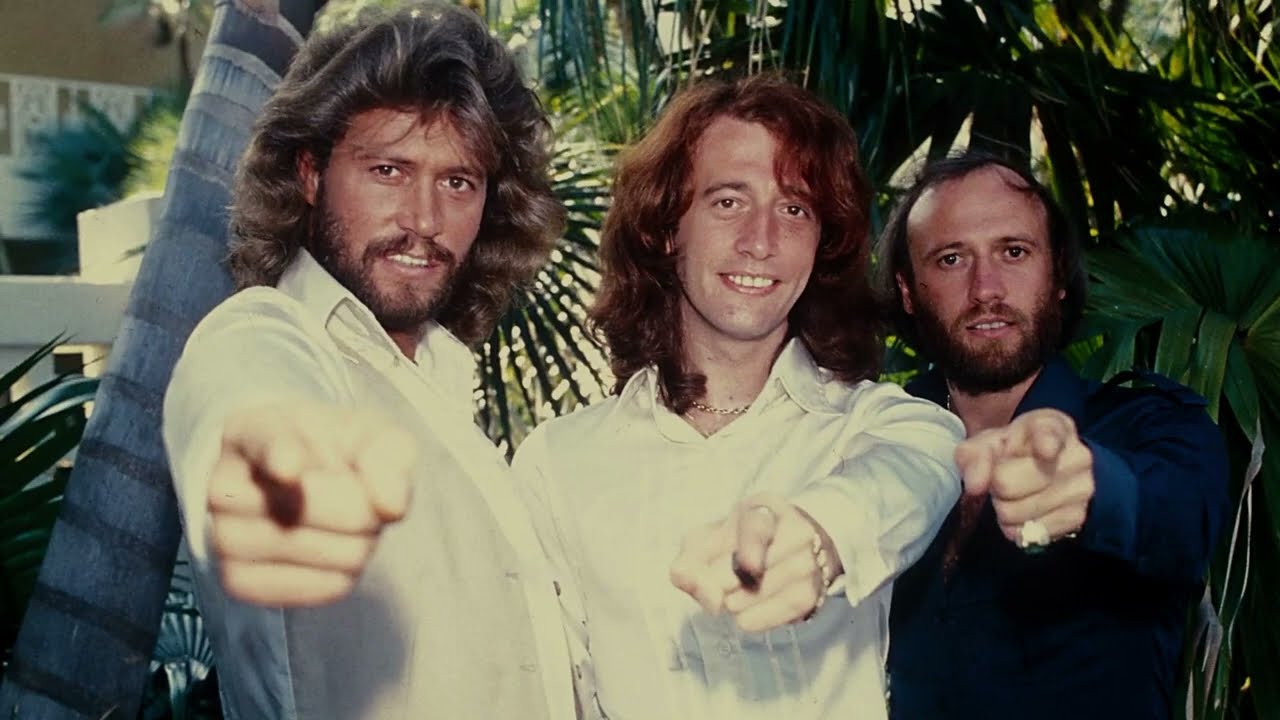
“If I Can’t Have You” is heartbreak with the engine redlined — all need, no composure, and the kind of melodic desperation only the Bee Gees could make feel this sleek, this urgent, and this addictive.
There are Bee Gees songs that ache, Bee Gees songs that shimmer, and Bee Gees songs that seem to move like pure instinct. “If I Can’t Have You” belongs to that last, thrilling category. It still sounds like heartbreak in overdrive because it never pauses long enough to recover its balance. The song was written by Barry, Robin, and Maurice Gibb in 1977 for the Saturday Night Fever orbit, but its release history is part of what makes it so fascinating: it first appeared on the soundtrack in a version by Yvonne Elliman in November 1977, while the Bee Gees’ own version followed in December 1977 as the B-side of “Stayin’ Alive.” Elliman’s recording then became a major smash, reaching No. 1 on the Billboard Hot 100 and No. 4 in the UK in 1978.
That history matters because the song has always carried a strange dual identity. To many listeners, it is first remembered as a Yvonne Elliman hit. But emotionally and structurally, it is pure Bee Gees writing at full late-70s intensity. In fact, sources on the song’s history say the Bee Gees originally recorded their own version for the film, while Robert Stigwood ultimately decided that the Bee Gees should keep “How Deep Is Your Love” and give “If I Can’t Have You” to Elliman instead. It was a brilliant commercial decision, but it also left behind one of the more tantalizing “what ifs” in their catalog: a song that became a giant hit in another singer’s hands while still sounding unmistakably like the brothers’ emotional and melodic DNA.
And what DNA it is. “If I Can’t Have You” is built on obsession stripped of dignity. This is not heartbreak sitting quietly by the window. It is heartbreak pacing the floor, refusing sleep, refusing calm, refusing to accept that wanting someone can ever be reasoned with. That is why the song remains so addictive. The emotional premise is simple, almost brutally simple: without this person, everything else collapses in value. That absolutism is part of the song’s danger. The Bee Gees were masters of taking feelings that should sound excessive on paper and turning them into something irresistibly human once melody, rhythm, and phrasing entered the room. Here, they do it by refusing moderation. The song does not negotiate. It pleads in one long surge.
What makes it feel like heartbreak in overdrive is the contrast between emotion and motion. This is a desperate song, but it does not crawl. It moves. The rhythm keeps the feeling airborne, almost impatient, so that the longing never settles into self-pity. Instead, it becomes propulsion. That is one of the Bee Gees’ great late-70s gifts: they could make emotional panic danceable without making it trivial. The song sounds polished, yes, but not emotionally safe. Under the gloss is compulsion. Under the groove is a kind of romantic freefall.
There is also a striking bit of backstory in the Bee Gees’ own version. According to the song’s historical notes, Maurice Gibb later said this was the first song they worked on while recording material for the film, with the basic track begun at Château d’Hérouville in France and completed later at Cherokee Studios in Los Angeles. That detail fits the song beautifully. It feels like the beginning of something — the first rush of a new sound world, a new phase, a new level of urgency in their writing. Before it became associated with Elliman’s chart triumph, it was already part of the Bee Gees’ own creative engine during one of the most explosive periods of their career.
And perhaps that is why the song still clings so hard. It is not merely catchy, though it certainly is. It is not merely disco-adjacent, though it belongs to that era’s pulse. It lasts because it captures one of the Bee Gees’ deepest strengths: the ability to make emotional extremity sound elegant. “If I Can’t Have You” is not cool in the detached sense. It is cool on the surface and feverish underneath. That combination is exactly what makes it hard to shake. The listener gets the sleekness first, then the desperation creeps in after.
So yes, “If I Can’t Have You” still sounds like heartbreak in overdrive. Whether one comes to it through Yvonne Elliman’s No. 1 hit or through the Bee Gees’ own version hiding on the flip side of “Stayin’ Alive,” the essential thrill is the same: this is longing with no brakes, set to a melody too strong to resist. The Bee Gees were always brilliant at making pain sound beautiful. Here, they went one step further and made desperation sound almost euphoric. That is why the song still rushes through the speakers the way it does — not as nostalgia, not as mere soundtrack history, but as one of the sharpest examples of how the Bee Gees could turn emotional overload into pop perfection.