
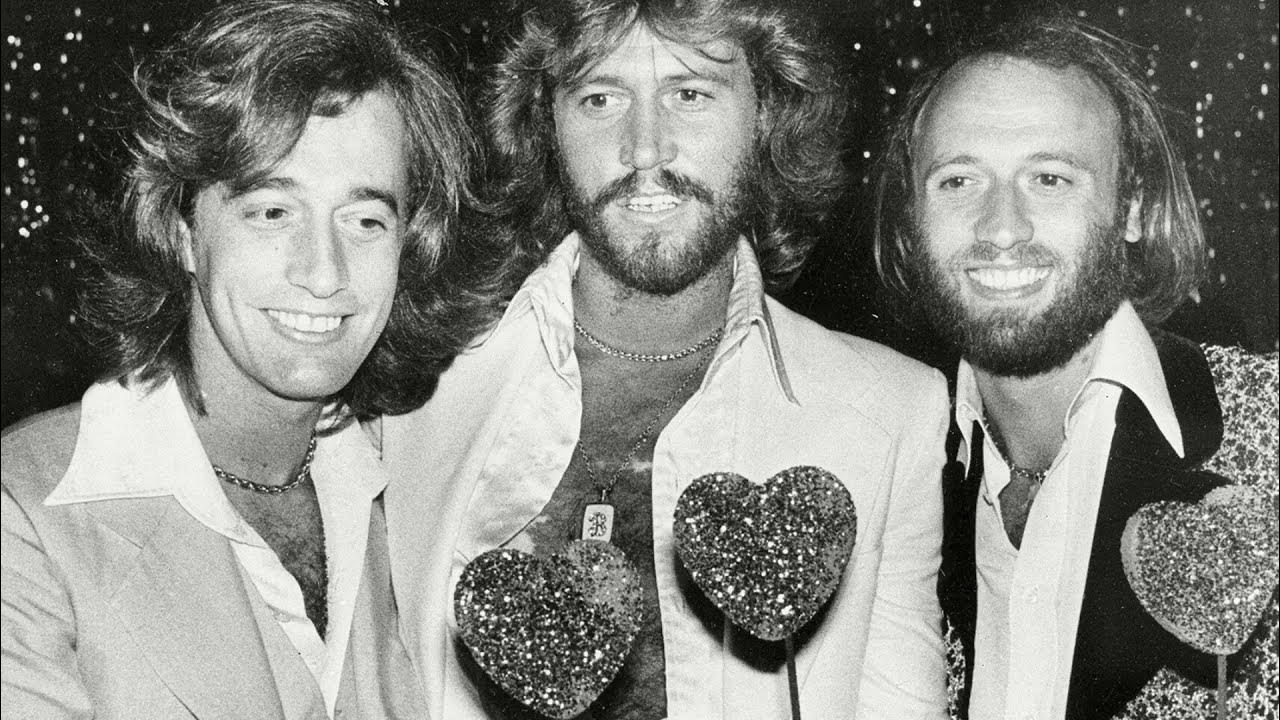
“Indian Gin and Whisky Dry” is a small, strange Bee Gees miniature—bright as a toast on the surface, but shadowed by the feeling that the night is swallowing the reasons you came.
In August 1968, the Bee Gees were still in their psychedelic-pop chapter—restless, melodically gifted, and already far more emotionally adult than their ages suggested. That month they released Idea, their fifth studio album, recorded at IBC Studios in London between December 13, 1967 and June 25, 1968. Within that album’s carefully sequenced first side, “Indian Gin and Whisky Dry” arrives as track A4, clocking in at about two minutes—a fleeting moment that nonetheless feels like it opens a door into a longer, more complicated night.
Commercially, Idea was no footnote: it peaked at No. 4 on the UK Albums Chart and reached No. 17 on the US Billboard 200, an impressive placement for a band still being understood by the wider world. And yet this song was not a single with its own chart run. It lives where many Bee Gees treasures live—inside the album, waiting for listeners who don’t stop at the hits.
What makes “Indian Gin and Whisky Dry” so memorable is its tone: it doesn’t behave like a tidy pop narrative. It feels like a half-spoken confession overheard at the edge of a party—those moments when music is still playing but the mind has wandered somewhere else. The lyric begins in a dizzy blur—“All day, all night you feel as if the earth could fly”—then slips quickly into the ritual of another round: “Three more…” for “fine Indian gin and whisky dry.” It’s the language of escape, but it’s also the language of someone who knows escape is temporary, and maybe even dangerous.
Credits help explain the emotional texture. “Indian Gin and Whisky Dry” is attributed to Barry Gibb, Robin Gibb, and Maurice Gibb, and sources documenting the album’s track list place it firmly as a group composition within Idea. It is also commonly noted in album documentation that Robin Gibb takes the lead vocal on the track—an important detail, because Robin’s voice had a particular kind of ache even when the arrangement smiled. Robin could make a line sound like it was remembering something it didn’t want to remember.
There’s a small “behind the curtain” recollection associated with the song as well: one set of liner-notes-style commentary attributes the title’s spark to an idea connected with India, suggesting it began life as more of a “working tape” notion before becoming the finished track on Idea. Even if you treat that as anecdotal rather than definitive, it matches what the song feels like: a fragment captured quickly, preserved because the fragment itself carried a mood too true to discard.
And the meaning—what does it say, underneath the clink of glasses? To me, it’s a portrait of a particular human bargain: if you can’t change the world outside you, you try to change the world inside you—chemically, temporarily, and with consequences you’ll negotiate later. The phrase “whisky dry” evokes that old, clipped adult manner of ordering pain: not sentimental, not indulgent—just dry, like you’re determined not to show your hand. The “Indian gin” detail adds a slightly exotic shimmer, the kind of faraway adjective people reach for when they want the night to feel larger than their own small room.
Placed within Idea—an album that also holds giants like “I’ve Gotta Get a Message to You” and the melancholy “I Started a Joke”—this track functions like a quick shot of nervous truth between bigger statements. It’s the Bee Gees proving, even in 1968, that they could make a song out of almost nothing: a phrase, a mood, a sense of spinning—then leave you with the aftertaste.
You don’t finish “Indian Gin and Whisky Dry” feeling “entertained” so much as aware. It’s a two-minute reminder that some of the most lasting songs aren’t the ones that explain themselves. They’re the ones that capture a fleeting human moment—laughter thinning out, lights too bright, another drink ordered not for pleasure but for silence—and let that moment haunt you long after the needle lifts.