
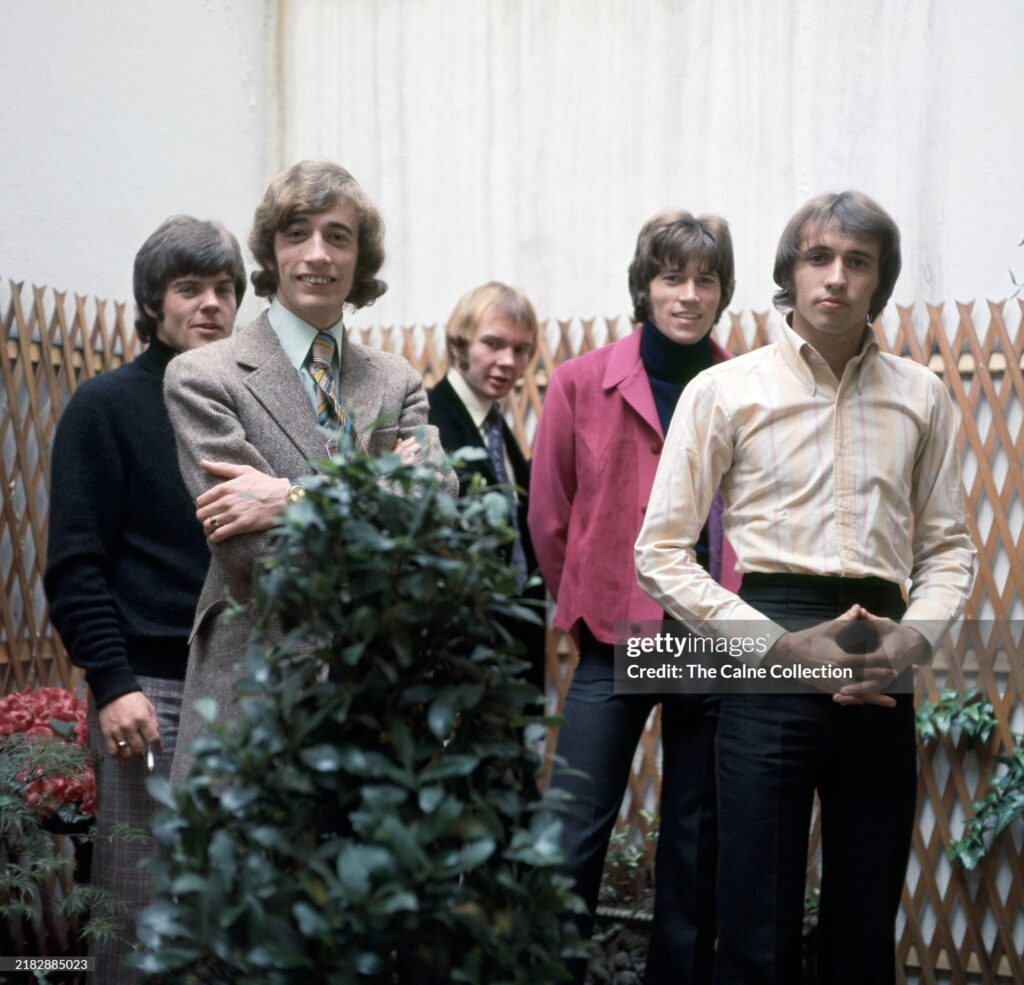
“Holiday” sounds less like escape than farewell—the kind of song that hides its goodbye in soft melody, then leaves behind a sadness far heavier than its title ever promises.
There is something quietly devastating about “Holiday” because almost everything about it seems to mislead you at first. The title suggests lightness. It suggests relief, maybe even a pause from sorrow. But the song itself does nothing of the sort. From the moment it begins, Bee Gees create a mood that feels suspended between distance and disappearance, as if someone is already halfway gone before the heart has caught up. That is why the song still feels so sad. It is not openly dramatic. It does not announce heartbreak in the usual way. It simply drifts into the room carrying a kind of emotional absence, and once that feeling settles, it is very hard to shake.
Recorded on April 21, 1967 and released in the United States in September 1967 from Bee Gees’ 1st, “Holiday” came during that extraordinary first international flowering of the group, when the brothers were still young enough to sound almost ghostly in their delicacy, yet already gifted enough to make melancholy feel grand. It was written by Barry Gibb and Robin Gibb, with both sharing lead vocals, and it reached No. 16 on the Billboard Hot 100, No. 18 in Canada, and No. 2 in the Netherlands. It was notably not released as a single in the UK, where Polydor chose a different path. Those facts matter because they place the song inside a very specific moment: the Bee Gees were becoming major pop figures, yet “Holiday” itself remained a slightly more mysterious piece than the clearer chart declarations around it.
And mystery is exactly what gives the song its hold. “Holiday” never explains itself in a neat, literal way. Its lyrics feel poetic, blurred, half-withheld. That would weaken many songs. Here, it deepens the ache. The words move like memory rather than statement, which makes the song feel less like a story being told than like a feeling returning. AllMusic’s Stewart Mason called the melody “haunting and pretty” and described the lyrics as “vaguely poetic,” and that is part of the song’s strange beauty: it leaves enough unsaid for the sadness to spread into the silence around it.
What has always struck me most is how much “Holiday” feels like a goodbye hidden in plain sight. Not a dramatic final scene. Something sadder than that. It sounds like the moment just before someone becomes a memory. The Bee Gees were already masters, even then, at singing as if tenderness itself carried a wound, and here they turn that instinct into atmosphere. The orchestral presence, the minor-key pull, the almost weightless harmonies — all of it gives the song the feeling of beauty trying not to collapse under its own sorrow. You do not hear celebration in “Holiday.” You hear distance.
That is why I think the song still carries one of the saddest moods of the 1960s. Not because it is louder in its pain than other records from the era, but because it is quieter. The sadness is not argued. It is absorbed into the sound. In the late 1960s, many songs about loss either pushed toward operatic heartbreak or wrapped themselves in psychedelic confusion. “Holiday” does something finer. It remains poised, graceful, nearly elegant, while letting grief hover just beneath the surface. That emotional restraint gives it lasting power. It feels like sorrow that has already accepted it will not be understood completely.
It also helps that this belongs to the early Bee Gees period when the brothers’ voices still carried a particularly fragile blend — youthful, close, almost unearthly at times. Barry and Robin together on lead make the song feel less like one person speaking than like feeling itself splitting into two shades: one more immediate, one more distant. Maurice, too, is part of that spell through the instrumental color and backing presence. You can hear a group already discovering how to make harmony sound not merely beautiful, but haunted.
Even the reception at the time hints at how distinctive the record felt. Billboard called it “an intriguing ballad change of pace” from “To Love Somebody,” while Cash Box singled out the “powerful organ backdrop” and vocal performance. Those old trade-paper reactions still make sense now. “Holiday” does feel like a pause, a hush, a turning inward. But what sounded then like a change of pace now feels more like a glimpse into one of the Bee Gees’ deepest gifts: their ability to make melancholy sound almost sacred.
So yes, “Holiday” remains one of the saddest moods the 1960s ever gave us, precisely because it never insists on its sadness. It lets the title hide it. It lets the melody soften it. It lets the listener discover, almost too late, that this is not a song about escape at all. It is about leaving, losing, fading, and the strange gentleness with which some goodbyes enter our lives. And perhaps that is why it still lingers so deeply: because the Bee Gees made sorrow sound beautiful enough to approach, but never easy to survive.