
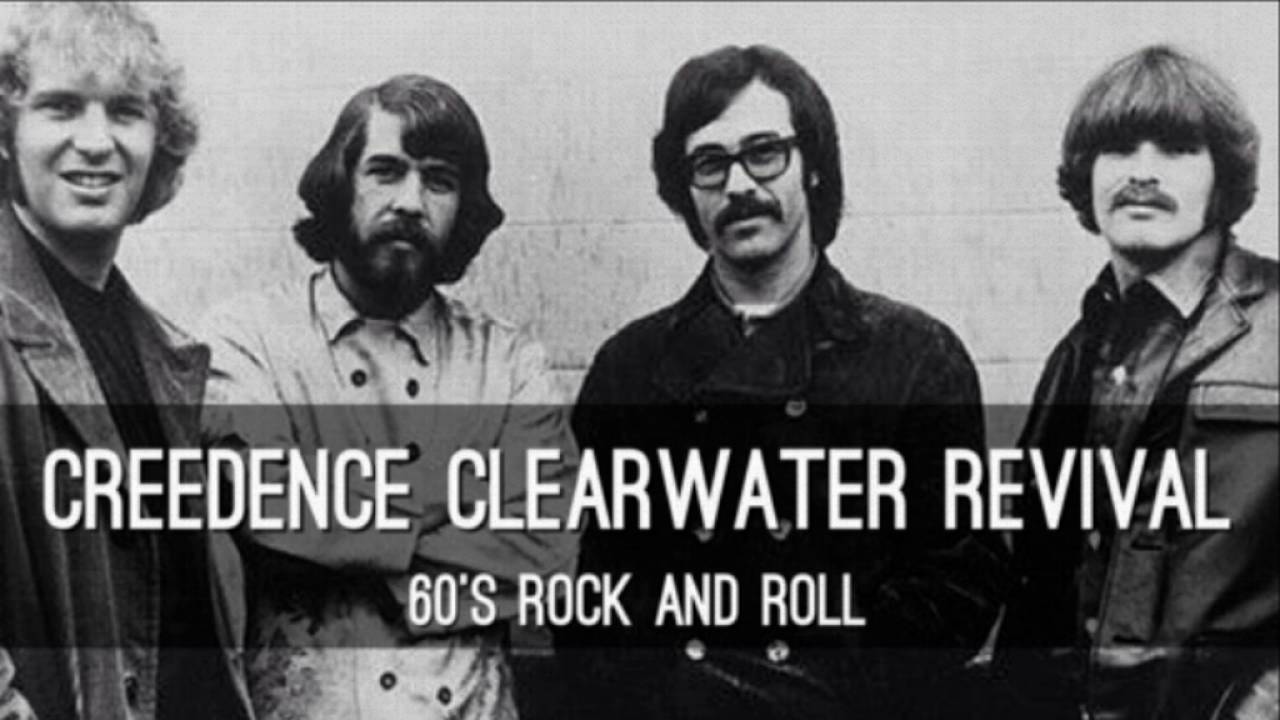
“Sweet Hitch-Hiker” still explodes off the speakers because it takes a fleeting roadside encounter and drives it so hard that the song stops feeling like a story and starts feeling like motion itself.
Some Creedence Clearwater Revival songs brood, some warn, some roll in like weather. “Sweet Hitch-Hiker” does something simpler and more thrilling: it tears down the highway. Released as a single in July 1971, it reached No. 6 on the Billboard Hot 100, becoming CCR’s ninth and final U.S. Top 10 hit before later appearing on Mardi Gras in 1972. That chart fact matters, but not only because it marks one more success. It matters because the song arrived at a late moment in the band’s story and still sounded gloriously alive, as if fatigue, tension, and wear inside the group had not managed to touch the engine.
The first truly valuable detail is that “Sweet Hitch-Hiker” was issued after Tom Fogerty had already left the group. In other words, this was CCR as a trio, and yet the record does not sound diminished. It sounds rowdy, hungry, almost grinning with velocity. That gives the song a little extra voltage. A lesser band, under strain, might have sounded careful or tired. CCR answered instability with pure forward thrust. The song feels like a refusal to slow down, and that refusal is part of its enduring charm.
But the hotter spark is emotional, not historical. “Sweet Hitch-Hiker” is built around one of rock’s oldest little myths: the dangerous, irresistible stranger encountered in motion. Yet John Fogerty does not treat the scene as dreamy romance. He attacks it with adrenaline. The woman at the center of the lyric is not soft-focus fantasy. She is quick, wild, vivid, the kind of figure who flashes into a song and instantly changes its temperature. That is why the record still feels so physical. You do not merely hear it—you feel pushed along by it. The guitars bite, the rhythm pounds, and Fogerty sings as if standing still would be a betrayal of the whole idea.
The second precious detail is small, but it brings the song closer to the ground in a wonderful way. The lyric mentions the Greasy King, a real restaurant in El Cerrito, California, where the band members grew up. That matters because CCR were always masters at making their songs feel mythic without losing the smell of real places. Even in a two-minute-and-change rush like this, there is a local detail tucked into the roar, a reminder that the roadside world in the song is not entirely invented. It has grease on it, sunlight on it, and the kind of ordinary landmark that suddenly becomes immortal because a rock and roll band sang it into memory.
What makes “Sweet Hitch-Hiker” so hard to forget is that it never overthinks itself. It is all nerve. The title promises movement, flirtation, a little recklessness, and the record delivers exactly that. But beneath its surface fun there is something else too: the old CCR ability to turn American restlessness into sound. So many of their great songs are about running, rolling, drifting, escaping, crossing. Here that instinct becomes almost playful, but no less potent. The road is not symbolic in some heavy-handed way. It is simply where the pulse of the song belongs. And once the track gets moving, it barely touches the ground.
There is also something poignant in its place within the band’s final stretch. “Sweet Hitch-Hiker” was one of the last great bursts of classic CCR energy before the more troubled chapter of Mardi Gras fully arrived. Later commentary on the album often treated this song as one of the few cuts that still unmistakably sounded like the old band at full power. That only deepens its reputation. It stands there like a final fast ride before the lights began to dim—a reminder that even near the end, John Fogerty and company could still kick up dust better than almost anyone.
So yes, “Sweet Hitch-Hiker” is too rowdy to forget. Not because it carries some grand philosophical weight, and not because it tries to be anything more solemn than it is. It lasts because it understands one of rock’s purest pleasures: speed, danger, desire, and a voice shouting above the racket as the whole thing races past. Creedence Clearwater Revival took a roadside sketch and turned it into pure adrenaline. And once that beat grabs hold, it still feels like the wheels may never stop turning.