
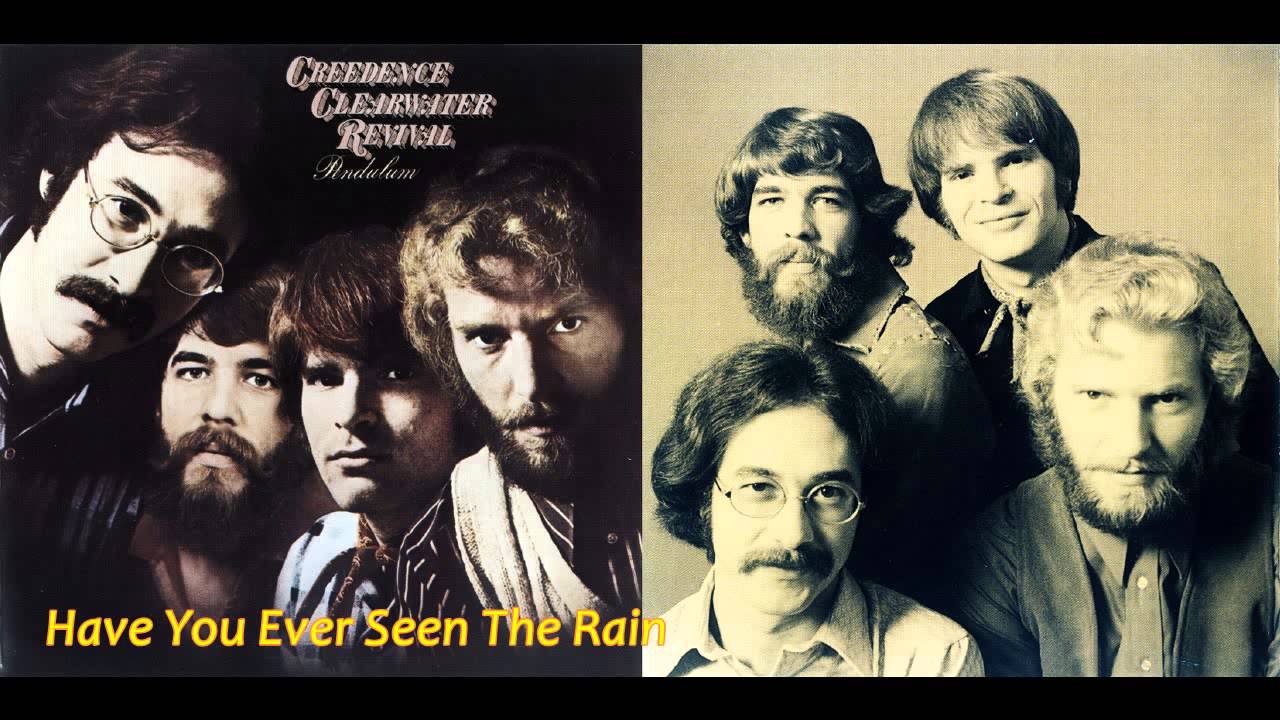
“Someday Never Comes” cuts so deeply because it trades fire for something harder to bear—John Fogerty looking at fathers, sons, and broken promises with the kind of plainspoken sorrow that leaves nowhere to hide.
Some Creedence Clearwater Revival songs hit with force, swagger, or warning. “Someday Never Comes” hurts differently. Released in May 1972 as a single from Mardi Gras, it became the band’s final single before their breakup that October and reached No. 25 on the Billboard Hot 100. That alone gives the song a special kind of ache: it was not only a moving record, but one of the last things the world heard from CCR while the group was coming apart.
But the real heat in the story is not the chart position. It is the wound inside the lyric. John Fogerty later explained that the song reflected both his parents’ divorce and, at the time, his own marital troubles as well. That makes the song feel more exposed than many listeners first realize. This is not abstract sadness. It is family pain carried across generations—the child waiting for answers, the grown man discovering that age does not magically bring them, and the parent realizing he may be passing the same confusion forward.
That is why the song lands with such unusual force. The title itself is devastating. “Someday” is supposed to be a promise, a reassurance adults give when life is too complicated to explain. But “Someday Never Comes” turns that promise inside out. It suggests that understanding does not always arrive on schedule, and sometimes it does not arrive at all. In Fogerty’s hands, that idea becomes almost unbearable in its honesty. He is not raging here. He is admitting something sadder: that love can exist inside a family, and still fail to protect the people inside it from hurt.
There is another precious detail that deepens everything. Mardi Gras, released on April 11, 1972, was made during one of the most troubled stretches in CCR’s history. It was the band’s final studio album, recorded after Tom Fogerty had left, and its sessions were marked by creative tension and a sense of disintegration. Even John Fogerty would later speak harshly about that period, while still singling out “Someday Never Comes” as a song he believed in strongly enough to revisit later. That matters because the heartbreak in the song does not float in isolation—it was born in a moment when the band itself was fraying.
And yet the recording never becomes melodramatic. That is one of its greatest strengths. Fogerty had always known how to sound urgent, but here he chooses restraint. The vocal does not beg for sympathy. It simply carries the burden of someone who has seen the pattern too clearly to deny it anymore. That is what makes the song more emotional than many expected from a band so often celebrated for grit, drive, and political bite. CCR could roar, certainly—but here Fogerty proves he could break a heart just as effectively by lowering his voice and telling the truth.
Perhaps that is why “Someday Never Comes” lasts so powerfully. It is not only about one father, one son, one marriage, or even one band nearing its end. It is about the old human sorrow of waiting for clarity, forgiveness, or wisdom that keeps receding just out of reach. Some songs burn bright and disappear. This one stays behind like a sentence you wish were not true, but know is. And that is why it hits so hard: because beneath the melody, John Fogerty is not selling heartbreak—he is living with it.