
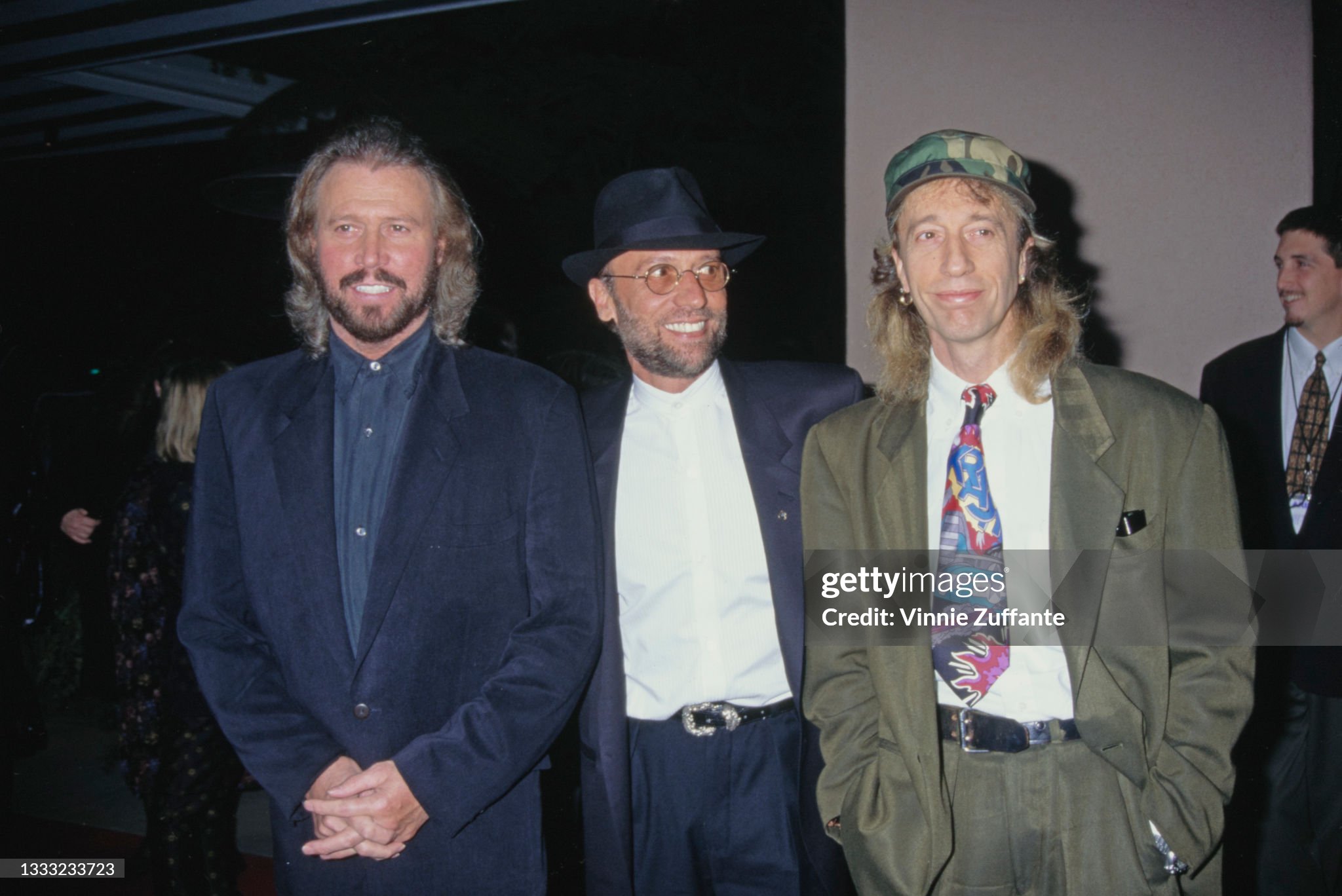
In “One,” the Bee Gees turn the smallest possible word into a fracture. It sounds like unity, but in this song it feels like the instant love realizes it can no longer hold itself together.
There are titles that promise comfort just by existing. “One” seems like it should be one of them. The word suggests wholeness, closeness, two lives made indivisible. But the Bee Gees do something far more painful with it. In their hands, “One” becomes a love story breaking in real time—a song where the word that ought to mean togetherness starts to sound like loss, distance, and the terrible loneliness of watching something once shared become singular again. The song was released in 1989 as the title track from the album One. It became the Bee Gees’ biggest U.S. hit of the 1980s, reaching No. 7 on the Billboard Hot 100, topping the U.S. Adult Contemporary chart, and giving them their first American Top 10 single since “Love You Inside Out” in 1979. In the UK, though, it only reached No. 71, which somehow suits the song’s later afterlife: it would become less a public monument than a private wound many listeners carried quietly.
The emotional shadow behind the song makes it even harder to hear casually. The album One was released in April 1989 in the UK and later that year in the U.S., and it was made in the wake of Andy Gibb’s death in March 1988. The album itself was dedicated to Andy, and that grief hangs over the record’s atmosphere. Even when “One” is heard first as a romantic song, it comes from a period when the brothers were recording under the pressure of family loss, memory, and survival. That context does not reduce the song to biography, but it deepens its ache. A song about emotional fracture, recorded in that season of their lives, cannot help but sound more exposed.
That is why the title cuts so deeply.
One is both the dream and the wound.
The Bee Gees had always understood how to write about closeness, longing, and regret, but “One” is especially cruel in the way it bends language. The title promises unity; the performance reveals separation. The whole song lives inside that contradiction. It does not sing of love already buried and neatly remembered. It sings of love coming apart while the heart is still close enough to feel every tear in the fabric. That is why it feels like a story breaking in real time rather than one told afterward. The pain is still happening. The singer has not yet gained the dignity of distance.
What makes the song endure is not just melody, but emotional timing. By 1989, the Bee Gees were no longer the untouchable commercial force of the late 1970s, yet “One” returned them to American radio with startling force. That return matters because the song does not sound like a triumphant comeback in the usual sense. It sounds bruised. It sounds like artists who still knew how to make pop elegant, but who also knew that elegance means little unless it carries human damage inside it. The charts confirmed the song’s reach, but the feeling inside the record is much more intimate than its commercial success might suggest.
There is also something quietly devastating in how simple the title remains after the song is over. Some great Bee Gees ballads carry elaborate phrases, dramatic pleas, or unmistakable images. “One” gives us almost nothing to hide behind. Just a single syllable. A single idea. A single emotional center. That spareness is part of the song’s power. It allows the listener to pour everything into it: the hope that love can make two people one, and the dread that when love fails, “one” is all that is left. The word shrinks and deepens at the same time. It becomes less a number than a sentence of solitude.
So yes, “One” still feels like a love story breaking in real time because it understands a very hard truth: the most painful songs are often built from the smallest words. In the Bee Gees’ hands, “One” is not a slogan of unity. It is the sound of unity slipping. A title that should have meant wholeness becomes, line by line, a record of emotional separation. And that is why it still lingers with such force. The song does not just describe heartbreak. It lets you hear the exact moment when togetherness becomes singular, and singular becomes unbearable.