
“Back Home” is a postcard written under strange skies—proof that even the most chaotic journeys are really about one quiet wish: to return to yourself.
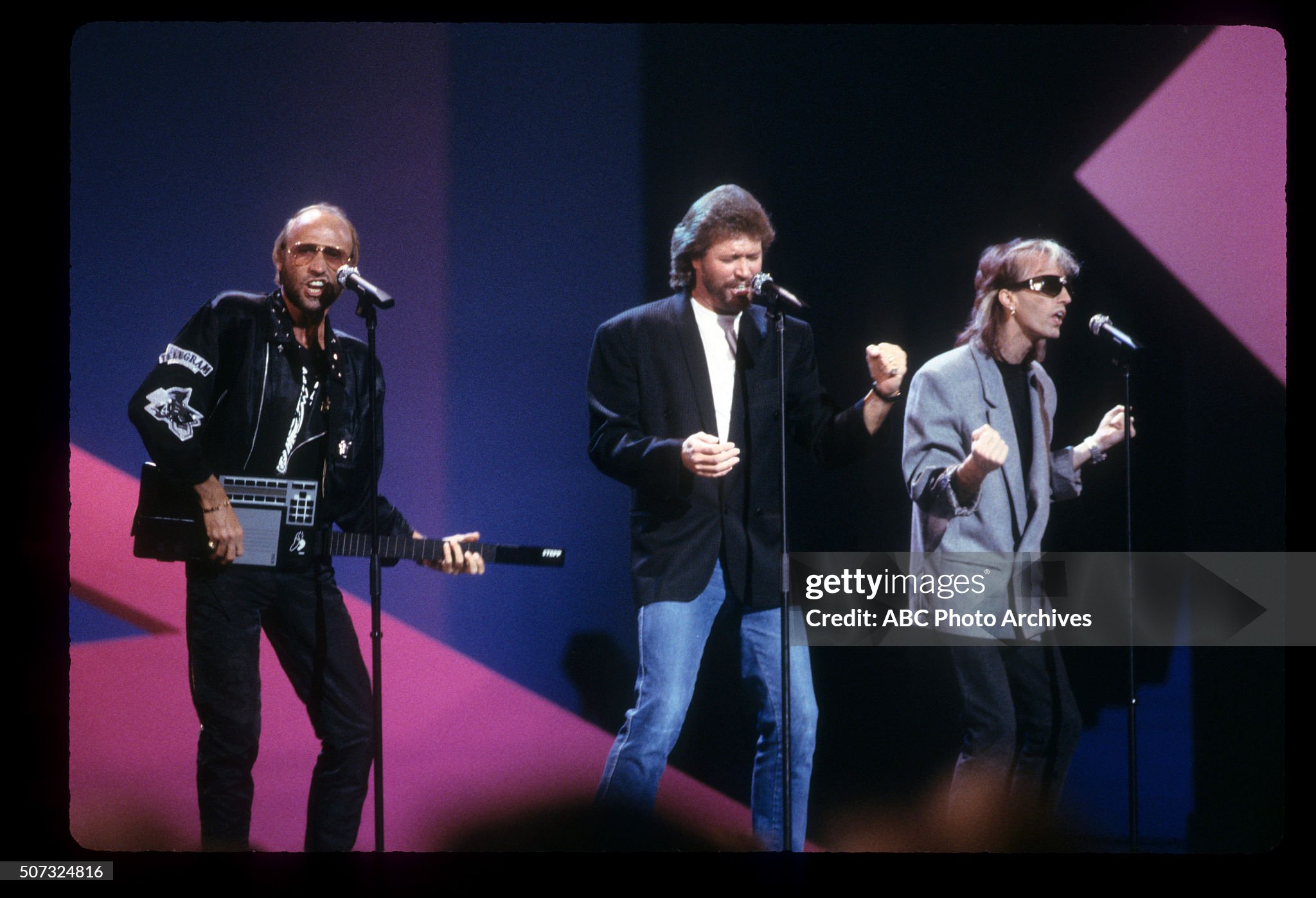
In the long, winding narrative of the Bee Gees, “Back Home” is one of those small songs that can slip past you—barely two minutes long, modest in scale—yet it holds an entire emotional climate inside it. It lives on 2 Years On (released November 1970) , an album that mattered because it marked a true re-gathering of the brothers after a very public fracture. Robin Gibb had returned to the group following the post-Odessa split, and you can feel that reunion in the album’s DNA: a renewed sense of “us,” even when the songs wander into private corners.
Let’s be clear about the chart story up front, because accuracy matters: “Back Home” itself was not released as a single at the time, so it did not have an original singles chart peak to announce its arrival. Its context is album-centered. What did chart loudly was the album’s lead single “Lonely Days”—a major comeback statement that hit No. 3 in the U.S. and No. 33 in the UK—while 2 Years On reached No. 32 on the U.S. album chart. That success is the frame around “Back Home”: it’s not the banner on the building, it’s the small room inside—where the meaning lives.
The recording circumstances help explain the song’s character. 2 Years On was recorded 13 June–5 October 1970 at IBC Studios (London), with production credited to the Bee Gees and Robert Stigwood. It was also the first album with drummer Geoff Bridgford involved as a full-time member. In other words, this wasn’t just another session—it was the sound of a band re-forming its bloodstream.
“Back Home” sits on the album as a quick jolt of narrative—listed at about 1:52 in the track sequence. And what a curious narrative it is: a travelogue that’s funny on the surface and unsettled underneath. The lyric tosses you from place to place—planes, cities, detours that don’t feel entirely voluntary—until the title phrase starts to glow like a rescue flare. Even without quoting lines, you can hear the idea: movement becomes its own kind of captivity, and “home” becomes less a location than a promise.
One of the most fascinating “behind the song” notes comes from detailed Bee Gees session documentation: as released, all three brothers sing together, and the instrumentation suggests Maurice Gibb handling the guitar, with Barry’s contribution likely focused on vocals—and even the possibility that lyrics were adjusted the way the group sometimes did in-studio. That’s the kind of detail that changes how you listen. Because “Back Home” feels like a song assembled in motion—stitched together by instinct, harmony, and that uniquely Gibb ability to make even a brief track feel like a scene with weather and shadows.
What does it mean, then—beyond the itinerary? To me, “Back Home” is about the exhaustion of being “elsewhere.” Not the glamorous elsewhere that travel posters sell, but the elsewhere of restlessness: the sense that you can keep going and going, yet still not arrive at peace. The title lands like a sigh that finally tells the truth. Home is where the noise stops arguing with you. Home is where you don’t have to perform your bravery. And if you place the song inside its real-life moment—three brothers reuniting after separation—then “back home” starts to feel almost autobiographical, even if it’s written as a story. The Bee Gees were, in a very real way, trying to get back home to one another.
That’s why this little track lingers. It doesn’t beg for attention; it simply passes through—like memory does. And later, when you least expect it, you’ll find its message returning: that the world can spin you through a hundred headlines and hard turns, but the heart keeps a private compass. No matter how far you roam, it keeps pointing—quietly, stubbornly—toward the place where you can finally breathe.