
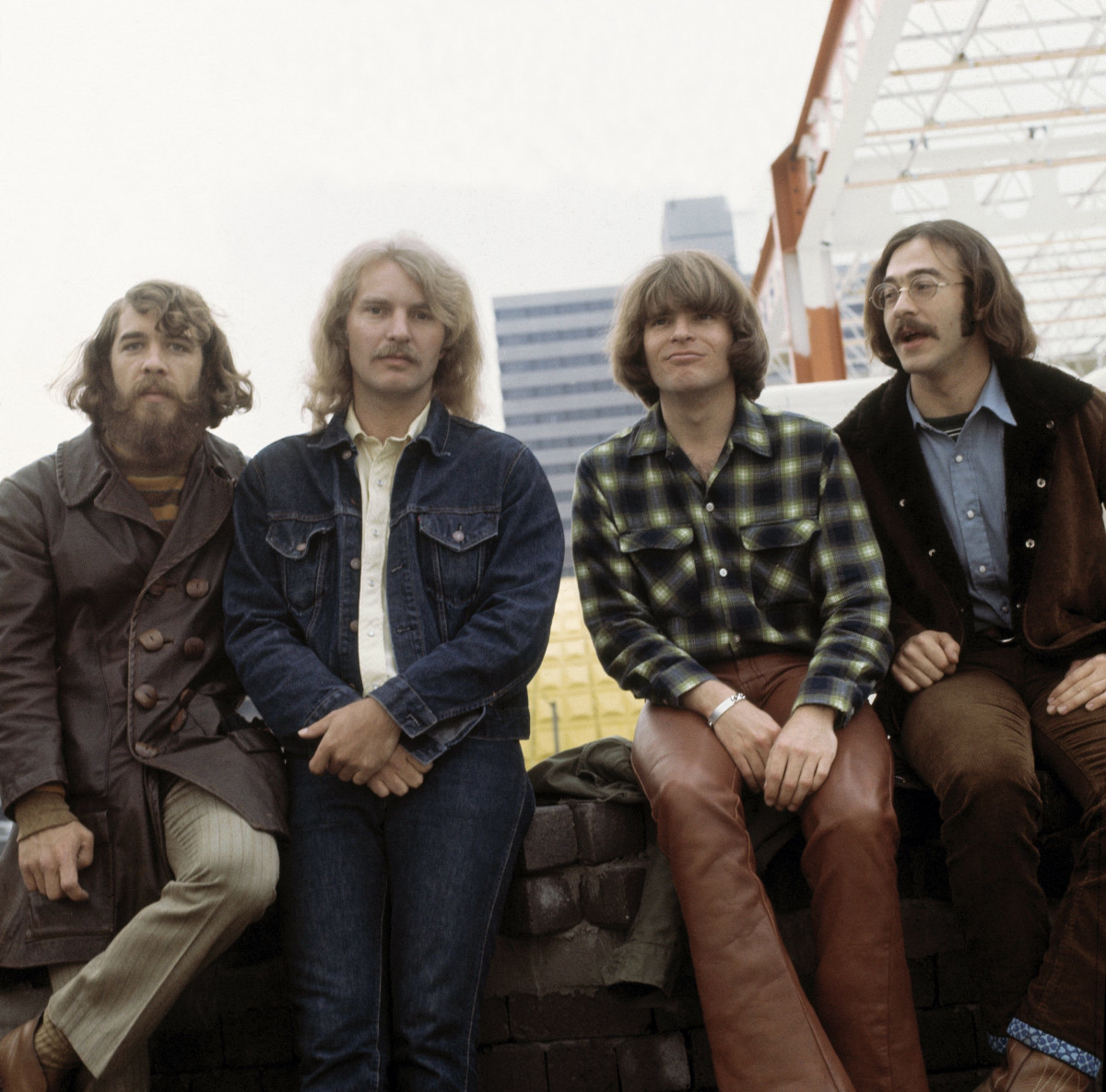
“Cross-Tie Walker” is CCR’s portrait of a restless drifter—boots on wooden ties, eyes on the freight line—chasing freedom the way some men chase salvation.
If you want the hard facts first, they frame the feeling. “Cross-Tie Walker” is a John Fogerty original on Creedence Clearwater Revival’s third studio album, Green River, released August 7, 1969 on Fantasy Records. The album was recorded March–June 1969 at Wally Heider Studios in San Francisco, with Fogerty also credited as the album’s producer—an early sign of how tightly he held the wheel of CCR’s sound. On the LP’s track list, “Cross-Tie Walker” sits on Side Two, track 3, running 3:20. And importantly, it was not released as a single, meaning it didn’t have an individual chart “debut” moment of its own—the chart story belonged to the album that carried it.
That album story was huge. Green River reached No. 1 on the Billboard 200, the first CCR album to top that chart, and it did it while still sounding like a band that preferred grit over glamour. So when you hear “Cross-Tie Walker,” you’re hearing a deep cut from a record that was, at the time, sitting at the very center of American listening—proof that an “album track” can still feel like part of a national heartbeat.
But the deeper truth is the one Fogerty himself offered: “Cross-Tie Walker” is “about hoboes catching trains,” and he even said “Cross-Tie Walker” was a phrase he invented. That little admission gives the song its special flavor. CCR often sounded like they were channeling old American folklore—bayous, backroads, riverboats—yet here is the reminder that folklore can be made, too. A songwriter coins a phrase, sings it with conviction, and suddenly it feels like it has always existed out there, somewhere between a whistle in the dark and a lantern swinging by a rail yard.
Musically, the track moves with a kind of lean, road-worn confidence—less psychedelic San Francisco, more hard-traveling American vernacular. Uncut described it as “a quintessential Johnny Cash two-step with a nifty bassline” and a tale of “a hobo hopping a train and starting a new life.” That’s a perfect capsule: it’s got motion in its bones. The beat doesn’t drift; it walks. It keeps stepping forward like a man who can’t stay in one place long enough to let the past catch him.
And the story the song tells—at least in spirit, and by Fogerty’s own framing—isn’t romantic in the glossy way. This isn’t a postcard of freedom. It’s freedom with splinters in it. A “cross-tie” is the wooden support beneath the rails, and a “walker” is someone moving along those ties—close to the steel, close to the danger, close to the constant possibility of escape. In that image is a whole American tension: the yearning to start over, and the quiet cost of having nowhere stable to return to. The freight train is both promise and threat—an engine that can carry you away from your troubles, or carry you straight into another kind of trouble.
That’s why “Cross-Tie Walker” feels so haunting in the larger emotional landscape of Green River. The album holds bright, radio-famous storms like “Bad Moon Rising,” but it also holds these smaller narratives where the weather is internal—restlessness, hunger, the need to keep moving so you don’t have to explain yourself to anyone. The drifter in “Cross-Tie Walker” doesn’t ask permission. He doesn’t make a speech. He simply goes. And there’s something oddly tender in that: the way the song gives him dignity without turning him into a saint.
In the end, “Cross-Tie Walker” is one of those CCR tracks that proves why their best music outlasts trends. It doesn’t rely on studio trickery or fashionable attitude. It relies on a human archetype—someone walking the ties where the freight trains run, chasing a new beginning with nothing but nerve and rhythm. And once you’ve heard it that way, it’s hard not to feel the rails under your own feet for a moment… and understand, with a quiet shiver, why the road keeps calling some people back.