
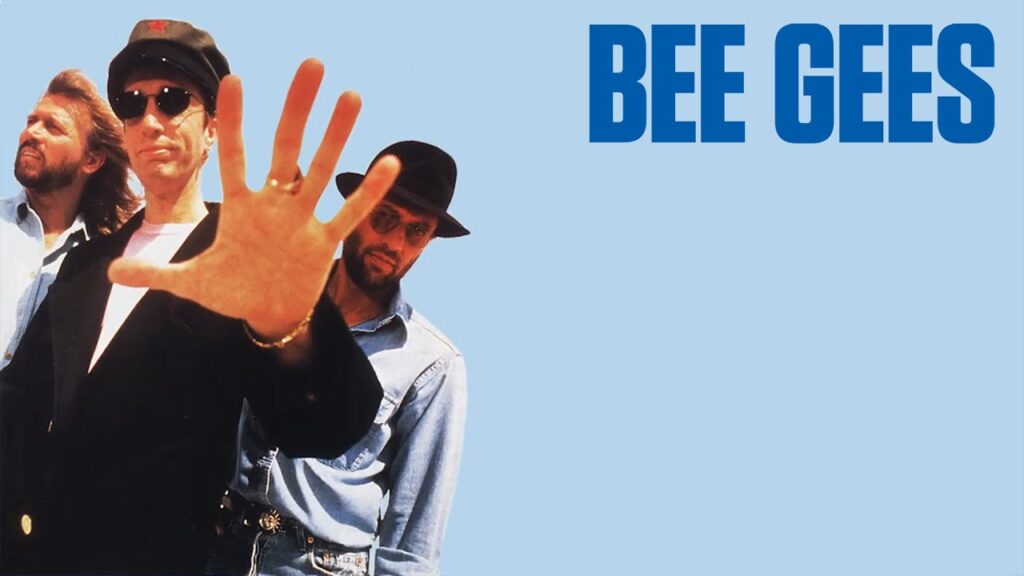
Jive Talkin’ was more than a hit for the Bee Gees—it was the sound of reinvention, the moment three brothers turned rhythm, doubt, and survival into a brand-new beginning.
When Bee Gees released “Jive Talkin'” in 1975, they were not simply unveiling another single. They were stepping into a new life. The song became a major comeback record, climbing to No. 1 on the Billboard Hot 100 in the United States and reaching No. 5 on the UK Singles Chart. It also served as the lead single from the album Main Course, the record that quietly, then unmistakably, changed the course of their career. For many listeners, this was the first sign that the Bee Gees were no longer the same group who had defined so much late-1960s melancholy and orchestral pop. They were leaner now, funkier, sharper around the edges—and somehow more alive.
That is what makes “Jive Talkin'” so fascinating even now. It still sounds like a door swinging open.
The story behind the song has become part of pop legend because it feels so wonderfully accidental. While traveling across the Julia Tuttle Causeway in Miami on the way to Criteria Studios, the brothers became aware of the steady, hypnotic rhythm made by their car tires on the bridge. That sound planted the first seed of the song. At one stage, the working title was “Drive Talking”, a phrase born directly from that road rhythm. But as the groove took shape, the words changed, and the mood changed with them. What had begun as a mechanical pulse became something cooler, more playful, more sly: “Jive Talkin'”.
And what a title it was. In everyday language, jive talking means empty talk, smooth deception, language used to charm, mislead, or dodge the truth. The song turns that idea into pure motion. Lyrically, it is about frustration with dishonesty—someone talking in circles, saying just enough to keep the game going. Yet the magic of the record lies in its contrast. The subject is irritation, but the music glides with confidence. It does not brood. It struts. That tension is one of the reasons the song has lasted: it captures the sting of being misled, but it does so with style, with rhythm, with a grin that never fully hides the hurt.
There was also a deeper importance to the recording itself. By 1975, the Bee Gees needed a fresh identity. Their earlier run of success had faded, and the musical landscape around them had shifted. Working with producer Arif Mardin, they began moving toward a more rhythmic, R&B-influenced sound. Main Course became the album where that transformation took hold, and “Jive Talkin'” was the breakthrough moment. You can hear the band discovering a new language in real time: the crisp guitar figures, the tight groove, the bass that keeps everything moving, the vocal attack that feels less ornate and more urgent. This was not nostalgia. This was rebirth.
Barry Gibb‘s vocal on the track deserves special attention because it sits right at the edge of what the next phase of the Bee Gees would become. The famous high falsetto that later helped define the group’s late-1970s identity was not yet fully dominating the song, but the transition was beginning. There is a tensile energy in his voice here—confident, rhythmic, teasing—that helped pull the group into a modern sound without sacrificing their gift for melody. Robin Gibb and Maurice Gibb, as always, brought their own intelligence to the arrangement, making the record feel tightly built and emotionally balanced even at its most danceable.
That balance is one reason the song still resonates across generations. “Jive Talkin'” is catchy, certainly, but it is also a record about perception. It knows how people hide behind charm. It knows how language can be used like smoke. And perhaps that is why the song never feels lightweight, even when it is moving with such joy. Beneath the groove is a very human recognition: sometimes the truth comes wrapped in rhythm because plain speech is not enough.
It is impossible to talk about “Jive Talkin'” without acknowledging what it led to. This single reopened the door for the Bee Gees and paved the way for one of the most remarkable second acts in popular music. Without “Jive Talkin'”, the story of Main Course would look different. Without Main Course, the later triumphs that carried the group into worldwide cultural history would be harder to imagine. This song was not merely a successful release; it was the hinge on which their future turned.
There is something deeply moving about hearing a band rediscover itself in public. Some songs sound polished from the beginning, as if destiny had already signed the papers. “Jive Talkin'” sounds more precious than that. It sounds earned. It carries the thrill of artists listening closely—to the road beneath them, to the changing world around them, and to the restless instinct that told them they still had somewhere new to go.
So when that opening groove arrives, what we hear is not just a catchy 1975 hit. We hear risk. We hear instinct. We hear the exact moment the Bee Gees stopped looking backward and started writing the next chapter. And that may be the real reason “Jive Talkin'” still feels so good all these years later: it is the sound of reinvention made irresistible.