
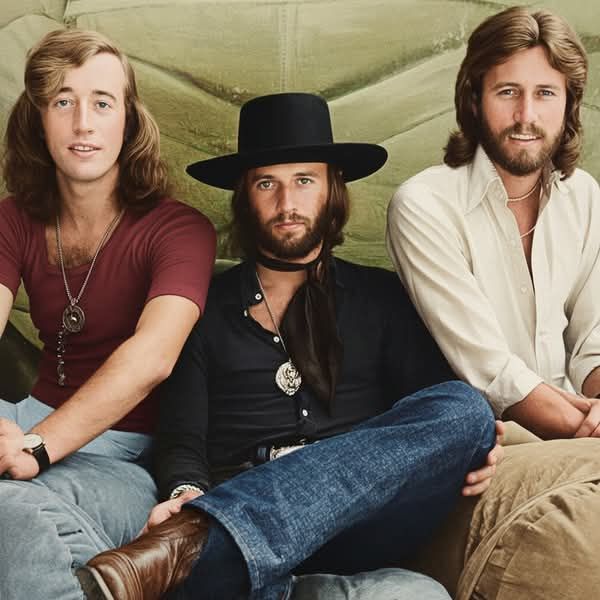
Before the dance-floor era changed everything, “My World” showed how beautifully Bee Gees could turn simple devotion into something warm, melodic, and deeply human.
Released in January 1972, “My World” came at a fascinating moment in the story of Bee Gees. In Britain, the single climbed to No. 16 on the UK chart, a strong showing that confirmed the group still had a loyal audience even before their later global reinvention. It was not one of the towering signature hits that casual listeners mention first, and perhaps that is exactly why the song feels so precious now. It belongs to that in-between chapter: after the group had weathered tension, separation, and reunion, but before the world would forever connect their name with the sleek pulse of the disco years.
Written by Barry Gibb and Robin Gibb, “My World” was issued as a standalone single rather than as part of a major original studio album at the time, though it would later be familiar to many listeners through collections such as Best of Bee Gees, Volume 2. That detail matters, because the song has always carried the feeling of a hidden gem rather than an overplayed classic. It feels like a moment caught between eras, a snapshot of the brothers still working in the elegant, melodic tradition they had refined in the late 1960s and early 1970s.
And what a lovely record it is. There is a lightness in “My World” that separates it from the aching grandeur of songs like “How Can You Mend a Broken Heart”. The melody moves with ease, the harmonies are close and luminous, and the emotional message is immediate. This is not a song built on heartbreak, regret, or dramatic confession. Instead, it rests on one of pop music’s oldest and most enduring ideas: when love is real, one person can become your whole horizon. The title says it plainly, but the performance gives that idea its depth. The brothers do not oversell the sentiment. They let it breathe.
That is one of the quiet strengths of Bee Gees at their best. Even when their lyrics were direct, their voices carried shades of feeling that made simple words resonate. In “My World”, the sentiment could have been ordinary in lesser hands. But the Bee Gees had that unmistakable family blend, a sound both polished and intimate, as though the emotion had been passed from one voice to another until it became something fuller than any one singer alone could express. You hear not just affection, but assurance. Not infatuation, but belonging.
There is also a deeper historical sweetness in hearing this song now. By 1972, Bee Gees had already lived several artistic lives. They had gone from bright young hitmakers to sophisticated craftsmen of ornate pop, then through personal strains and professional uncertainty, and then into reunion. “My World” carries the sound of a group rediscovering balance. It does not feel burdened by the past, yet it clearly benefits from everything they had already survived. That may be why the record has such emotional poise. It sounds confident without being forceful, affectionate without being sugary.
Musically, it sits in that early-1970s Bee Gees lane where melody still led the way. The arrangement is clean and buoyant, the rhythm keeps the song moving, and the vocal architecture remains the true centerpiece. Even listeners who came to the group through later songs can hear, in records like this, the craftsmanship that made the later triumphs possible. Before the falsetto became a phenomenon, before the image grew larger than life, there were songs like “My World” that relied on composition, phrasing, and emotional tone. No excess, no disguise, just writing and singing of a very high order.
The meaning of the song is wonderfully uncomplicated, but not shallow. “My World” is about emotional centrality, about the rare comfort of knowing exactly where your heart belongs. It speaks to that stage of love when the outside world loses some of its noise, and one relationship becomes the place where everything settles. There is something deeply moving about that idea, especially in a song delivered with such grace. The Bee Gees do not treat love as spectacle here. They treat it as orientation, as the quiet force that gives life its shape.
That may be why the song has lasted so well among devoted listeners. It does not demand attention through grandeur. It earns affection slowly. Over time, “My World” begins to feel like the kind of single that reveals more about Bee Gees than some of their more famous records. It reminds us that the group’s greatness was never only about trends or timing. It was about melody touched by memory, harmony touched by kinship, and songs that could make a listener feel both comforted and understood.
Looking back now, “My World” stands as a lovely marker of who Bee Gees were in 1972: seasoned but still searching, refined but still heartfelt, and capable of making even a modestly scaled love song sound rich with feeling. Long before the late-1970s spotlight turned them into something almost mythic, they were already doing what they had always done best—finding emotional truth inside a beautiful melody and sending it out into the world with unmistakable sincerity.