
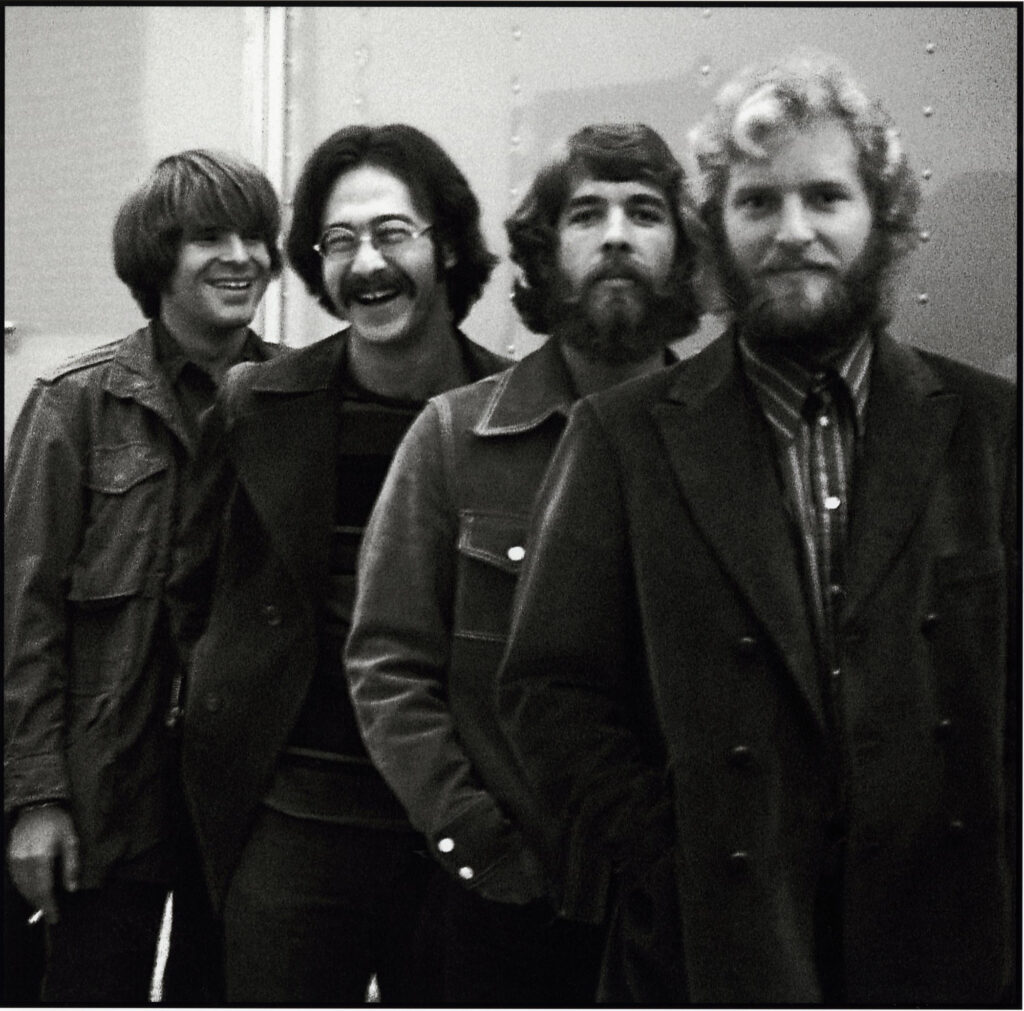
“(Wish I Could) Hideaway” is Creedence Clearwater Revival’s quiet escape song—an organ-lit confession where running away isn’t romance, it’s a last, tender wish for peace.
Among the hard-driving legends in the Creedence Clearwater Revival catalogue, “(Wish I Could) Hideaway” feels like a lamp left on in a different room—dim, private, and unexpectedly vulnerable. It arrives not as a single meant to shake radios, but as an album track on Pendulum, the band’s sixth studio album, released by Fantasy Records on December 9, 1970. That release date matters, because Pendulum sits at a turning point: CCR were still commercially dominant (the album peaked at No. 5 on the Billboard 200) even as internal strain was beginning to show at the edges.
“(Wish I Could) Hideaway” itself wasn’t issued as a standalone single, so it has no separate “debut” chart moment. Its impact is more intimate—the kind earned by listeners who let an album play past the hits. What it does have is placement and purpose: it’s track 5 on Pendulum, credited to John Fogerty as songwriter. The song was recorded in November 1970 at Wally Heider Studios in San Francisco, the same month-long session period that was unusually extended for CCR’s famously efficient workflow.
The “story behind” Pendulum makes this song feel even more poignant. Wikipedia’s album history notes a band meeting before the sessions in which Tom Fogerty, Stu Cook, and Doug Clifford demanded more creative input from John Fogerty—a pressure point that foreshadows the fractures to come. In that light, “(Wish I Could) Hideaway” doesn’t sound like a generic sad song. It sounds like a man trying to find a pocket of quiet inside a room that’s getting louder with conflict.
Musically, it’s also a subtle departure from the “CCR sound” most people picture. Contemporary commentary on the album often highlights how Fogerty’s organ steps forward here—an organ-led ballad where guitar is not the main character. That choice aligns with the broader Pendulum palette, where Fogerty played Hammond B-3 on many tracks and leaned into a Booker T.-influenced feel. The result is a CCR song that moves less like a riverboat and more like a slow internal weather system: steady, patient, and a little haunted.
So what does “(Wish I Could) Hideaway” mean? At its core, it’s a song about the human desire to vanish—not out of cruelty or laziness, but out of exhaustion. Some nights, “freedom” isn’t a highway; it’s a locked door and a quiet chair. The title phrase—wish I could hide away—carries the tenderness of a thought you don’t say out loud because it sounds selfish, even though it’s simply honest. And the organ underneath it feels like the physical shape of that honesty: a breath held a little too long, a sigh that doesn’t want to become a sob.
It’s telling that writers and listeners who revisit Pendulum decades later often single out “(Wish I Could) Hideaway” as one of its most wistful highlights. That wistfulness isn’t mere mood; it’s emotional architecture. Where CCR’s big singles tend to externalize tension—storms, trains, bad moons—this one turns inward. It’s the sound of someone trying to step out of the spotlight of their own life for a moment, not because they don’t care, but because caring has started to cost too much.
And perhaps that’s why the song lingers so stubbornly. In a band celebrated for muscle, “(Wish I Could) Hideaway” is CCR revealing their nerve endings. It reminds us that even the toughest American rock ’n’ roll can carry softness without losing authority. If the rest of Pendulum often feels like a band still running at full speed, this track is the moment the engine idles and you hear the truth in the silence: sometimes the bravest thing isn’t to fight or flee—it’s to admit, quietly, that you need a place to rest.