
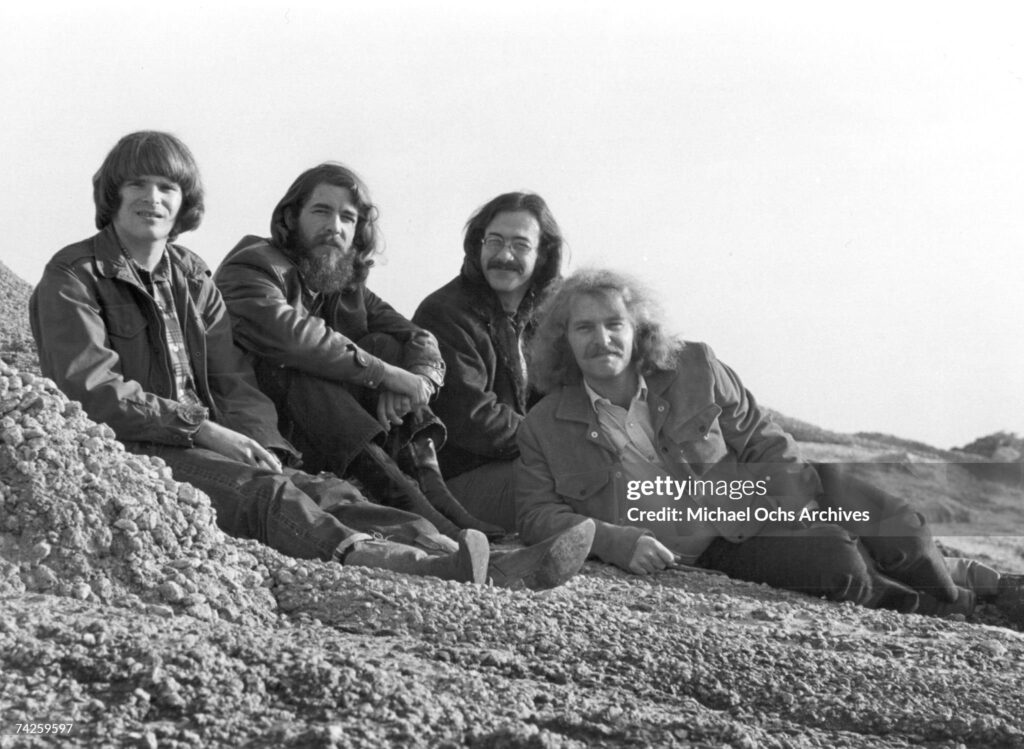
“Someday Never Comes” is CCR’s quietest punch—John Fogerty singing to a child (and to himself) about the cruelest promise adults make: “Someday you’ll understand”… and then someday never comes.
In May 1972, Creedence Clearwater Revival released “Someday Never Comes” as a single (Fantasy Records), backed with “Tearin’ Up the Country.” It was the final single CCR issued before the band’s breakup later that year—an ending-note that feels painfully appropriate, because the song itself is about endings that arrive before the answers do. On the charts, it performed strongly: No. 25 on the Billboard Hot 100 in 1972.
The track comes from Mardi Gras, CCR’s seventh and final studio album, released April 11, 1972. Mardi Gras is famously the record made under strain—recorded after Tom Fogerty’s departure, with the remaining trio attempting to hold the machine together while the spirit was already splintering. And yet, in that uneven, embattled context, “Someday Never Comes” stands like a clear window: direct, melodic, and devastatingly human.
The story behind it is not rumor; it’s been spoken aloud by Fogerty himself. He explained in later interviews that the song reflected both his parents’ divorce and the collapse of his own marriage—the child hearing grownups say “someday you’ll understand,” then becoming the adult who repeats the same line, almost despite himself. That is the song’s heartbreak: it isn’t only about abandonment; it’s about how pain repeats through generations, not through malice, but through helplessness—because sometimes the truth is too complicated, too raw, too shameful to explain to a child in one clean sentence.
Musically, CCR dress that weight in deceptively gentle clothes. “Someday Never Comes” is country rock in texture, but emotionally it’s closer to a lullaby with a crack in the ceiling. The guitars don’t swagger; they walk. The rhythm doesn’t boast; it keeps time, like a clock you can’t negotiate with. Fogerty sings in a voice that feels older than his years—tender, yes, but also tired in that specific way that comes from trying to be brave for someone smaller than you. The melody sounds like it’s reaching for comfort, while the lyric keeps returning to the same hard wall: the promised understanding is always deferred, always “later,” always out of reach.
The song’s meaning lives in its central paradox. A parent wants to protect a child from the full blast of adult damage, so he offers the softest substitute he can find: later. Someday. It’s meant as mercy. But for the child, “someday” can feel like a locked door—because childhood doesn’t measure time the way adults do. Childhood hears “not now” as “maybe never.” And Fogerty’s genius is that he lets the song carry both perspectives at once: the child’s hunger for answers and the adult’s inability to give them without breaking something.
There’s another layer that makes “Someday Never Comes” hit harder in retrospect: it’s a late CCR single from the period where the band’s internal relationships were fraying publicly. A song about a father and son—about promises, departures, and the ache of things unsaid—released while the band itself was approaching its own irreparable goodbye. You can hear the irony without anyone having to point it out. The song becomes a mirror: not only family history repeating, but human history repeating—people who love each other failing to stay whole.
And still, the song isn’t nihilistic. It doesn’t sneer at love. It simply tells the truth that love sometimes arrives incomplete—full of intention, short on delivery. That’s why it lingers. “Someday Never Comes” doesn’t sound like youth. It sounds like the moment youth ends: the moment you realize the grownups didn’t have the map, they just had responsibilities and fear and a few phrases to cover the gaps.
If CCR’s biggest hits are often remembered as soundtrack-to-motion—rivers, bayous, travelin’ bands—then “Someday Never Comes” is the moment the car pulls over and the engine idles. It’s a song you don’t merely hear; you recognize it. Because nearly everyone, in one way or another, has lived inside that sentence: “Someday you’ll understand.” And nearly everyone has felt the quiet shock when years pass, and understanding still hasn’t arrived on schedule.