
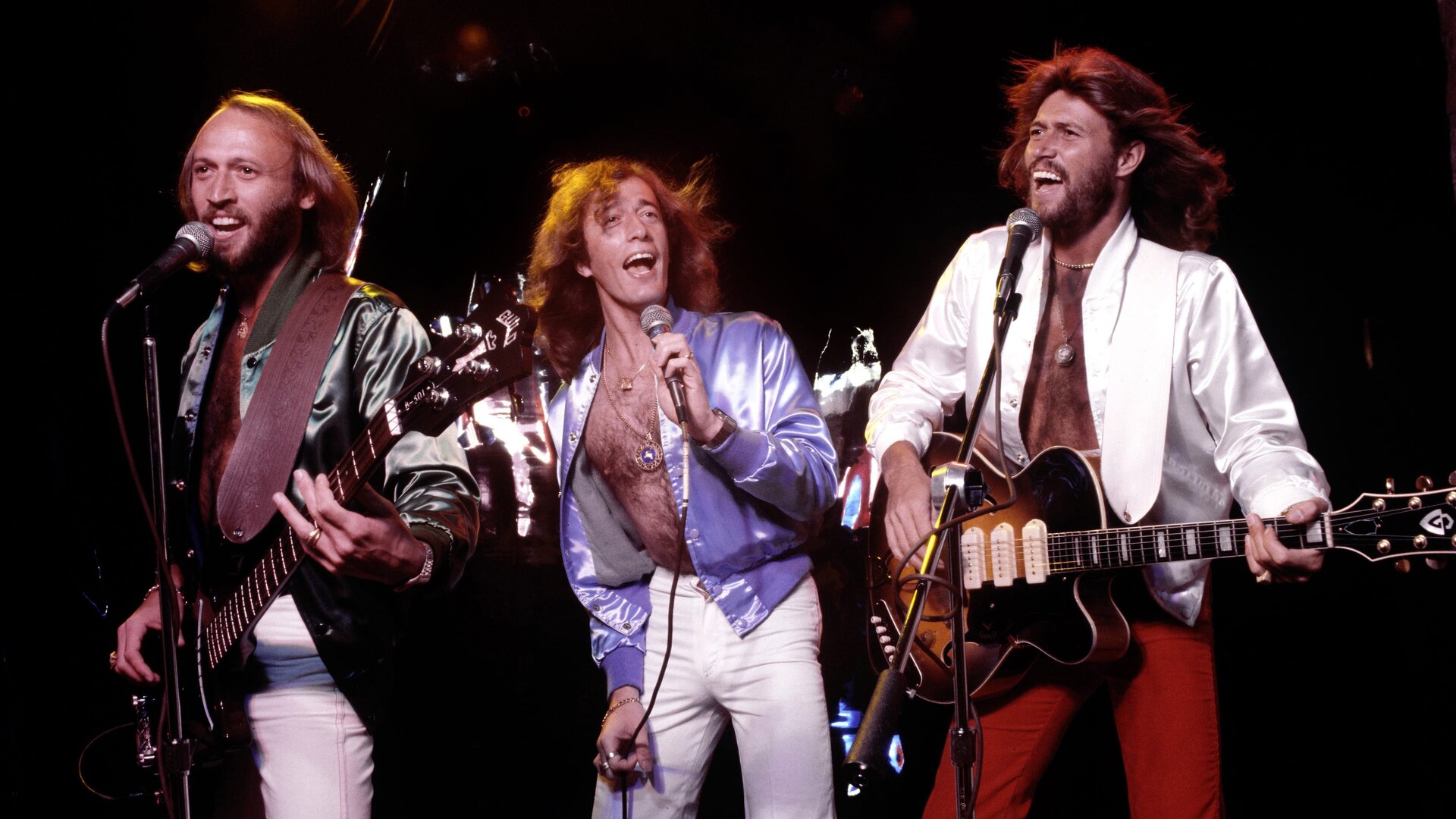
“Kitty Can” is the Bee Gees in miniature—bright, strange, and slightly mischievous—like a forgotten B-side postcard that still carries the perfume of 1968.
If you only know the Bee Gees through their later, immaculate pop architecture—falsetto cathedrals and dance-floor commandments—“Kitty Can” feels like opening an older drawer in the same house and finding a different kind of photograph: younger faces, sharper angles, a playful glint that doesn’t ask permission to be odd. It’s a song that entered most people’s lives sideways, not as a headline but as the flip-side companion to one of their great early breakthroughs, “I’ve Gotta Get a Message to You.”
Here’s the essential “chart truth,” placed up front: “Kitty Can” itself did not chart as an A-side at the time. Its public arrival was as the B-side to “I’ve Gotta Get a Message to You,” a single that did explode—reaching No. 1 in the UK and becoming the group’s first U.S. Top 10 hit (peaking at No. 8 on the Billboard Hot 100). In other words, “Kitty Can” rode into the world on the back of a major moment—quietly, almost anonymously, the way B-sides often do—yet it was pressed into the hands of countless listeners who bought the record for the A-side and then, inevitably, turned it over.
The timeline is part of its charm. The song was recorded on 12 June 1968, and released as the B-side in 1968 (with sources listing release timing around late summer, and a specific single date of 7 September 1968 appearing in some discographies). It also took its place on the album Idea as track 2, meaning it wasn’t merely a throwaway—someone in the Bee Gees’ camp believed it belonged near the front of the record, right where an album announces its personality.
Authorship and stewardship matter here, too. “Kitty Can” is credited to Barry, Robin, and Maurice Gibb, and the production credit sits with Robert Stigwood and the Bee Gees themselves—an early glimpse of how hands-on they were becoming about their sound and their choices. Even its genre tag—often described as psychedelic pop—fits like a period-correct suit: 1968 was a year when pop songs could behave like small dreams, surreal and slightly sideways, without needing to explain themselves.
What makes “Kitty Can” worth returning to, decades later, is the particular temperament it carries. It has that late-’60s Bee Gees knack for wrapping something sly inside something catchy. The melody moves with a kind of nimble confidence—youthful, even impish—yet the atmosphere has a faintly uneasy shimmer, as if the song is smiling while keeping a secret. It’s a B-side in the best traditional sense: not a weaker sibling, but a slightly stranger one, the track that doesn’t have to be polite for radio.
And then there’s the quiet romance of how “minor” songs survive. “Kitty Can” has lived multiple lives: the original 45 flip-side; the album track on Idea; and later, its name resurfacing as the title of a 1973 South American compilation (Argentina and Uruguay), a curious afterlife that proves the song had enough identity to lend its name to a whole package. That’s how cult favorites behave—they keep slipping through the cracks of official history, showing up again when you least expect them.
Listening now, “Kitty Can” feels like a reminder that the Bee Gees were never only one thing. Even in 1968, before the world learned to associate them with a single signature era, they were already balancing pop discipline with a taste for the offbeat. And perhaps that’s the song’s quiet meaning: life isn’t only made of the tracks that “won.” It’s also made of the ones that linger in the background—half-remembered, privately beloved, waiting for the right evening to sound new again.
So if you put “Kitty Can” on today, don’t treat it like a historical footnote. Treat it like what it really is: a small, bright artifact from the Bee Gees’ restless, inventive youth—an era when a B-side could still feel like a secret shared between the artist and the listener… and secrets, as we learn with time, are often the things we remember most clearly.