
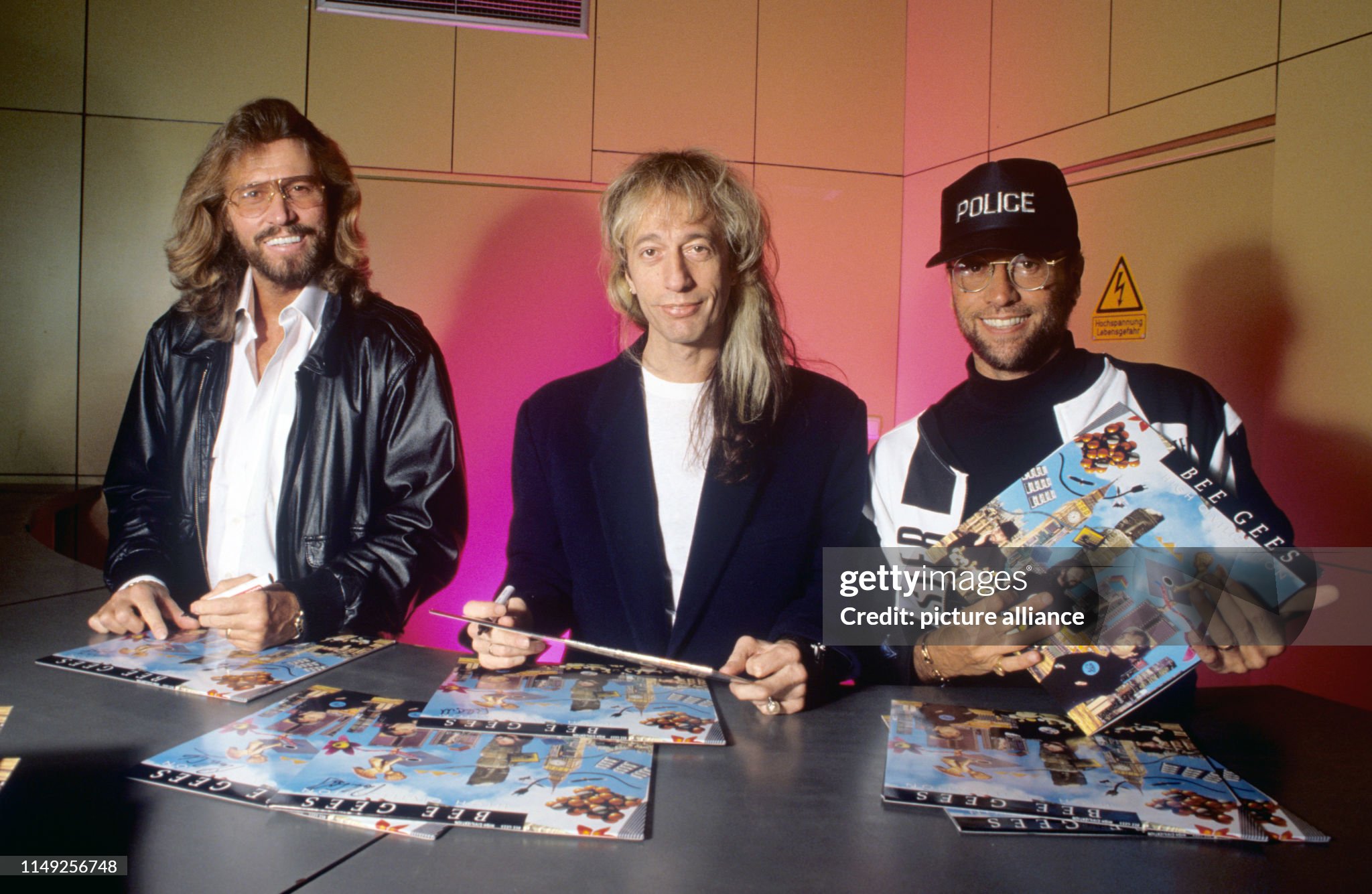
“All This Making Love” is the Bee Gees at the exact moment their pop past softened into silkier soul—desire set to a groove that feels warm, restless, and unmistakably grown-up.
In the Bee Gees story, “All This Making Love” is one of those deep cuts that tells you more than a greatest-hits playlist ever can. It doesn’t arrive with the fanfare of a single, and it never needed it. Instead, it lives where the real transformation happens: inside Main Course, the 1975 album that didn’t just revive the brothers’ commercial fortunes—it redesigned their musical vocabulary for the rest of the decade. Main Course was released in May 1975 (U.S.) and August 1975 (U.K.), recorded from 6 January to 21 February 1975 at Criteria (Miami) and Atlantic (New York), and produced by Arif Mardin.
Within that setting, “All This Making Love” opens Side Two—listed as track 6 overall—clocking in at 3:03, with lead vocals by Barry and Robin Gibb. That placement is quietly brilliant. After Side One’s sleek reinvention (anchored by the era-defining singles), Side Two begins by doubling down on physicality—on rhythm that moves like a heartbeat you can’t quite calm down. It’s as if the album turns its face away from the mirror and back toward the body: not the dramatic heartbreak of the late ’60s Bee Gees, but the breathy, late-night insistence of mid-’70s adult pop.
What’s most important, historically, is what Main Course represented. Wikipedia describes it as the Bee Gees’ first album to lean heavily into R&B/soul/funk/disco influences, essentially creating the template for their late-’70s run. The band’s own official discography page also frames it as a Miami-made “perfect slice of 70s pop and R&B,” noting how the move (famously suggested by Eric Clapton) helped reset their sound and momentum. In the same breath, that page confirms the album’s U.S. chart peak at No. 14 and the key single peaks—“Jive Talkin’” at No. 1, “Nights on Broadway” at No. 7, and “Fanny (Be Tender with My Love)” at No. 12.
Against those big numbers, “All This Making Love” is almost deliberately modest. It was not one of the singles listed from the album’s campaign. That “non-single” status is part of its charm: it feels like a private room off the main hallway—something meant for listeners who stay after the hits, who let the album keep talking when the radio would have moved on.
Musically, the track’s appeal is in how it marches—a steady, slightly gritty propulsion that contrasts beautifully with the Bee Gees’ famously polished harmonies. The official Bee Gees discography even calls it “an infectious number that marches along with fuzzy guitar,” which is exactly right: it’s a groove you can lean on, almost physical in its forward motion. And because Barry and Robin share the lead, the song carries that uniquely Bee Gees emotional doubling—one voice sounding like desire, the other sounding like doubt, braided so tightly you can’t separate the yearning from the unease.
That’s the deeper meaning of “All This Making Love.” It isn’t just a sexy phrase. It’s the suggestion that intimacy can become its own weather—something you live inside for a while, something that warms you and then leaves you slightly disoriented when you step back into daylight. The best Bee Gees songs do this: they make romance feel both immediate and strangely reflective, like you’re dancing and thinking at the same time. Here, the production doesn’t drown the lyric in drama. It lets the pulse do the storytelling—because sometimes the truest “plot” is simply the body insisting on what the mind is trying to manage.
Listen now—years removed from 1975’s clothes, cars, and radio culture—and you can still hear why this track matters. “All This Making Love” is the sound of a band turning a corner in real time: leaving behind the old orchestral ache without losing their emotional intelligence, and stepping into a groove-driven future without sacrificing melody. It’s not the Bee Gees asking for permission to change. It’s the Bee Gees already changed, smiling as they walk past you—leaving only that warm, restless rhythm in the air, like a memory you didn’t plan to keep but can’t quite let go.