
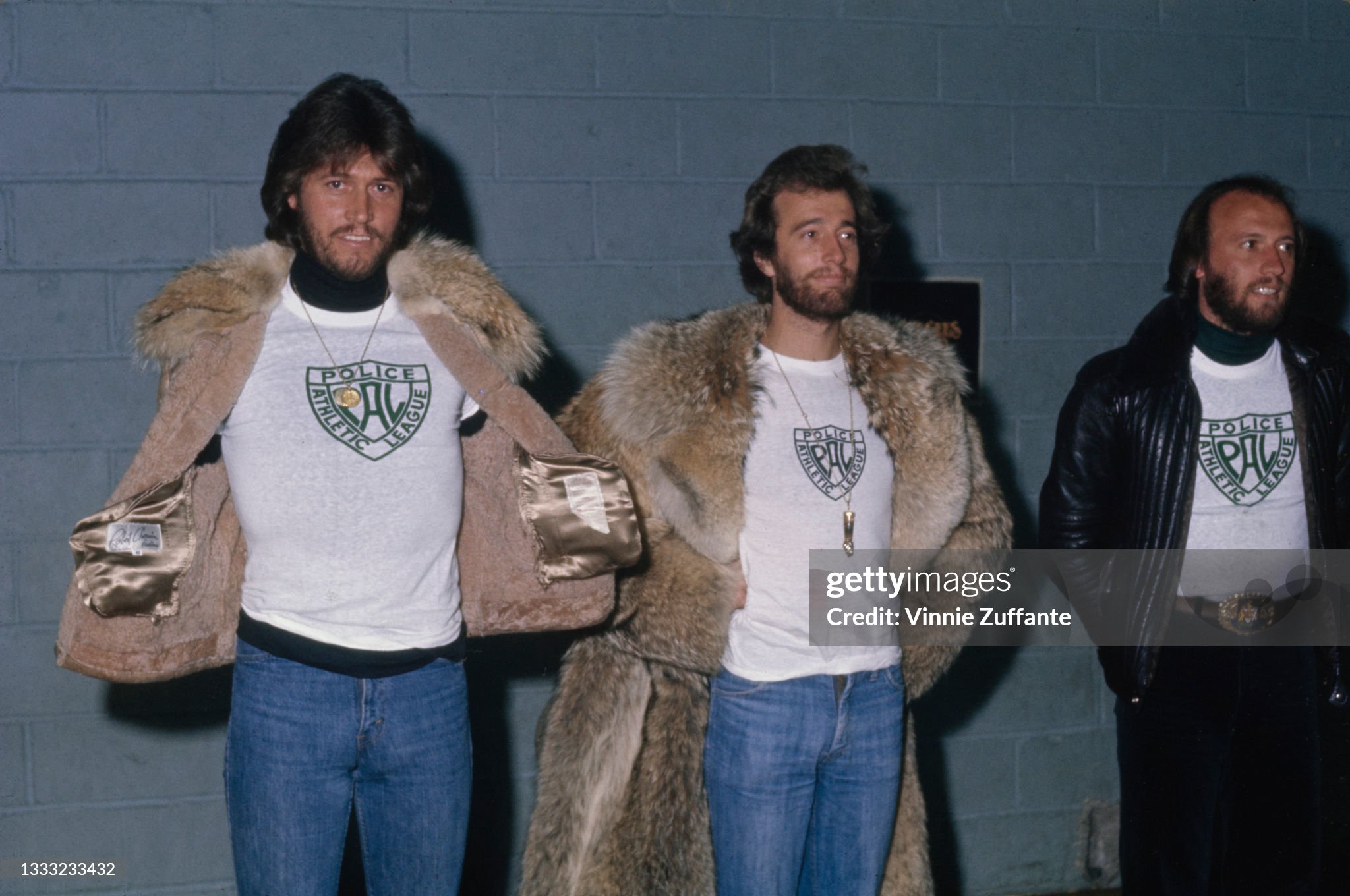
“Love You Inside Out” is devotion with its sleeves rolled up—a promise so fierce it sounds like a heartbeat arguing with doubt, refusing to cool down.
Released on April 6, 1979, “Love You Inside Out” arrived as the third single from the Bee Gees’ blockbuster album Spirits Having Flown—and it didn’t just “do well.” It became the group’s ninth and final No. 1 hit on the Billboard Hot 100, reaching the summit with a peak chart date of June 30, 1979. In the U.K., it charted strongly too, first entering on April 14, 1979 and peaking at No. 13 (holding that peak for two weeks) with a nine-week run on the Official Singles Chart.
Those numbers matter, but so does what they represent: by 1979 the Bee Gees weren’t simply riding the afterglow of Saturday Night Fever—they were proving they could keep writing and recording pop that felt both contemporary and personal. Spirits Having Flown (released February 5, 1979) hit No. 1 on the Billboard 200, and in Britain it also reached No. 1, staying on the UK chart for an impressive stretch. And “Love You Inside Out” was the capstone of a remarkable run: Rhino notes it was the third single from the album to hit No. 1, following “Too Much Heaven” and “Tragedy,” extending the group’s extraordinary streak of U.S. chart-toppers across that era.
Behind the scenes, the song carries the fingerprints of the team that defined their late-’70s sound. It was written by the unmistakable triumvirate—Barry Gibb, Robin Gibb, and Maurice Gibb—and produced by the Bee Gees alongside Albhy Galuten and Karl Richardson. In other words: this wasn’t a borrowed costume. It was their own workshop, their own craft, their own instincts—honed to the point where a record could be sleek and radio-ready without losing its pulse.
What makes “Love You Inside Out” endure, though, is the way it turns a dancefloor groove into something strangely intimate. The title sounds playful until you really sit with it: inside out suggests not just affection, but exposure—loving someone so completely you’re willing to be seen in the most unguarded way. The lyric’s central idea isn’t polite romance; it’s love as total commitment, almost stubborn in its insistence. Not the kind of devotion that asks permission—more like the kind that shows up anyway, even when pride says it shouldn’t.
Musically, it’s easy to remember the sheen—the confident rhythm, the cool precision, the way it moves like a lit boulevard at midnight. Yet beneath that polish there’s an emotional tension that gives the song its heat: the sense that passion is not merely pleasure, but also a responsibility. The narrator isn’t floating above the feeling; he’s inside it, aware that what burns bright can also burn out, and trying—by force of will, by force of voice—to keep the fire alive.
And perhaps that’s why the record felt so right in 1979, a year when pop was learning how to sound glamorous and anxious at the same time. “Love You Inside Out” is glamorous, yes—but it’s also human. It acknowledges that love can feel like a promise you renew daily, not a trophy you win once. It’s the sound of someone dancing while quietly checking the candle’s flame, hoping it will last until morning.
There’s a bittersweet historical glow around it now, too: this was the Bee Gees’ last Hot 100 No. 1, the final chapter of an American chart reign that had seemed almost effortless. But the song doesn’t feel like an ending. It feels like a moment caught in motion—three voices and a band locked to the same heartbeat—making something bold, glossy, and vulnerable all at once.
If you return to “Love You Inside Out” years later, you may notice how it still carries the same quiet dare: to love without hiding, to keep showing up, to keep the faith even when the night gets long. That’s not just disco nostalgia. That’s a life lesson set to a groove.