
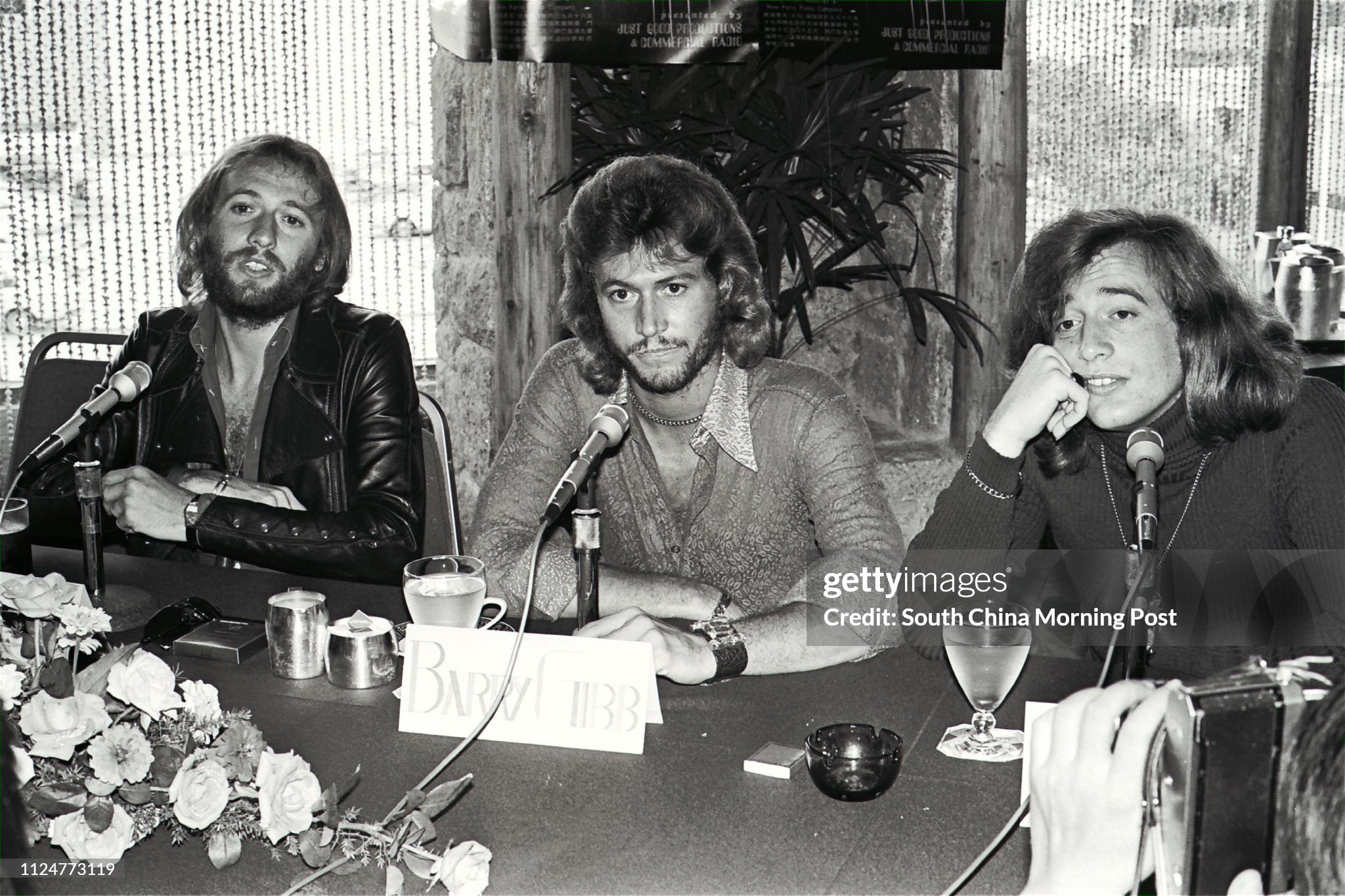
“Lay It on Me” is a small, two-minute plea that feels bigger than it looks—Maurice Gibb stepping forward in plain clothes, asking for closeness the way a tired heart does: simply, and without pride.
If you go searching for a big single moment—an explosive debut number, a famous chart peak—you won’t find it, and that’s the first truth worth saying. “Lay It on Me” was not rolled out as a headline A-side; it lived as an album track on 2 Years On (released November 1970), the record that marked the Bee Gees’ reunion as a trio after a turbulent split. So the “ranking at launch” belongs to the album around it: 2 Years On reached No. 32 on the U.S. Billboard 200. In a way, that’s fitting. This song isn’t a spotlight grab. It’s a moment you notice when you stop running after the obvious hits and let the deeper cuts speak.
What makes “Lay It on Me” special is that it sounds like a door opening inside the Bee Gees’ story. Maurice Gibb wrote it and sings lead, and the track is famously compact—2:07—as if it arrives, tells you what it needs, and slips away before anyone can argue. On 2 Years On, the band was re-forming its internal weather: recorded from June 13 to October 5, 1970, at IBC Studios in London, with Robert Stigwood and the Bee Gees credited as producers. You can hear that “reunion energy” all over the album—three brothers trying to remember how to breathe together again—yet “Lay It on Me” feels particularly personal, because it’s Maurice taking the wheel and driving the song where he wants to go.
And where does he go? Not to baroque pop, not to orchestral grandeur—he goes earthy. One of the most perceptive fan-historians of the catalog, Joseph Brennan, calls it a kind of “swamp rock” flavored featured number for Maurice—so central to his identity in those years that it became, in Brennan’s words, his “signature song” performed live as his featured spot. That’s a revealing detail: the Bee Gees were never short on strong frontmen, but here is Maurice insisting, I have something too. Let me say it my way.
The meaning of “Lay It on Me” is, on the surface, almost disarmingly direct—an invitation, maybe even a demand, for affection and honesty. But beneath that straightforward phrasing is a familiar ache: the sense that love can’t be negotiated from a safe distance. The title itself carries the weight. “Lay it on me” is what someone says when they’re ready to hear the truth, even if it bruises. It’s also what someone says when they’re willing to shoulder another person’s heaviness—give it to me, I can take it. In the context of 2 Years On, that double meaning stings a little: a family mending itself, a band mending itself, and Maurice stepping forward with a song that sounds like emotional responsibility dressed up as a groove.
That reunion context is not trivia; it’s the air the song breathes. 2 Years On is widely framed as the album that brought Robin Gibb back into the fold after leaving in 1969, and it introduced drummer Geoff Bridgford into the Bee Gees’ working unit. “Lay It on Me,” recorded during those earliest reconvened sessions, sits like a handshake—short, warm, slightly wary, but real.
There’s also something quietly moving about how the track has survived. It didn’t need to chart as a single to endure; it endured the way certain songs do—through performance memory, through fans who keep returning to the corners of a catalog where the artists sound most unguarded. Even its later appearance on retrospective sets that spotlight Maurice’s lead moments underlines what listeners sensed all along: this wasn’t filler. It was character.
So if you put on “Lay It on Me” today, try hearing it less as a “minor” Bee Gees track and more as a small self-portrait. Before the global disco reign, before the suits and falsettos became shorthand, there was a brother with a rougher, friendlier bite to his voice, offering a two-minute truth: closeness is not abstract. It’s weight, it’s trust, it’s the courage to say, without flourish—lay it on me.