
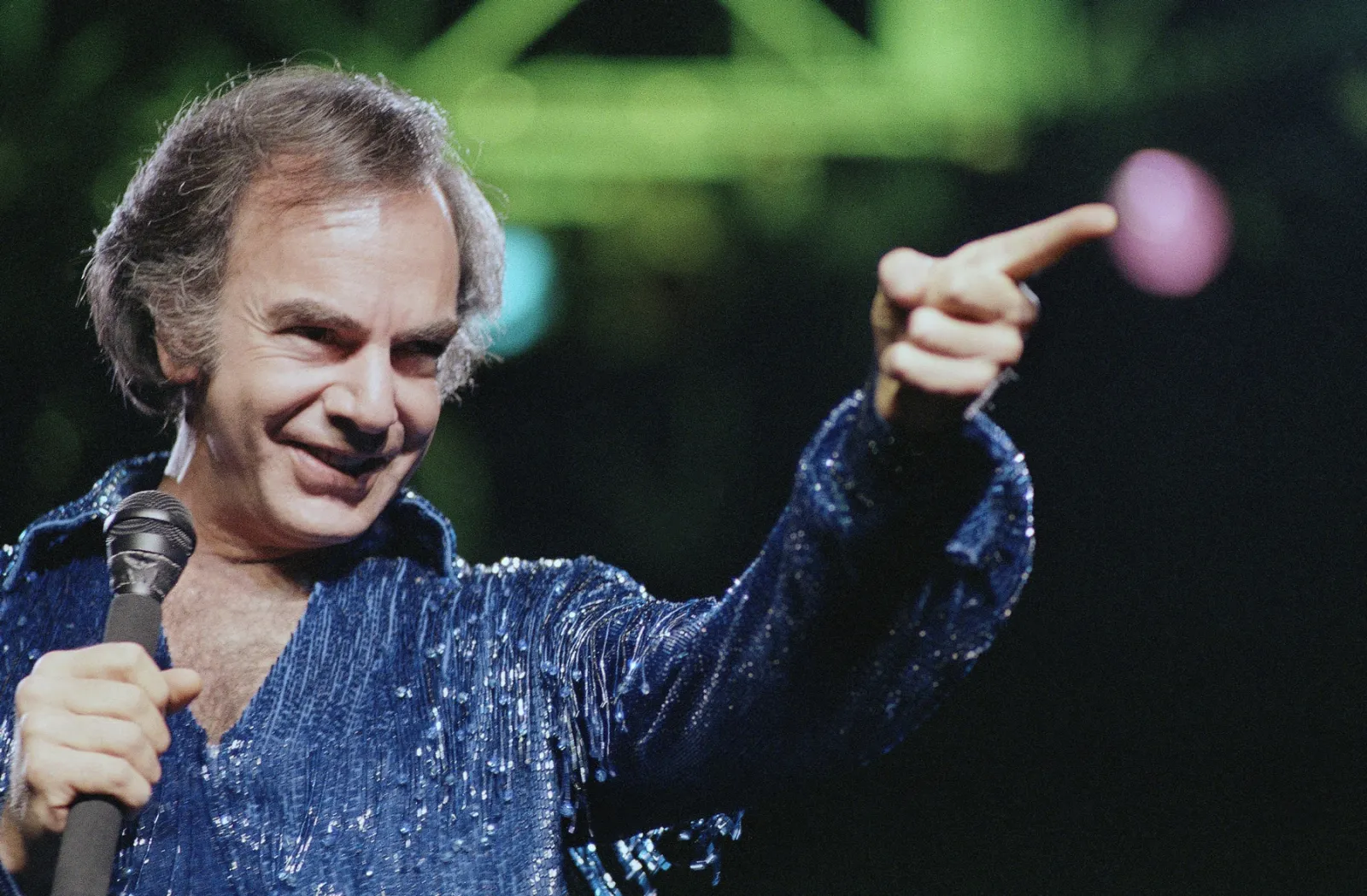
In “Flight of the Gull”, Neil Diamond gave wings to a deeply human longing: the wish to rise above limits, trust the spirit, and move toward something larger than fear.
Some songs arrive like a radio event. Others settle into the heart more slowly, almost like a private revelation. “Flight of the Gull” belongs to that second kind. Drawn from Neil Diamond’s 1973 soundtrack album Jonathan Livingston Seagull, the piece was never one of his most obvious commercial smashes, and it was not a major standalone Billboard Hot 100 hit in the way songs like “Cracklin’ Rosie” or “Sweet Caroline” were. Yet it lives inside one of the most unusual and ambitious chapters of his career. The album itself performed strongly, reaching No. 2 on the Billboard album chart, and it revealed a very different side of Diamond: not just the hitmaker, but the spiritual storyteller.
That matters when talking about “Flight of the Gull”, because this is not a song built around immediate pop pleasure. It comes from a bigger artistic vision. Jonathan Livingston Seagull began as Richard Bach’s bestselling novella, a fable about a seagull who refuses to live within the narrow expectations of the flock. Instead, he pursues excellence, freedom, discipline, and transcendence. Diamond was drawn to that material in a way that now feels almost inevitable. He had always carried a searching quality in his music, a tension between loneliness and uplift, between earthly struggle and spiritual yearning. In this soundtrack, and especially in “Flight of the Gull”, those impulses found a natural home.
What makes the song so moving is that it does not force its message. It glides. The arrangement has the feeling of open space, of wind and horizon, and Diamond sings with a kind of reverent restraint that gives the music its emotional power. He does not treat flight as spectacle. He treats it as awakening. That difference is everything. In lesser hands, a song tied to a symbolic film could have become heavy or overexplained. But Neil Diamond understood that the deepest forms of freedom are often quiet. They begin in solitude. They sound less like triumph at first than like resolve.
There is also something unmistakably of its time about the song, and that is part of its enduring charm. The early 1970s gave us many artists reaching for something more reflective and inward. Audiences were listening not only for hooks, but for meaning. In that atmosphere, Jonathan Livingston Seagull stood apart. It was a soundtrack, yes, but it also functioned as a personal statement. Diamond was not merely decorating a film; he was interpreting a philosophy. “Flight of the Gull” feels like one of the clearest expressions of that effort, a song that carries the emotional weather of the whole project.
The story behind the album adds another layer of fascination. The 1973 film adaptation of Jonathan Livingston Seagull received mixed reactions, but Diamond’s music often outlived the film in listeners’ memory. That happens sometimes in popular culture: the image fades, but the song remains. In this case, the music preserved the soul of the source material more tenderly than many expected. “Flight of the Gull” is a perfect example of why. Even outside the film, it still communicates a complete emotional idea. You do not need to know every plot point to feel what the song is reaching for. The desire to break beyond routine, the loneliness of choosing a harder path, and the grace that comes with self-discovery are all there in the sound itself.
For longtime listeners, this song can feel like opening a window to another era of Neil Diamond. The public often remembers him as the master of grand choruses, live electricity, and sing-along anthems. All of that is true. But songs like “Flight of the Gull” remind us that he was also a remarkably thoughtful writer, capable of expressing aspiration without sentimentality. He knew how to make yearning sound noble. He knew how to make reflection feel melodic. That is not a small gift.
Its meaning, finally, is what keeps it alive. “Flight of the Gull” is about movement, but not only physical movement. It is about inner ascent. It suggests that growth asks something of us: patience, courage, isolation, even misunderstanding. Yet it also suggests that the journey is worth it. There is comfort in that, especially after years of living, trying, failing, beginning again, and learning how often the most important victories are invisible to the crowd. The song does not flatter the listener. It accompanies the listener. It says, in its own gentle way, that becoming who you are meant to be may look lonely from the outside, but it carries its own radiant peace.
That is why “Flight of the Gull” still matters. It may not be the first Neil Diamond title mentioned in casual conversation, but for those who have spent time with Jonathan Livingston Seagull, it lingers as one of his most sincere and elevating works. It is the sound of a songwriter looking beyond the hit parade and trusting something deeper. And decades later, that quiet act of faith still soars.