
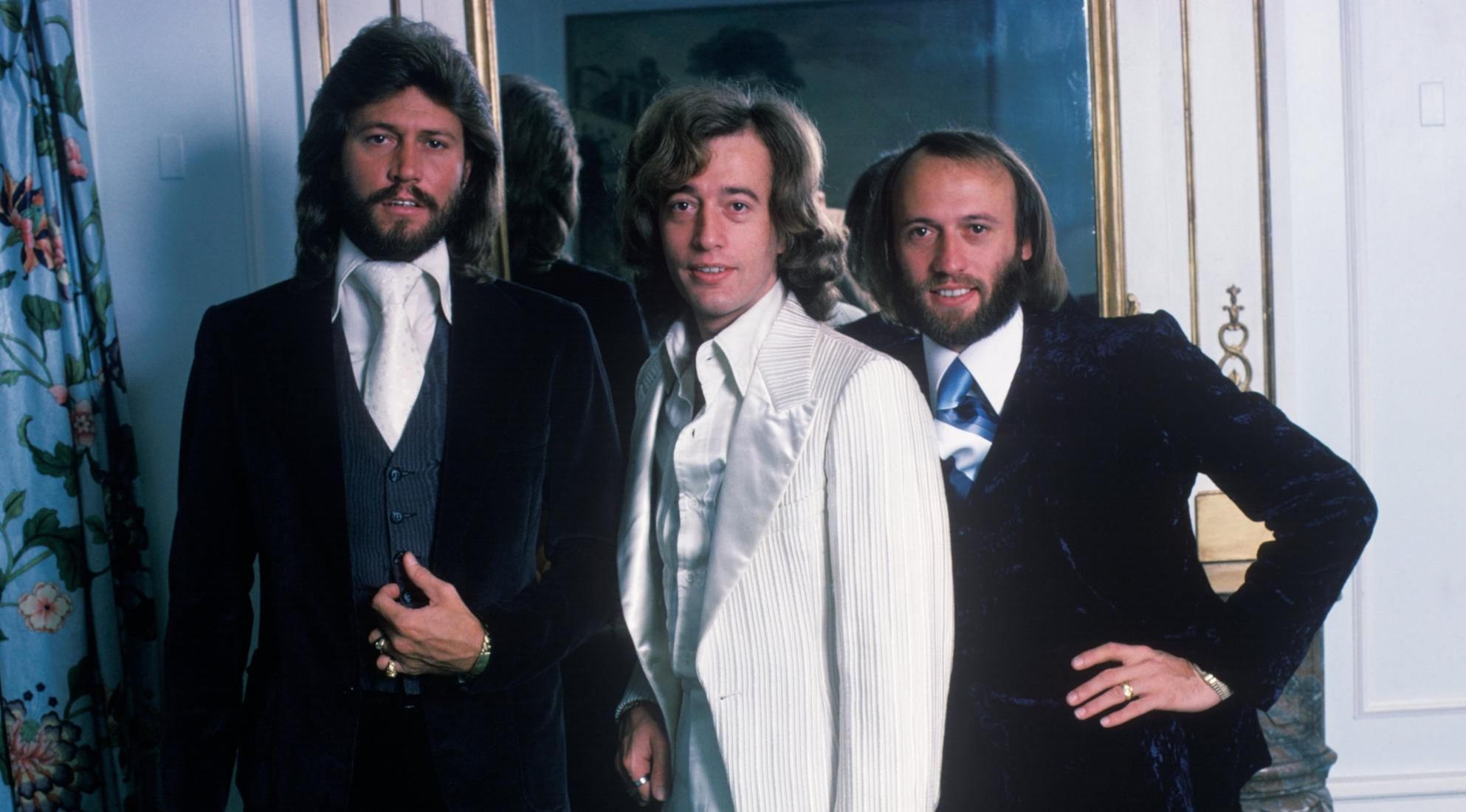
“Déjà Vu” is the Bee Gees’ late-career sigh—Robin Gibb sounding as if he’s reliving a heartbreak he can’t quite outrun, where the past doesn’t stay behind… it circles back like a familiar night.
By the time the Bee Gees released This Is Where I Came In—their final studio album, issued 2 April 2001 in the UK (and in the US later in April 2001)—they were no longer chasing any fashionable definition of pop. They were documenting something older and more human: what it feels like to keep living, keep loving, keep losing, and still find new corners inside the same emotions.
That’s the world where “Déjà Vu” lives. It’s track 6, running 4:17, with Robin Gibb on lead vocal, and it’s credited—as so much of their late work is—to Barry, Robin, and Maurice Gibb. The album was recorded across 1998–2000 in studios including Middle Ear (Miami Beach) and Area 21 (London), and produced by the Bee Gees alongside Peter-John Vettese. These details matter because “Déjà Vu” doesn’t feel like a “track” so much as a late-night page from a notebook—carefully made, but emotionally unguarded.
If you’re looking for chart context at release, the honest story is the album’s, not the song’s. “Déjà Vu” was not released as a major single; “This Is Where I Came In” was the album’s lone headline single. Meanwhile, the album itself arrived with real, dignified impact: it peaked at No. 6 in the UK and No. 16 in the US—a remarkable final chapter for a band already woven into the fabric of five decades of popular music.
And then there’s the deeper “behind the song” truth that hangs over everything: This Is Where I Came In is now heard through the lens of time, because it was released less than two years before Maurice Gibb’s death in January 2003. That fact doesn’t turn “Déjà Vu” into a eulogy—but it does make the listening more tender. It’s hard not to hear the album, and Robin’s voice in particular, as if the brothers already sensed how precious their shared sound really was.
So what does “Déjà Vu” mean—in the way it feels, in the way it lingers?
The title itself is the key. Déjà vu isn’t simply “remembering.” It’s the unsettling sensation of repeating—of stepping into a moment that seems new but carries the shape of an older ache. In Robin Gibb’s voice, that idea becomes intensely personal. He doesn’t sing like a man telling a story from a safe distance; he sings like someone inside the recurrence, watching history reassemble itself around him. Robin’s gift—always—was that he could make vulnerability sound dignified. Even at full emotional pitch, there’s a kind of trembling poise, as if he’s holding the feeling carefully so it doesn’t break.
Musically, the track sits perfectly in the album’s late-period palette: mature pop craftsmanship, a measured pulse, an arrangement that doesn’t need to shout because the emotion is already loud. The Bee Gees, in 2001, understood something that only seasoned artists truly grasp: sometimes the most devastating moments are the most controlled ones. You don’t raise your voice when the truth is heavy. You let it fall, and you let it land.
That’s why “Déjà Vu” can feel so strangely familiar even if you’re hearing it for the first time. It carries the Bee Gees’ oldest themes—love’s persistence, loss’s echo, the way the heart repeats its favorite mistakes—yet it speaks in a later vocabulary: less drama, more clarity; less glitter, more shadow. It’s the sound of romance after experience has taken its toll… and still, stubbornly, romance remains.
In the end, “Déjà Vu” isn’t asking to be remembered as a chart milestone. It’s offering something quieter and, for many listeners, more lasting: the recognition that life circles back. That we meet the same feelings in different rooms, under different lights. That the past doesn’t always haunt us—it sometimes simply returns, wearing a new face, asking if we’ve learned anything yet. And when Robin Gibb sings it on the Bee Gees’ final studio album, the song becomes what the best late-career recordings often become: not a farewell speech, but a final, honest look in the mirror.