
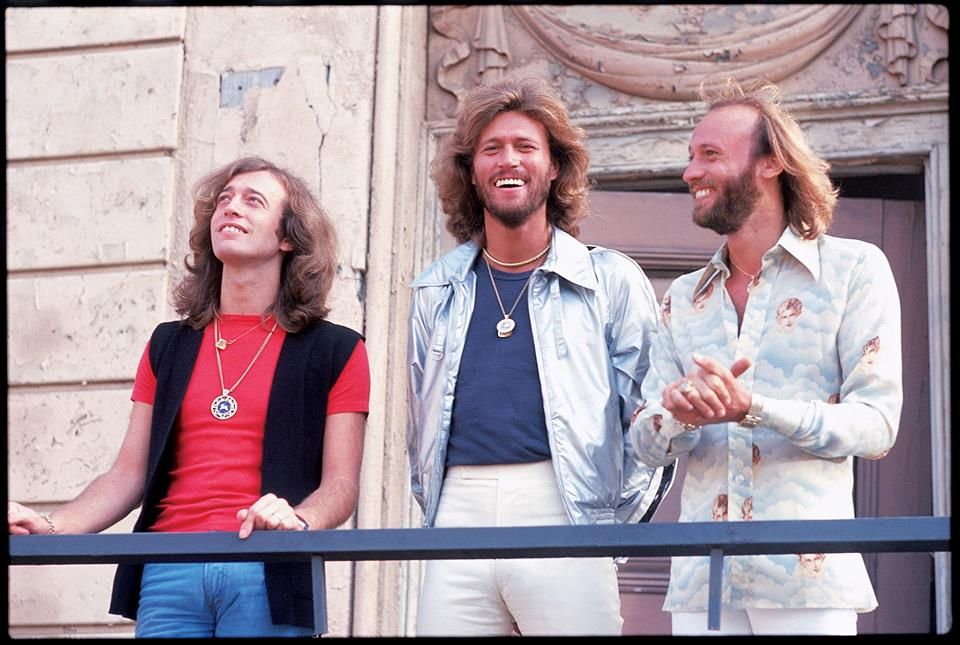
“Juliet” is a neon-laced love letter sung in Robin Gibb’s trembling falsetto—proof that desire can feel both glamorous and lonely, like a city at midnight that never quite lets you rest.
When people say Bee Gees and “Juliet” in the same breath, it’s worth placing the spotlight accurately: “Juliet” is officially a Robin Gibb solo single—yet it carries the unmistakable family fingerprint of the Gibb brothers. Released in May 1983 in the UK (and June 1983 in the US) on Polydor, the song was written by Robin Gibb and Maurice Gibb, and produced by Robin and Maurice as well. That detail matters, because you can hear it: even outside the Bee Gees brand name, the record still breathes in that uniquely Gibb way—melody first, emotion close behind, and a voice that sounds like it’s singing from the edge of the heart rather than the center.
In terms of chart “position at launch,” “Juliet” lived two different lives depending on the country. In the UK, it made only a modest impression, peaking at No. 94 on the Official Singles Chart in late May 1983. But across mainland Europe it became something far bigger—described in major discography references as a huge hit, reaching No. 1 in Germany, Italy, and Switzerland, and No. 2 in Austria. The single was also certified Gold in Germany in 1983, a strong signal of just how deeply it landed there. In other words, “Juliet” wasn’t a universal chart event; it was a regional phenomenon—the kind that becomes intensely personal for the places that embraced it, like a song that’s always playing somewhere in the background of your memories.
The track served as the calling card for Robin’s second solo album, How Old Are You?—released in 1983, and co-produced by Robin and Maurice (with Dennis Bryon also credited in the album’s production). The album itself didn’t become a major success in the UK or the US, but it performed strongly in Germany (peaking at No. 6 there), driven largely by the momentum of “Juliet.” That backstory gives the song a particular emotional color: it’s not the sound of an act coasting on worldwide domination. It’s the sound of an artist stepping out alone—still carrying the Bee Gees’ melodic intelligence, but searching for a new shape in the early-’80s landscape of synth-pop and new wave textures.
And what does “Juliet” mean—beneath the sheen? At its core, it’s a romance song, but not the tidy kind. Robin doesn’t sing like a man calmly stating devotion; he sings like someone haunted by it. His vocal is that familiar, aching instrument—half plea, half proclamation—where longing seems to quiver inside each note. The production wraps him in a stylish, modern glow, yet his delivery keeps revealing the older truth: love doesn’t always arrive as comfort. Sometimes it arrives as obsession, as a beautiful disturbance, as a name you can’t stop saying to yourself.
There’s also something quietly theatrical in the title itself—“Juliet”, the most famous romantic symbol in Western pop imagination. But Robin’s “Juliet” isn’t balcony poetry. It’s city-night yearning: the kind of love that feels urgent precisely because it might be slipping away, the kind you chase through crowds and lights and still end up alone with, when the night finally goes quiet. That’s why the song continues to resonate with listeners who found it in its true natural habitat: late drives, dim rooms, radios low, the world outside softened by darkness.
In the end, “Juliet” stands as one of those fascinating “side roads” in the Gibb universe—technically Robin Gibb solo, spiritually still part of the wider Bee Gees story. It reminds us that even the most famous voices have private chapters: songs that don’t define an era globally, but define a feeling perfectly for those who lived with them. And if you’ve ever loved someone in a way that felt bigger than your ability to explain it—if you’ve ever carried a name like a secret flame—then “Juliet” understands you, and it sings back in that trembling, unmistakable Robin Gibb voice.