
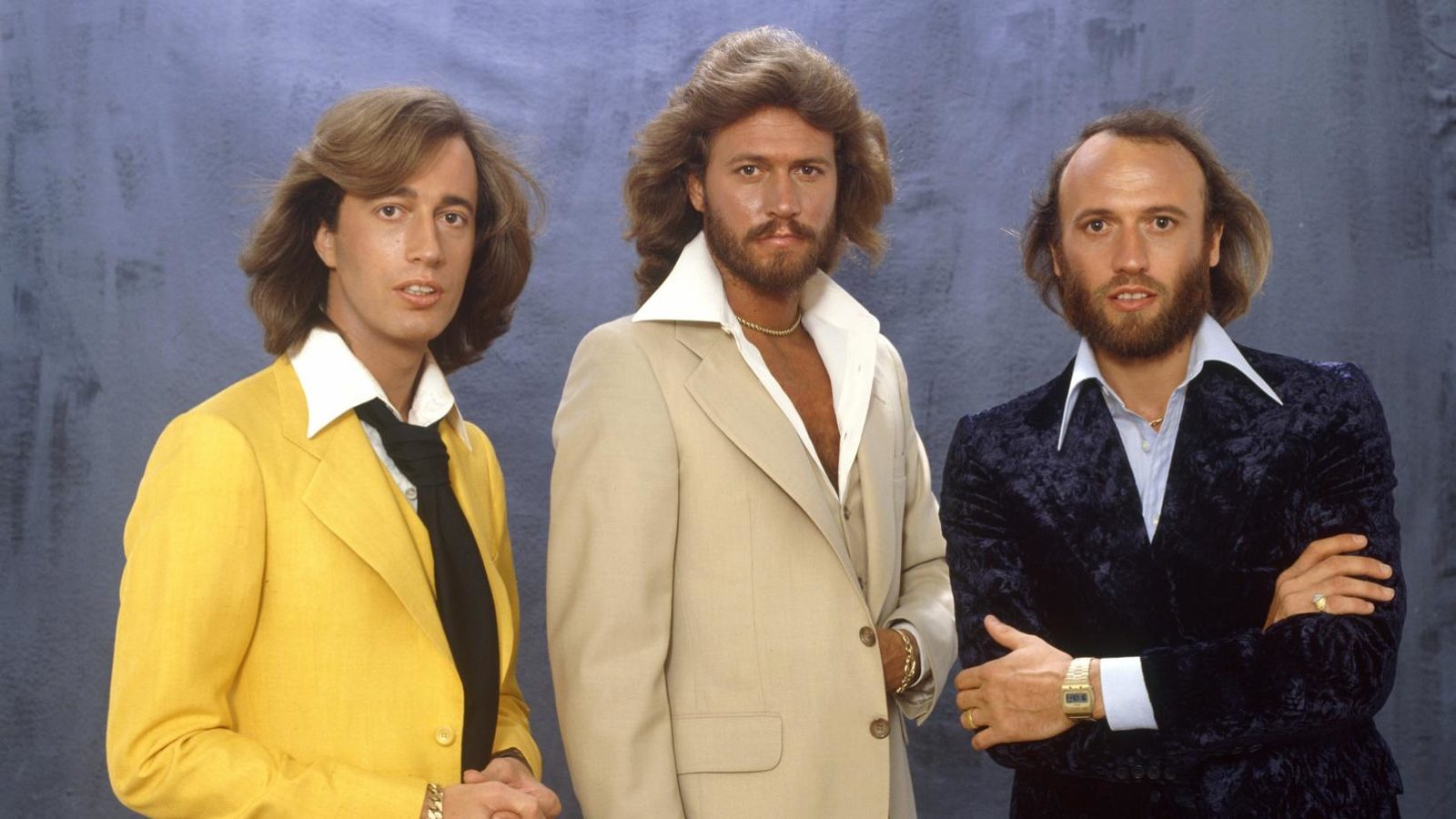
“The Three Kisses of Love” is the Bee Gees’ earliest kind of magic: a boyish doo-wop promise pressed onto a fragile Australian 45, where innocence shines brightest precisely because it won’t last.
If you want to hear the Bee Gees before the world knew what to call them—before the orchestras, before the falsetto lightning, before the myth hardened—go back to March 22, 1963. That’s the release date of their debut single in Australia, “The Battle of the Blue and the Grey”, with “The Three Kisses of Love” as its B-side, issued on Leedon.
Right away, the essential facts place this song in a very specific room and time: it was recorded around February 1963 at Festival Studios, Sydney, produced by Col Joye, and written principally by Barry Gibb. It’s only about 1:46 long—barely enough time to say goodbye—yet it already carries the seed of what would define the brothers for decades: melody as emotional truth, harmony as a kind of family signature.
Because it was a B-side, its “chart life at release” is the chart life of the single itself. Sources don’t completely agree on the exact Australian peak—one account notes a peak around No. 93, while another widely circulated discography table lists No. 98—but either way, the truth is the same: this wasn’t a hit that roared in on first contact. It was a small, early step on a local chart, the kind of modest beginning that later feels almost touching when you consider what the name “Bee Gees” would come to mean.
And yet the song lived, because the brothers performed it—lip-synced—on Australia’s Bandstand on April 24, 1963, pairing it with the A-side. That’s the image I always return to when I think about “The Three Kisses of Love”: three young voices, borrowed stage lights, television gloss, and behind it all a sincerity that’s almost disarming. Pop history loves the grand moments—the chart-toppers, the reinventions—but it’s often in these small, early performances that you can hear what’s inevitable.
Musically, “The Three Kisses of Love” is a teenager’s valentine shaped like early-’60s doo-wop—sweet, bright, and a little “cutified,” as one retrospective commentary puts it, clearly aimed at the teen market more than the old-Dixie flavor of the A-side. The chorus-like insistence of the title phrase feels like a ritual—three kisses, counted out like a charm against loneliness. There’s no cynicism here, no clever twist. It’s romance in primary colors, sung as if love were both simple and urgent… which is exactly how love feels when you’re young enough to believe it might never hurt.
The deeper meaning, though, sits under the sugar. A “three kisses” promise is the kind of promise you make when you want to keep someone close, but you don’t yet have adult language for permanence. That’s what makes the song quietly poignant now: it captures the moment before life teaches you how complicated staying can be. In later Bee Gees ballads, devotion often arrives with bruises—love remembered, love regretted, love surviving its own storms. Here, devotion is still pure wish. It doesn’t know the future yet.
Historically, the track also has that fascinating “afterlife” so many early Bee Gees recordings share. It didn’t land on a proper album immediately; instead, it circulated through Australian releases and later compilations—appearing on their early EP The Bee Gees in September 1963, and later turning up on the 1967 compilation Turn Around, Look at Us, with much of the Australian-era material gathered again decades later on collections like Brilliant from Birth. In other words, “The Three Kisses of Love” survived the way memories survive: not always in the spotlight, but kept, revisited, and eventually recognized as part of the foundation.
So if you play “The Three Kisses of Love” today, don’t listen for the finished Bee Gees. Listen for the beginning—the sound of Barry Gibb learning how to shape a hook, the sound of brotherly harmony becoming an identity, the sound of pop optimism before it learns to flinch. It’s only a minute and forty-something seconds, but it holds a whole world: Australia, 1963, a small label, a small chart position… and the first quiet proof that something enduring had already started to sing.