
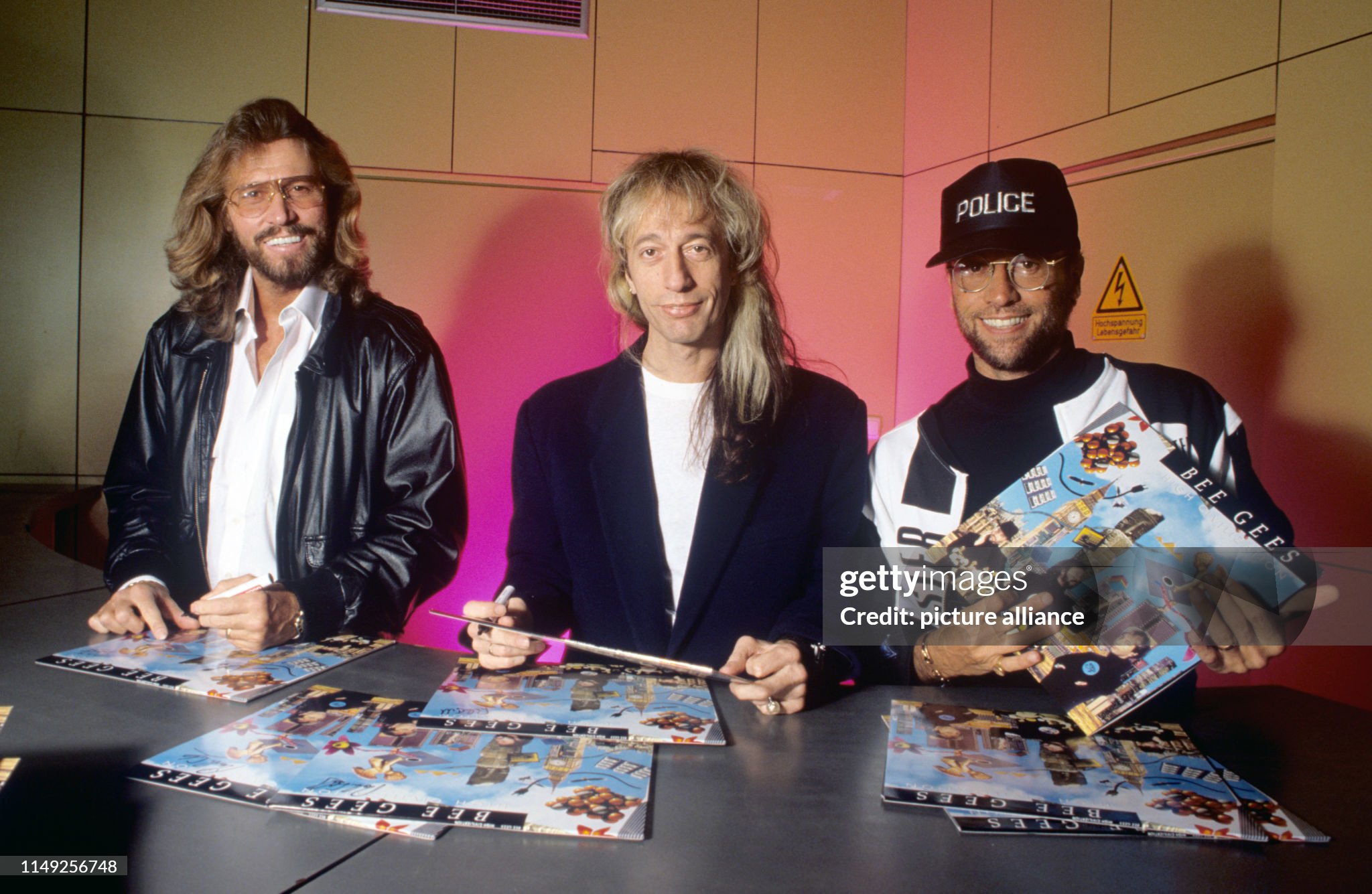
A Fragile Giant in a Shifting Era: The Bee Gees’ Tender Reckoning with Change
Released in March 1968 as a stand-alone single, “Jumbo” arrived during a crucial crossroads for the Bee Gees, just as their early baroque-pop triumphs were giving way to more expansive sonic explorations. Written by the Gibb brothers—Barry, Robin, and Maurice—and issued under the Polydor label in the UK and Atco in the US, the song was initially positioned as the A-side companion to “The Singer Sang His Song.” Yet, despite the group’s flourishing reputation following the success of their album Horizontal, “Jumbo” only reached modest chart positions—No. 25 in the UK and No. 57 in the US—falling short of the towering expectations that surrounded every Bee Gees release of that era. Still, beneath its deceptively simple exterior lies one of their most understated experiments: a meditation on emotional dislocation wrapped in a surprisingly muscular pop arrangement.
By early 1968, the Bee Gees were evolving rapidly. Having conquered audiences with lushly orchestrated melancholia like “Massachusetts” and “To Love Somebody,” they began searching for new textures and tones—music that would reach beyond the sentimental chamber pop that had defined their early British period. “Jumbo” emerged as part of that transition, embodying both continuity and rebellion. Its production favors a thicker, earthier sound: a bass-driven groove underscored by brass flourishes and rhythmic assertiveness rarely heard in their previous work. In this context, “Jumbo” feels almost like an emotional self-portrait of a band testing its boundaries, caught between youthful idealism and mature reflection.
Lyrically, “Jumbo” carries a bittersweet ambiguity—a portrait of affection tinged with confusion and loss. Whether one interprets its title character as literal or metaphorical, “Jumbo” stands as a symbol of innocence fading under the weight of adult consciousness. There’s something heartbreakingly childlike about its narrative perspective; yet, beneath that simplicity runs an undercurrent of yearning and displacement. The Bee Gees often wrote about separation—not only between lovers but between selves—and here they capture that sense of emotional distance through imagery both intimate and surreal. The song becomes less about its titular figure than about what that figure represents: memory slipping away, love receding into abstraction.
Musically, it’s a snapshot of creative restlessness. The arrangement avoids ornate orchestration in favor of punchy immediacy—a precursor to some of the more rhythmically dynamic work they would pursue later in the decade. In hindsight, one can hear faint echoes of their eventual transformation into architects of disco sophistication; yet “Jumbo” remains firmly rooted in their late-’60s sensibility, where melody was still king and sentiment reigned supreme.
Though history tends to overlook it amid grander Bee Gees milestones, “Jumbo” occupies an intriguing niche within their canon—a song that quietly signals transition while preserving the tender vulnerability that made their early material so resonant. It is a reminder that even giants can tremble when confronted with change, and sometimes it is within those tremors that true artistry reveals itself.