
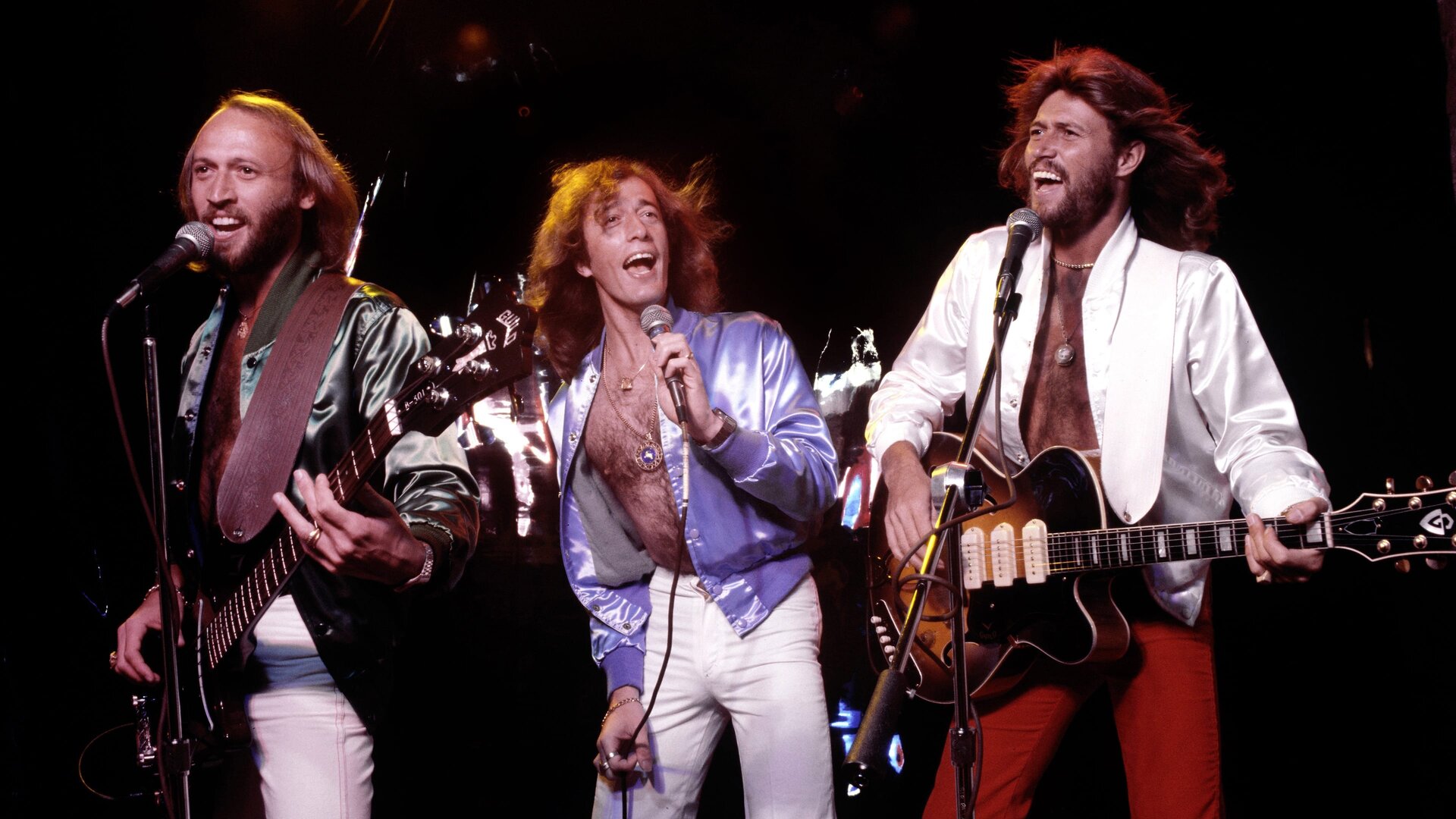
“Lonely Days (Live at the MGM Grand)” feels like a late-career victory lap that still aches—three familiar voices proving that time can deepen a song’s sorrow without dulling its shine.
If you want the headline facts up front, they’re worth savoring: “Lonely Days” was originally released on 6 November 1970 (from the album 2 Years On) and became the Bee Gees’ first U.S. Top 5 hit, climbing to No. 3 on the Billboard Hot 100 (and reaching No. 1 on Cashbox and Record World).
Then, more than a quarter-century later, the group reclaimed it onstage at the MGM Grand in Las Vegas on 14 November 1997, a performance issued on the live album and video One Night Only (album released 7 September 1998).
That’s the arc: a 1970 comeback single that helped reopen America’s ears, and a 1997 Las Vegas rendition that sounds like a band looking back with clear eyes—older, weathered, and somehow even more precise about where the hurt lives inside the harmony.
In its original studio form, “Lonely Days” arrives dressed in stately pop finery—part chamber-pop elegance, part blue-eyed soul yearning—written by Barry, Robin, and Maurice Gibb, and produced with Robert Stigwood. The lyric is simple on the surface: loneliness as a weather system that moves in and refuses to leave. But the structure tells you what the words don’t always say outright. It starts with restraint—like someone trying to keep their dignity while a private storm gathers—then it swells into that unforgettable refrain, where the desperation stops whispering and finally speaks in full voice. It’s the kind of songwriting the Bee Gees could do in their sleep and still make you feel awake: melody as confession, harmony as a hand on the shoulder.
Now jump to “Lonely Days (Live at the MGM Grand)” and the meaning changes without changing a single title. On One Night Only, the song isn’t just a memory of loneliness—it becomes a meditation on endurance. There’s something bracing about hearing a hit born in 1970 delivered in 1997 with the confidence of men who have lived long enough to understand the difference between heartbreak and the long, quiet housekeeping that comes afterward. The phrasing is more deliberate. The harmonies—always their secret weapon—carry the weight of years, as if each note has a little more history in it than before.
The setting matters, too. That MGM Grand concert was framed as something close to a farewell—the title “One Night Only” originally reflected the idea that it might be their final live performance, in part because Barry Gibb’s back arthritis had worsened enough to make continued touring uncertain. So when “Lonely Days” appears in that show, it lands as more than a catalog favorite. It feels like a statement: we’re still here; the songs still know our names.
And perhaps that’s the deepest story behind this particular live version. In 1970, “Lonely Days” signaled a renewed foothold—proof they could re-enter the American mainstream with something dramatic, heartfelt, and impeccably crafted. In 1997, the same song becomes a kind of testimony. Not to youth, not to reinvention, but to continuity—the idea that certain emotions don’t age out of us. We simply learn to carry them with more grace.
Listen closely to the live performance and you can almost hear the audience recognizing themselves in it—not just remembering where they were when the record first climbed the charts, but recognizing the feeling the song describes: those stretches of time when the room is full and yet something inside you is still walking alone. That’s the paradox the Bee Gees always understood. Their music could be lavish, even triumphant, and still leave space for the bruise. “Lonely Days (Live at the MGM Grand)” is that paradox, beautifully preserved—proof that a great pop song doesn’t merely survive decades; it gathers them.