
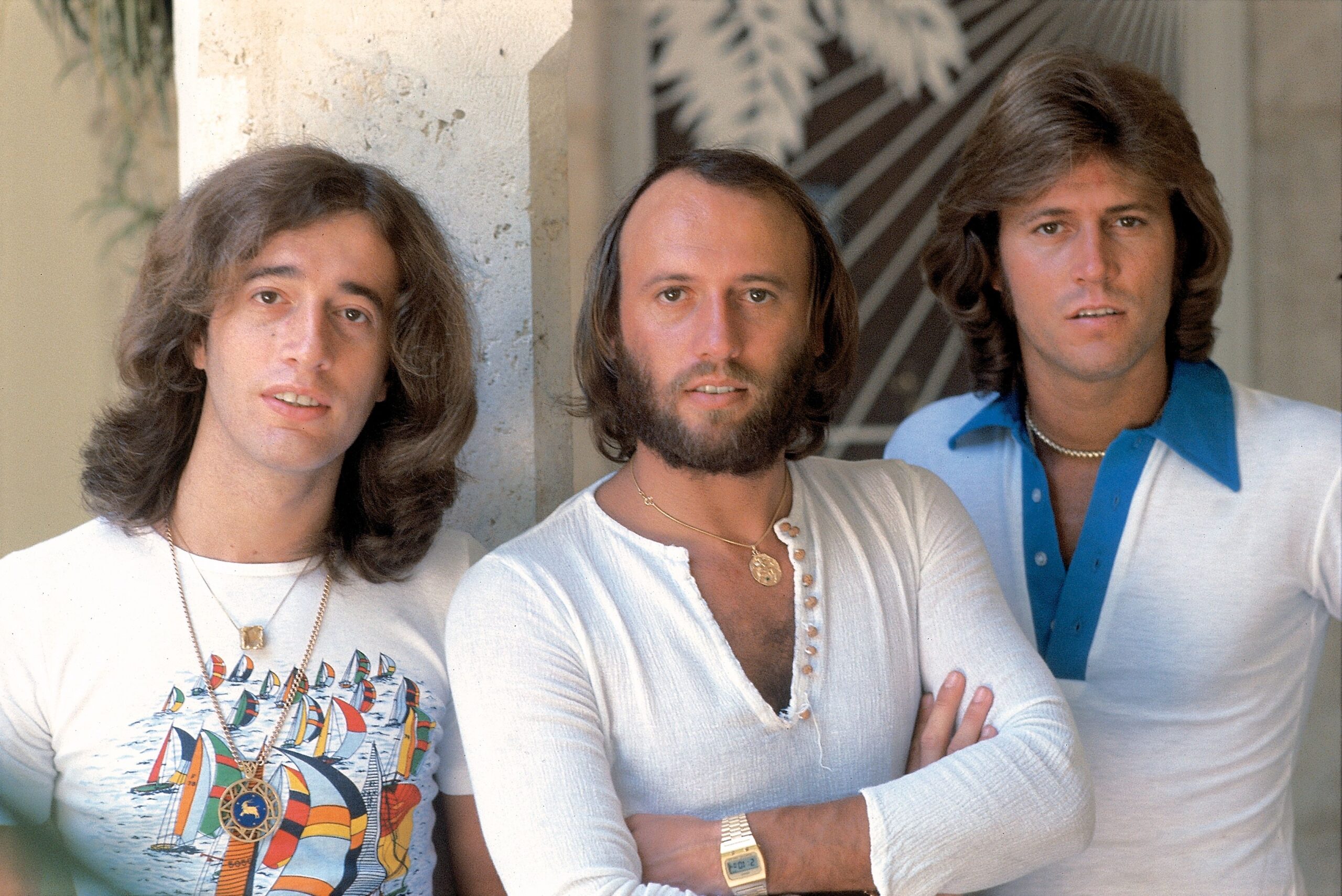
“Road to Alaska” is the Bee Gees taking a detour from symphonic balladry into a plainspoken, windswept kind of longing—like a postcard written on the move, where the miles themselves feel like medicine.
“Road to Alaska” was never positioned as a headline single, and that matters immediately for its “chart story”: it did not receive a standalone chart peak on release, because it arrived as an album track rather than a promoted 45. Instead, it lived inside the Bee Gees’ 1972 album To Whom It May Concern, released in November 1972. In the United States, the album reached No. 35, a respectable showing in a period when their relationship with the charts—especially in the UK—was far less guaranteed than the pop myths make it seem.
And yet, within that album’s carefully perfumed atmosphere—ballads and soft-focus reflections that critics would alternately praise for craft and dismiss for comfort—“Road to Alaska” is the little gust of fresh air that changes the room. The official Bee Gees discography notes it as the album’s sole country offering, describing it as “infectious,” a word that fits the song’s easy forward motion and uncluttered charm. If much of To Whom It May Concern drifts like velvet curtains in lamplight, “Road to Alaska” opens a door and lets the outdoors in.
The behind-the-scenes facts sharpen its personality. On Wikipedia’s track listing, “Road to Alaska” is credited solely to Robin Gibb as songwriter, running 2:38. That single credit is worth pausing over, because Robin’s writing voice often carried a particular kind of emotional geometry—slightly oblique, slightly aching, fond of images that feel symbolic even when they sound conversational. In that sense, “Alaska” isn’t just a destination; it’s an idea: distance as purification, escape as renewal, a road so long it might finally straighten out whatever’s tangled inside you.
There’s also a subtle poignancy in where this song sits in the Bee Gees’ timeline. The album was recorded primarily between June 1971 and April 1972, then released months later in November 1972—a span that suggests careful assembling rather than quick capture. This was the Bee Gees in their early-’70s “adult pop” era—after Trafalgar, before disco reinvention—still chasing beauty, still working with lush textures, but also searching for who, exactly, their audience was. Even Maurice Gibb later linked the album’s very title to that uncertainty. Against that question mark, “Road to Alaska” feels like a private answer: forget the marketplace for a moment—follow the road, follow the feeling, keep going until the mind quiets down.
If you want to understand the song’s meaning in emotional terms, listen for its temperament: it doesn’t sound like conquest. It sounds like relief—the relief of movement, the relief of getting out from under a heavy sky. The country flavor isn’t there to imitate Nashville; it’s there to simplify the language. Country, at its best, speaks plainly when life is complicated. And here, the Bee Gees—so often associated with ornate harmonies and dramatic crescendos—briefly choose a more work-worn vocabulary, as if admitting that sometimes the grandest thing you can do is just… leave the porch light behind and drive.
Around it, To Whom It May Concern is anchored by singles with clearer commercial intent: “Run to Me” was released as a single in July 1972, and later “Alive” followed in December 1972. Those songs carried the album’s public face. But “Road to Alaska” is the kind of track that often becomes a longtime listener’s secret favorite precisely because it wasn’t pushed. It doesn’t arrive with a marketing slogan; it arrives like a memory you didn’t know you kept—of highways at dusk, of radio glow on the dashboard, of that particular optimism that shows up only when you’ve decided to put distance between yourself and whatever hurt you.
So, if the charts didn’t christen “Road to Alaska” at the moment of release, time has done something quieter and sometimes more meaningful: it has kept the song available for rediscovery—an unassuming deep cut that reminds you how versatile the Bee Gees truly were, and how often their most human moments are hiding one track away from the obvious hits.