
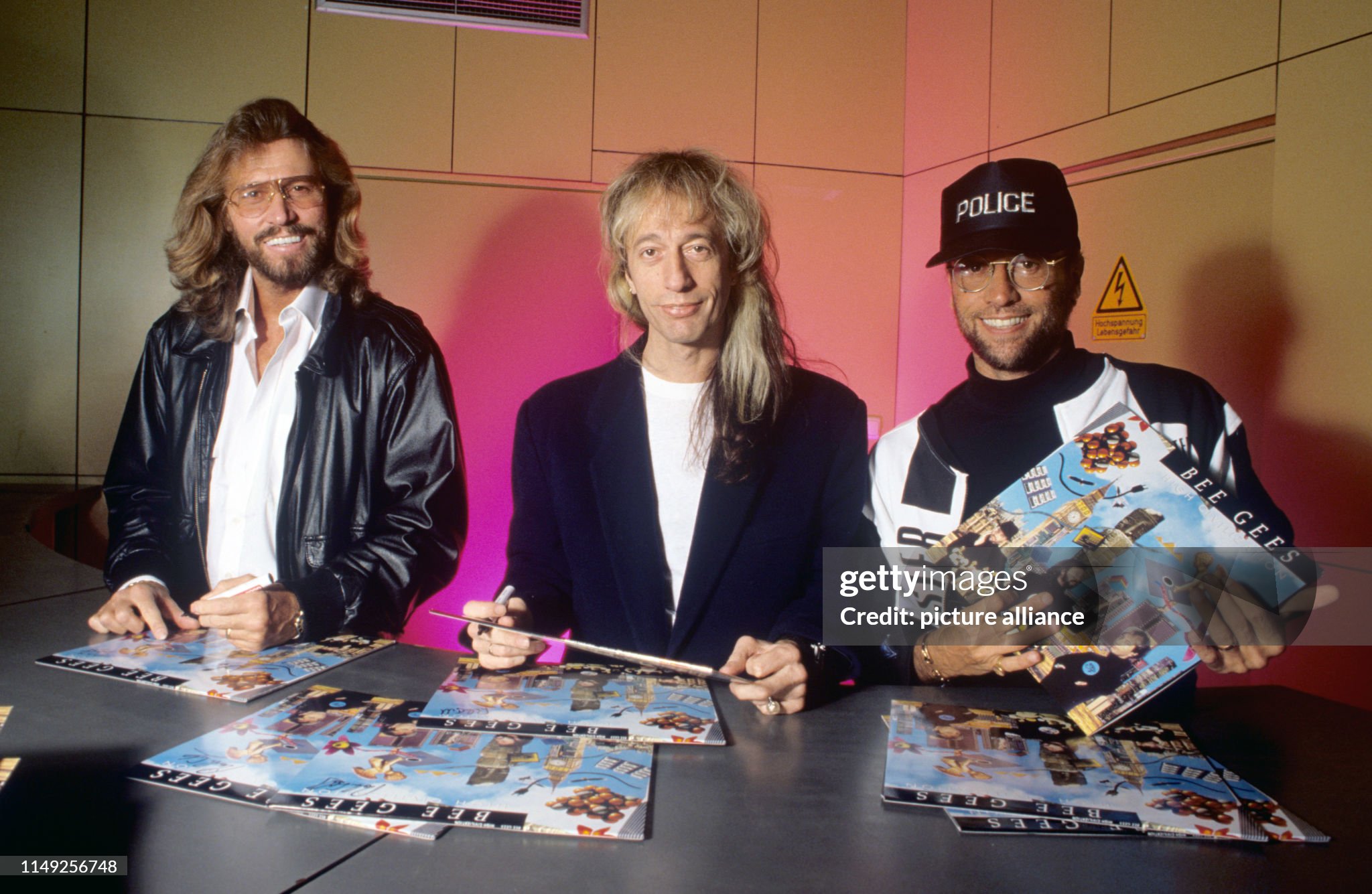
“Loose Talk Costs Lives” is the Bee Gees choosing late-career honesty over spectacle—an elegant warning that careless words can quietly destroy what love and time worked so hard to build.
Released in the twilight of a remarkable journey, “Loose Talk Costs Lives” appears as track 9 on This Is Where I Came In (released 2 April 2001), the Bee Gees’ final studio album of all-new material. The song is credited solely to Barry Gibb, with Barry also taking the lead vocal; the album’s track listing gives it a runtime of 4:19. These are important details to put at the front, because they explain the feeling: this is not the “three-brothers-in-perfect-unison” Bee Gees of radio myth so much as the mature band letting each brother’s voice and personality stand in clear light—especially in the final chapter.
Commercially, the album arrived with a dignity that suited its reflective tone. In the UK, This Is Where I Came In first entered the Official Albums Chart on 14 April 2001 at No. 6 (its peak), staying for six weeks inside the Top 100. In the United States, the album peaked at No. 16—and chart summaries that list both debut and peak show it effectively arriving at that same position. “Loose Talk Costs Lives” itself was not issued as the main chart single; the album’s principal single was the title track “This Is Where I Came In.” That matters, because it frames the song the way it’s meant to be heard: not as a radio handshake, but as an album scene—something you discover when you stop rushing and listen for what’s being confessed between the lines.
The “story behind” “Loose Talk Costs Lives” is partly a story of time—how long the Bee Gees had been carrying the weight of public fascination, misreading, and reinvention. This Is Where I Came In was recorded across 1998–2000 at Middle Ear (Miami Beach) and Area 21 (London), with the group producing alongside Peter-John Vettese. But Brennan’s meticulous session notes add a revealing, almost human detail: the song seems to have been altered after its initial recording, with Maurice adding guitar and “Chocolate” (George) Perry adding bass at a later point (late 1999 or 2000). You can hear the implication even if you don’t know the studio facts—this is a track that feels tended to, like a letter rewritten before it’s finally sent, because the message is delicate and the consequences feel real.
And the message—right there in the title—carries a cultural echo. “Loose talk costs lives” was a wartime warning long before it became a pop lyric: a blunt reminder that unguarded words can do real harm. In a modern, personal context, the phrase becomes less about military secrecy and more about emotional collateral damage—how gossip, careless confiding, and the casual cruelty of repeating what should have been kept sacred can ruin reputations, relationships, even a sense of safety. The Bee Gees had lived their lives in the pressure zone where private life becomes public property; a title like this doesn’t feel accidental. It feels like experience speaking.
Critics who listened closely often heard exactly that—maturity, not melodrama. One contemporary review singled the song out as a standout Barry ballad, calling it “beautiful” and placing it among the strongest of his long line of emotional slow-burns. Other album reviewers noted the track’s unusual flavor—“sparse,” “lounge-rock,” slightly skewed—less about big hooks and more about atmosphere, as though the band wanted you to lean in.
That’s why “Loose Talk Costs Lives” lands so deeply: it doesn’t accuse with a clenched fist. It warns with a steady voice. The arrangement feels refined—almost conversational—while Barry Gibb sings like someone who has learned (perhaps the hard way) that betrayal doesn’t always arrive with a slammed door. Sometimes it arrives as a story “everyone knows,” told by people who were never invited into the room where the truth actually lived. In that sense, the song becomes a late-career Bee Gees theme in miniature: the cost of being misunderstood, the fragility of intimacy, the ache of watching something private become currency.
He isn’t just saying that words can hurt. He’s saying they can end things—quietly, irreversibly—while the world keeps chatting as if nothing happened. And that’s the haunting elegance of this track: the Bee Gees, masters of harmony and longing, choosing in 2001 to write not about the thrill of love’s beginning, but about the discipline required to protect love once it exists. Some songs promise forever. “Loose Talk Costs Lives” asks for something harder and more realistic: discretion, loyalty, and the grace to keep certain truths safely inside the heart.