
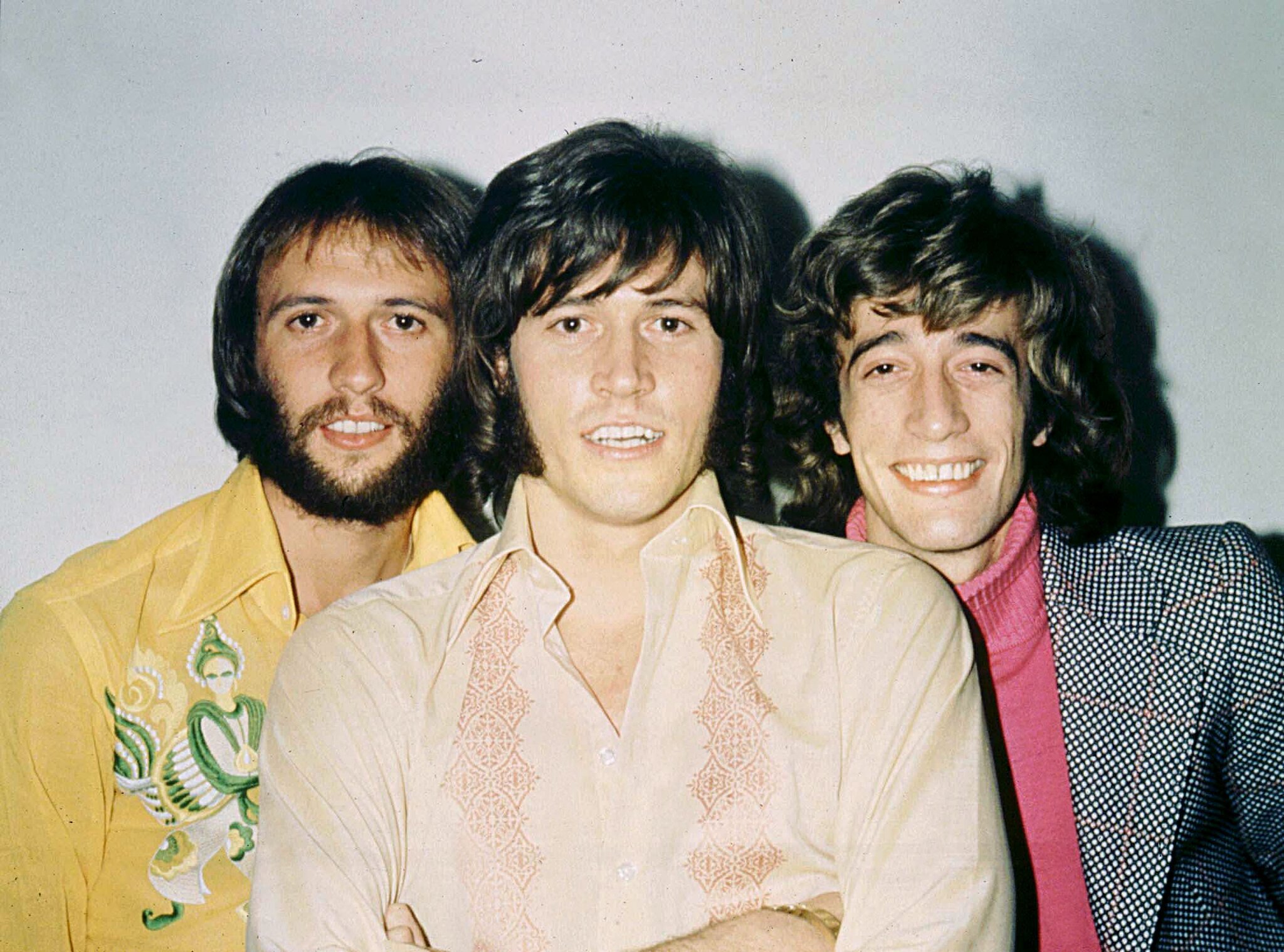
“It’s Just the Way” is one of those Bee Gees songs that never had to be a hit to matter — a small, melancholy Maurice Gibb jewel that reveals how much feeling could live in the quieter rooms of their catalog.
When the subject is “It’s Just the Way” by the Bee Gees, the most important facts should come first, because this is exactly the kind of song that can be overshadowed by the group’s bigger legends. “It’s Just the Way” appeared on the Bee Gees’ 1971 album Trafalgar, an album released in the United States in September 1971 and later in Britain in November 1971. It was written by Maurice Gibb, and it stands as one of the album’s most distinctive moments precisely because it carries that quieter Maurice signature. The album itself reached No. 34 on the Billboard 200, and although “It’s Just the Way” was not released as a single, it arrived on a record that also contained “How Can You Mend a Broken Heart,” the Bee Gees’ first No. 1 hit in the United States. In other words, the song lived inside a commercially important Bee Gees album, yet it remained one of its more private emotional corners.
That privacy is a large part of its charm. By 1971, the Bee Gees were already far more than bright pop craftsmen. They were entering one of their richest early-70s periods, writing with greater weight, greater sadness, and greater maturity. The official Bee Gees discography describes Trafalgar as a “mature, ballad-heavy collection,” and that phrase fits “It’s Just the Way” beautifully. This is not a song trying to dominate the room. It does not demand the grand spotlight of “How Can You Mend a Broken Heart.” It works in subtler fashion, with a muted emotional pull that grows stronger the longer one stays with it.
What makes the song especially valuable to serious Bee Gees listeners is that it belongs to that precious line of Maurice Gibb compositions and performances that reveal a side of the group’s artistry too often overlooked. The later Mythology box set, which devoted an entire disc to Maurice’s work, included “It’s Just the Way” among the songs chosen to represent him. Bee Gees historian Joseph Brennan also singled it out as “short but effective,” noting it during the Trafalgar sessions as Maurice’s contribution alongside bigger and more heavily discussed songs. That may sound modest, but modesty is part of the point. Maurice rarely pushed himself to the front in the way Barry and Robin so often did. When he did step forward, the result could be wonderfully intimate.
And intimate is exactly the word. Sources tied to Bee Gees cataloging and session history identify Maurice as the lead vocalist on “It’s Just the Way,” which gives the song its especially tender aura. Maurice’s voice never had the operatic ache of Robin or the bright, commanding sweep of Barry. What it had instead was warmth, inwardness, and a kind of unforced human scale. On a song like “It’s Just the Way,” those qualities matter enormously. He sounds close to the listener. He sounds as though he is not performing emotion so much as living inside it for a few minutes. That is one reason the song lingers so strongly with devoted admirers of the group’s deeper cuts.
There is also a lovely structural quality to the song’s place on Trafalgar. It appears early in the sequence, after “How Can You Mend a Broken Heart,” “Israel,” and “The Greatest Man in the World.” By the time “It’s Just the Way” arrives, the album has already established its solemn emotional weather. But instead of repeating the grandness of the earlier tracks, this song slightly narrows the frame. It feels more interior, more personal, almost like a thought passing through the album rather than a formal statement. Brennan even notes that it was the only song on the finished album with any sort of instrumental break, a small but telling detail that gives it a different texture from the surrounding material.
That difference may be why the song continues to fascinate listeners who know the Bee Gees as more than disco immortals. Long before Main Course, Children of the World, and the fevered brilliance of the late 70s, the brothers Gibb were already masters of atmosphere. “It’s Just the Way” belongs to that earlier world where the harmonies were gentler, the drama more chamber-like, the melancholy almost English in its soft gloom. Some later commentators have described the song as moody and unusually textured, and that feels right. It is not one of the group’s towering monuments. It is something more delicate: a song you discover after the hits, when you begin to love the Bee Gees not just for their fame, but for their inner rooms.
So when people return to “It’s Just the Way,” they are really returning to a truth about the Bee Gees that the loudest history sometimes forgets. This was a group of three very different brothers, and part of their greatness lay in the emotional colors each one could bring. Barry could soar, Robin could ache, and Maurice could quietly break your heart. On “It’s Just the Way,” he does exactly that. The song was never a hit single, never a chart story of its own, never one of the titles most casual listeners would name first. But that is often where the real treasures live. Heard now, it feels like a softly glowing fragment from the Bee Gees’ most reflective early-70s period — modest in scale, rich in feeling, and all the more beautiful for never insisting on its own importance.