
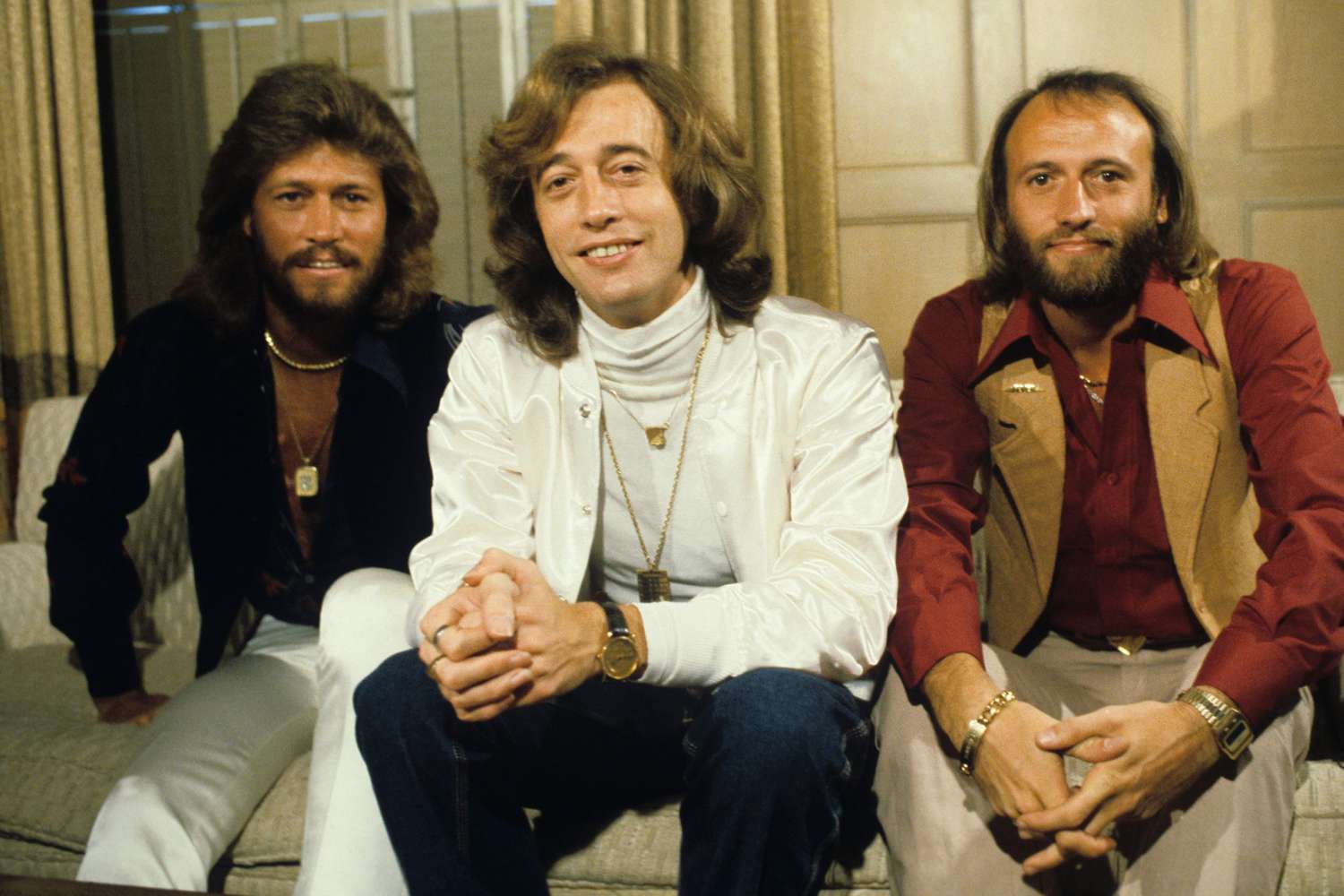
“The Lord” is the Bee Gees stepping into country-gospel clothing for a moment—less a sermon than a yearning glance toward peace, sung with the tender conviction of men who knew how to make any borrowed style feel strangely personal.
In the Bee Gees’ sprawling story, “The Lord” is one of those smaller rooms that can feel more intimate than the grand ballroom hits. It wasn’t launched as an A-side statement, and it didn’t have a chart peak of its own. Instead, it first entered the world in August 1969 as the B-side to “Don’t Forget to Remember”, and only later found its more permanent home on the 1970 album Cucumber Castle. The A-side, however, mattered hugely: “Don’t Forget to Remember” reached No. 2 on the UK Singles Chart, which means many listeners encountered “The Lord” as the quiet companion riding behind a major hit—like a second thought that sometimes lingers longer than the first.
The song itself was written by Barry Gibb and Maurice Gibb, and it’s explicitly framed as a country gospel piece, complete with a fast-picked guitar feel and lyrics that look toward Heaven, pledging belief “till death.” What makes that fascinating—almost poignant—is the way the track plays with faith as sound and language. Even Wikipedia notes the irony that none of the brothers publicly identified as Christians, suggesting they were “aping a style” rather than documenting a personal creed. Yet when you listen, it rarely feels like parody. It feels like an old American musical dialect spoken respectfully by three young men from another world—Australians in London, chasing warmth through harmony.
The timing behind “The Lord” adds a bittersweet layer. It was recorded around July 1969 at IBC Studios in London, during sessions that also produced other Cucumber Castle material. Those sessions were also the last with drummer Colin Petersen, who was fired from the band in August 1969—a detail that makes the record sound like a snapshot taken just before the frame changed. And Cucumber Castle itself is inseparable from upheaval: the album and its associated film arrived during the period when Robin Gibb was absent from the group, leaving Barry and Maurice to carry the name forward as a duo.
So what’s the “story behind” “The Lord” in the emotional sense? It’s the Bee Gees, at a crossroads, reaching for a kind of musical certainty—something plain, traditional, and unshakable—while their real lives were anything but settled. Country-gospel music, at its core, promises that beyond confusion there is order; beyond the night there is a morning. When the song pledges belief “till death,” it doesn’t have to be a literal theology to land. It can also be read as a human wish: let there be something dependable when everything else is rearranging itself.
Meaning, in Bee Gees songs, often hides inside the contrast. Here, the contrast is between the subject (faith, eternity) and the moment of creation (band fractures, personnel changes, reinvention-by-necessity). In that tension, “The Lord” becomes quietly moving. It’s not the Bee Gees as icons. It’s the Bee Gees as working musicians—listening, absorbing, trying on styles with humility—using harmony as a way to make the world feel less sharp.
And perhaps that’s why the track endures as a deep cut. It doesn’t ask to be ranked; it asks to be kept. Like a well-worn hymn you don’t even realize you remember until some late hour brings it back, “The Lord” sits there—unassuming, sincere in its own way—reminding you that even in pop music’s bright machinery, there are moments when the singers turn their faces toward something higher than applause.