
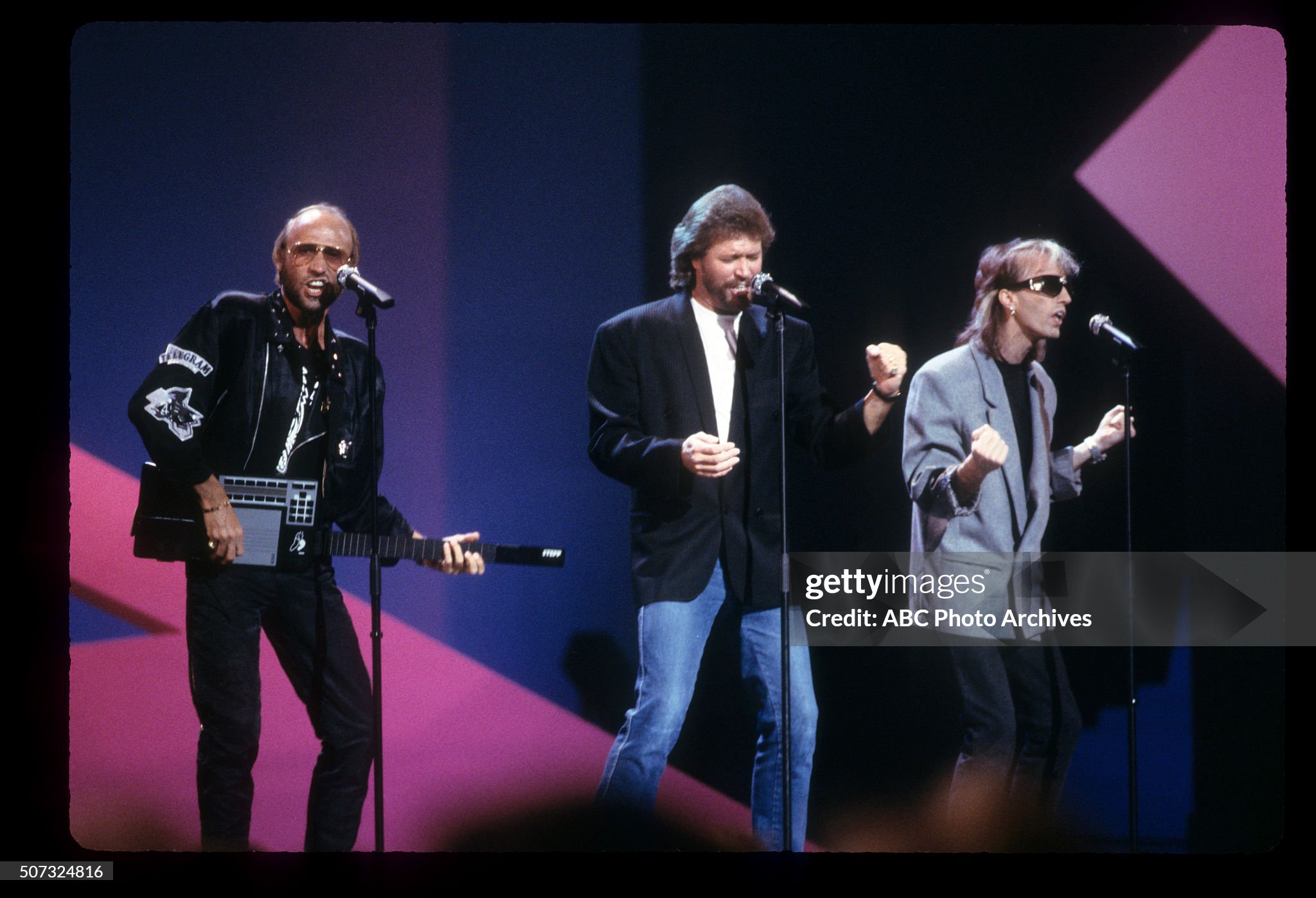
One Minute Woman catches the Bee Gees in their early, searching years, already able to turn uncertainty, desire, and youthful confusion into melody with remarkable instinct.
For many listeners, the name Bee Gees immediately brings back the elegant sadness of their late-1960s ballads or the polished brilliance of their later global hits. But songs like One Minute Woman remind us that long before the spotlight grew blindingly bright, Barry Gibb, Robin Gibb, and Maurice Gibb were building their identity one song at a time. This is one of those fascinating early recordings that may not have carried the chart power of their better-known singles, yet it offers something just as valuable: the sound of a major songwriting force taking shape in real time.
In terms of chart history, One Minute Woman is not generally associated with a notable U.K. or U.S. chart placing, and it does not belong to the short list of headline Bee Gees hits that dominated radio in their breakthrough years. That is important to say plainly, because its significance lies elsewhere. This is not remembered as a blockbuster single. It endures instead as a deeper catalog gem from the group’s formative period, a recording admired by devoted listeners who enjoy tracing how the Gibbs developed their emotional vocabulary long before the world fully caught up with them.
What makes the song so compelling is its atmosphere of movement and instability. Even the title, One Minute Woman, suggests somebody hard to hold, hard to predict, almost impossible to define. It feels like a portrait of love seen through quick changes of mood, a relationship understood not through certainty but through flashes. That idea fits the young Bee Gees beautifully. From the beginning, they were drawn to emotional contradictions: tenderness mixed with doubt, longing paired with confusion, beauty shaped out of tension. This song belongs to that tradition. It is leaner and less grand than some of the masterpieces that would come later, but the instinct is already there.
The story behind One Minute Woman is especially interesting because it reflects the brothers’ early creative phase, when they were still emerging from their pre-fame years and refining the blend of beat-pop melody, close harmony, and melancholy observation that would soon become unmistakably their own. Rather than being attached to a dramatic public episode or a huge chart event, the song’s backstory is really the story of development. It comes from that period when the Bee Gees were writing constantly, testing different sounds, and proving that they were far more than just a vocal group with pretty harmonies. They were craftsmen, already listening closely to the emotional texture inside ordinary romantic situations.
Musically, One Minute Woman has the feel of a young band reaching beyond simple pop structure. There is a quickness to it, a sense that the melody is chasing a mood that keeps slipping away. That quality suits the lyric idea perfectly. The song does not simply describe romance; it dramatizes the unease of trying to understand someone whose emotional rhythm changes from moment to moment. In lesser hands, that sort of theme could feel shallow or merely clever. With the Bee Gees, even in an early recording, it becomes something more reflective. You can hear their sensitivity to emotional shades, their ability to make fleeting feelings sound strangely permanent.
It is also worth appreciating how songs like this help complete the larger picture of the Bee Gees. The popular memory often divides their career into eras: the gifted young harmonists, the ornate late-1960s writers, the mature balladeers, the makers of era-defining rhythm records. All of that is true, but a song like One Minute Woman sits in the middle of the origin story and shows the threads being tied together. The melodic intelligence is there. The gift for character sketches is there. The desire to turn a private emotional puzzle into something singable is there. When heard now, the song feels less like a minor curio and more like evidence.
There is a special nostalgia in early Bee Gees recordings because they preserve not just youth, but ambition before polish fully arrived. One Minute Woman carries that feeling. It is the sound of talented young writers noticing that love can be charming and bewildering in the same breath. It does not need grand production or a famous chart number to leave an impression. Its charm comes from its honesty and from the unmistakable sense that the Gibbs were already hearing deeper emotional colors than many of their peers.
In the end, the meaning of One Minute Woman may be simpler and more touching than any mythology we might try to build around it. It is about instability, attraction, and the small bewilderments of affection. But beyond that, it is also about emergence. It lets us hear the Bee Gees before the full legend was formed, already writing with heart, discipline, and a gift for melodic memory. For listeners who enjoy the hidden rooms in a great catalog, this song offers one of those rare pleasures: not just a forgotten track, but a glimpse of becoming.