
“Kids’ Game” is innocence colliding with fate—where childhood dares and street-corner bravado quietly foreshadow the lifelong damage that follows.
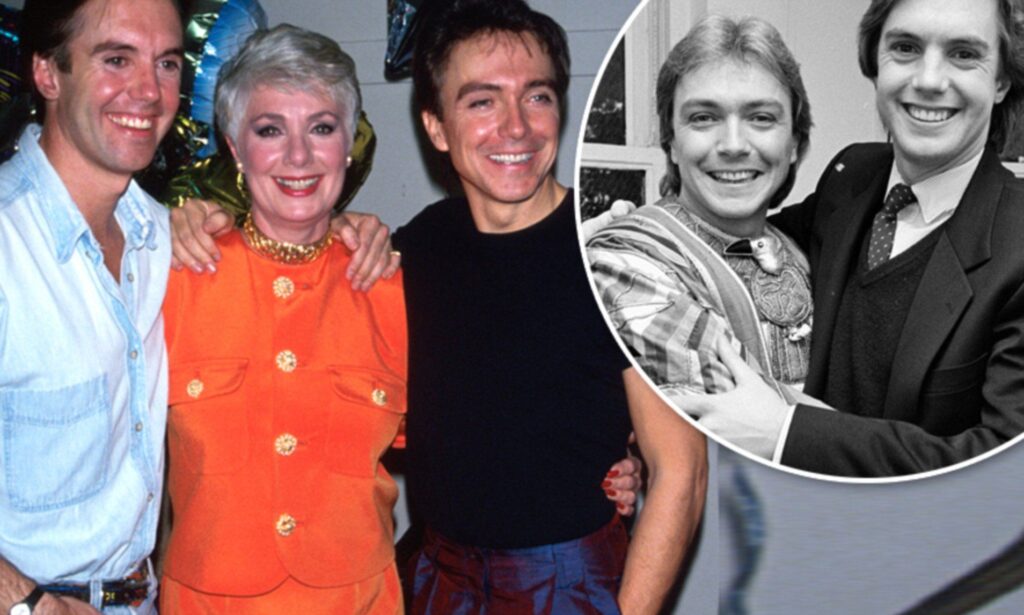
In the world of pop nostalgia, it’s easy to file David Cassidy away under sunlit choruses and television-era charm. But “Kids’ Game” asks you to remember another side of him: the stage actor, inhabiting a story where childhood isn’t a safe place—it’s the first battlefield. This song isn’t a lost Partridge Family cut at all. It comes from Willy Russell’s musical Blood Brothers, preserved on the 1995 studio cast album Blood Brothers: The International Recording (a cast recording featuring David Cassidy, Shaun Cassidy, and Petula Clark).
That context matters, because the song’s meaning is inseparable from the show’s central wound. Blood Brothers is built on the cruel irony of two twins separated at birth, raised in different social worlds, and slowly pulled toward tragedy by forces they never chose. The “kids’ game” in the title is not merely playground fun—it’s the illusion of control children cling to, before life teaches them how little control anyone really has. And when David Cassidy sings within that framework, the sweetness people associate with his earlier fame becomes something more complicated: a familiar voice now carrying a darker story.
On recordings and streaming credits, “Kids’ Game” is performed by David Cassidy alongside Jacinta Whyte, Joe Young, and the company—an ensemble feel that tells you it’s a scene, not a standalone pop statement. It’s theatre music: character-driven, narrative-bound, emotionally functional. It moves the plot, yes—but more than that, it stains the air. Even if you don’t know every twist of the story, you can sense the emotional direction: childhood is being remembered, and already it’s being mourned.
If you’re looking for a “chart position at debut,” the honest answer is that “Kids’ Game” was not released as a pop single with a Billboard-style chart run. Its public life is tied to the cast album format, where success is measured less by Top 40 rankings than by longevity—by the way a show keeps returning to the stage, and a recording keeps finding listeners long after the curtain falls. The cast recording itself is documented simply as a 1995 release, with different sources listing different label/distribution details (for example Relativity Records in one summary, and First Night Records attached to releases and digital distribution in others). So the safest truth is: it belongs to 1995, to the cast-recording world, and it wasn’t built for the singles charts.
The “behind the song” story becomes even more poignant when you look at the show’s endurance. Blood Brothers became one of the long-running landmarks of modern British musical theatre, moving to London’s Phoenix Theatre in 1991 and continuing there until 2012—a span that tells you how deeply its themes of class, family, and fate resonated with audiences. A song like “Kids’ Game” lives inside that resonance: it’s one of the moments that helps explain why the show hurts. Because it reminds us that the tragedies we call “adult” often begin as childish rituals—games, dares, little performances of toughness—before anyone understands what they are rehearsing for.
And the title itself is quietly devastating. A “kids’ game” sounds harmless, almost tender—something you’d expect to fade with dusk and be forgotten by morning. But Russell’s writing often thrives on that contrast: the ordinary phrase that later reveals its teeth. In the story’s universe, the innocence of the word “game” becomes a kind of heartbreak—because the characters are playing at life before life plays back, harder, louder, and without mercy.
Hearing David Cassidy here can feel like meeting an old acquaintance in an unfamiliar street. The voice is recognizable, but the emotional weather has changed. Instead of the bright certainty of teen-pop narrative, there is dramatic tension, the sense of consequences approaching. It’s a reminder—one that time teaches gently but firmly—that some voices are larger than their most famous era. Sometimes they return to you in a new form, asking you to listen differently.
So “Kids’ Game” endures as a small, dramatic hinge: a scene-song that carries childhood on its back, not as nostalgia, but as prophecy. It doesn’t promise you a happy ending. It simply shows you the first footprints leading toward one—and trusts you to feel, in your own chest, how early the heart begins keeping score.