
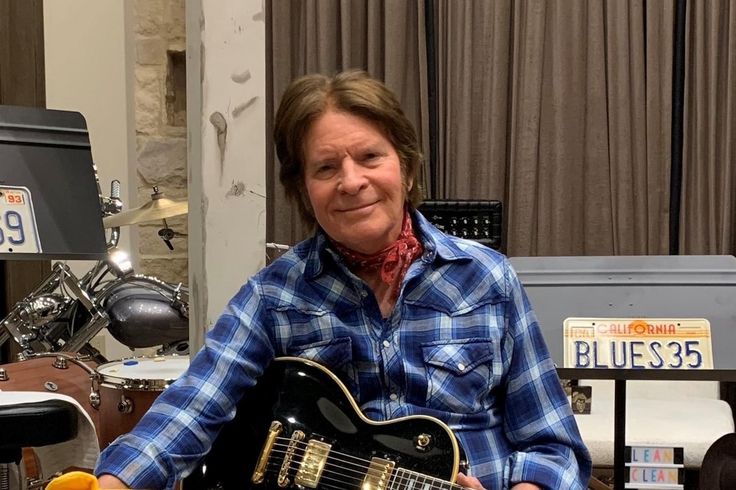
A kitchen-table blues about belonging—“Rhubarb Pie” finds its sweetness not in romance or rebellion, but in the ordinary comfort of home, memory, and simple pleasures.
“Rhubarb Pie” arrives as one of the most disarming moments on Deja Vu All Over Again, released September 21, 2004. It’s an album that did far better than many people remember at first glance—peaking at No. 23 on the US Billboard 200 and even hitting No. 1 in Sweden. In that broader comeback context, “Rhubarb Pie” sits quietly as track eight, clocking in at 3:17, and it offers something you can almost taste: a small, warm story that feels like it’s been passed down rather than manufactured.
The crucial facts are wonderfully plain—and they’re part of the charm. The song is written and composed by Fogerty, and the recording’s texture is built from a band that sounds like it’s smiling while it plays: Dean Parks on slide guitar, Viktor Krauss on bass, Kenny Aronoff on drums, and—most memorably—Aaron Plunkett credited on spoons. That last detail isn’t a gimmick. It’s a personality trait. It tells you, right there, that this track isn’t chasing “big.” It’s chasing real.
And that’s the secret of why “Rhubarb Pie” lingers: it refuses to pretend that meaning only lives in grand themes. In a world where rock songs often posture as sermons—about politics, about trauma, about destiny—here’s a tune that’s content to celebrate a humble slice of life. Yet the humility isn’t shallow. It’s the opposite: it’s a kind of hard-won wisdom, the understanding that the best memories rarely announce themselves as “important” while they’re happening. They happen in kitchens. On porches. In the smell of fruit and sugar, in the sound of someone moving around the house while you’re still half-lost in your own thoughts.
Listening closely, you can hear Fogerty’s lifelong gift at work—the way he can turn Americana into something physical. Even when the subject is domestic, he treats it like a landscape: the slide guitar glides like sunlight along a countertop; the rhythm snaps with that back-porch looseness; the spoons tick like a small clock measuring out joy. It’s playful, sure—but it’s also quietly protective, like he’s building a little shelter out of sound.
A critic at PopMatters put it bluntly (and affectionately): “Rhubarb Pie” basically celebrates rhubarb pie, and does it with slide guitar and spoons—“old-school blues” without pretension. That observation is more profound than it looks. “Without pretension” is not the same as “without purpose.” Sometimes a song’s purpose is to remind you that you’re allowed to be comforted. That you’re allowed to love what’s simple. That not every feeling has to be explained in heavy language to deserve respect.
Placed where it is on the album, the track also acts like a deep breath. Rolling Stone noted how tightly paced the album is—about thirty-four minutes—and in a record that moves briskly, “Rhubarb Pie” feels like the moment the pace slows just enough for the room to come into focus. It’s as if the bigger world—noise, headlines, arguments—stays outside the door for three minutes, and what you’re left with is the private geography of contentment.
So the meaning of “Rhubarb Pie” isn’t hidden in symbolism so much as it’s baked right into the premise: home isn’t only a place you return to; it’s a feeling you can still summon, even when time has changed everything around you. Sometimes that feeling comes from love, sometimes from faith, sometimes from memory—and sometimes, beautifully, it comes from the humble ritual of making something sweet and sharing it. In Fogerty’s hands, that sweetness doesn’t feel childish. It feels earned. It feels like someone who’s traveled far enough to know exactly what’s worth coming back for.