
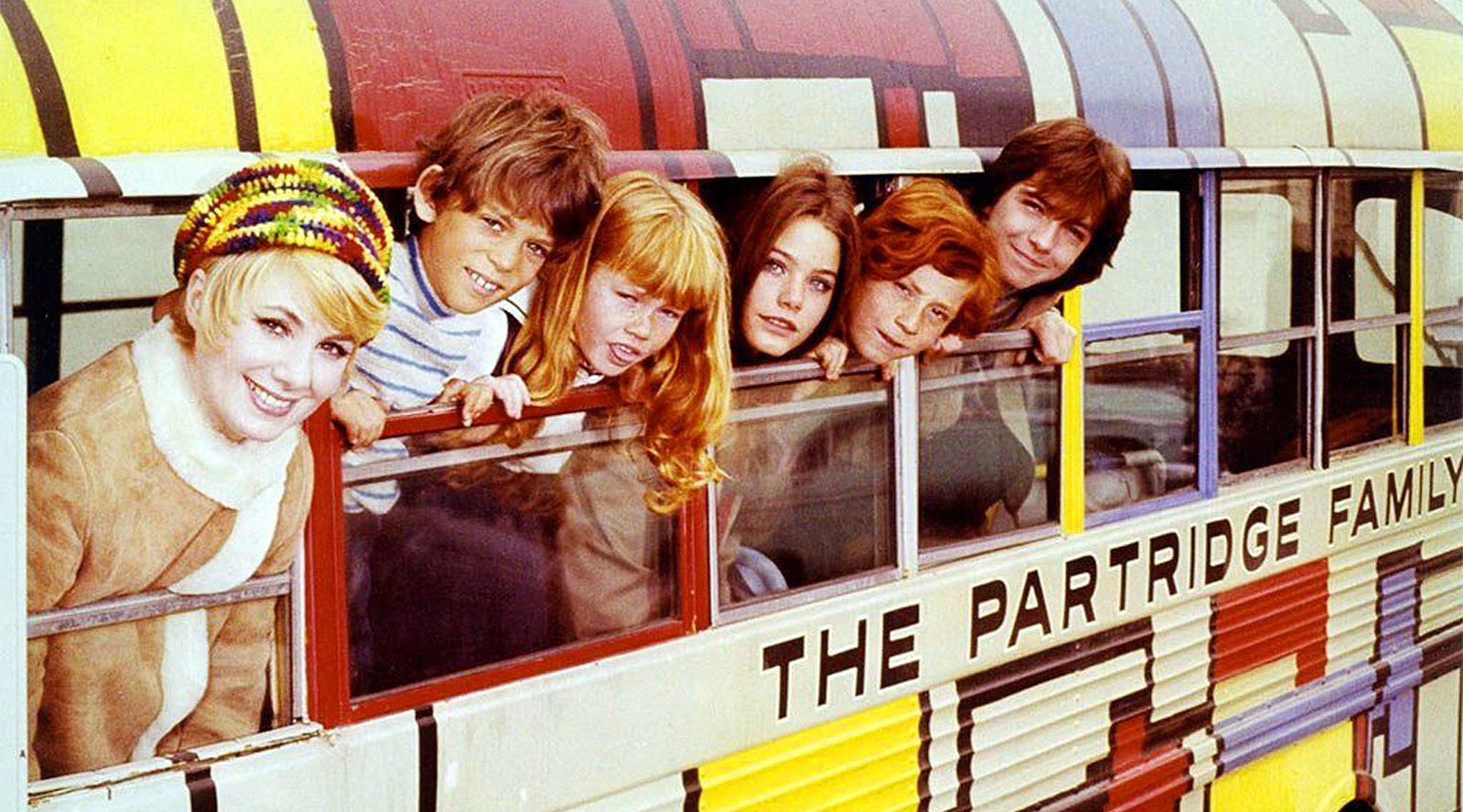
Money Money may sound like a light pop title, but The Partridge Family turned it into something gentler and more revealing: a bright early-70s song about wanting freedom, color, and just a little more life in your pocket.
In pure chart terms, Money Money was not one of the giant Billboard milestones that defined The Partridge Family at their commercial peak. It is remembered more as a catalog pleasure from the group’s early-1970s recording run than as a towering Hot 100 event, and that is part of its charm. By the time listeners discovered songs like this beyond the blockbuster titles, the group had already stamped itself into pop memory through I Think I Love You, which reached No. 1 on the Billboard Hot 100 in 1970, and later hits such as Doesn’t Somebody Want to Be Wanted and I’ll Meet You Halfway, both of which reinforced how strong the formula really was. Against that bright chart history, Money Money feels like the kind of song that reveals the craft hiding just behind the phenomenon.
That phenomenon, of course, was unusual from the start. The Partridge Family was a television family band, but the records were far more polished than many casual viewers realized. Under producer Wes Farrell, with first-rate Los Angeles studio players and the unmistakable lead voice of David Cassidy, the act regularly delivered records that were tighter, sweeter, and more musically durable than the word bubblegum usually suggests. That is why a song like Money Money deserves a closer listen. It sits in that sweet spot where television fantasy, radio craft, and genuine pop instinct all meet. What could have been disposable instead carries a little wit, a little ache, and a very human sense of longing.
The title makes the song sound simple, even mischievous, and in one sense it is. Like much of the best early-70s pop, it takes an everyday desire and turns it into rhythm, repetition, and lift. But the deeper appeal of Money Money is that it does not really play like a cold song about greed. It sounds more like a song about motion. In that era, money often meant independence, a ride across town, a new shirt for Saturday night, a date, a record, a little space to imagine a different version of yourself. The song catches that feeling beautifully. It understands that wanting money is often another way of saying you want access to possibility.
That is where David Cassidy mattered so much. He could sing bright material without making it feel empty. His phrasing gave even the lighter songs a sense of personality, as if the smile at the center of the record belonged to a real person rather than a pop assembly line. On Money Money, that quality helps the song breathe. There is energy in it, certainly, but there is also a youthful impatience that feels recognizable even now. You can hear the tug between innocence and appetite, between daydream and marketplace. That balance is one reason the record survives beyond novelty. It still sounds like somebody reaching for something just out of frame.
Another reason the song lingers is the larger cultural world around it. The early 1970s were full of bright, compact pop records that translated ordinary life into melodies people could carry with them. The Partridge Family specialized in that kind of translation. They were never trying to sound solemn or self-important. Their gift was to take familiar emotions and dress them in arrangements that felt immediate and openhearted. Money Money belongs to that tradition. It turns the language of everyday wanting into something catchy enough for radio, but warm enough to outlast the moment. Many listeners return to it not because it was the loudest song in the catalog, but because it preserves a whole mood from that period: optimism mixed with restlessness, polish mixed with sincerity.
The backstory of the group also gives the song an extra layer. There was always a curious contrast between the made-for-television image and the real musical workmanship underneath. Some listeners came to the records expecting only a lovable sitcom extension. Then the hooks would land, the harmonies would settle in, and the records would prove sturdier than expected. Money Money benefits from that same surprise. It is one of those songs that can seem light at first encounter and then slowly reveal how expertly it was built. The arrangement is clean, the performance is nimble, and the emotional message is deceptively relatable. Most people have known that feeling of believing one small missing thing could make the whole week sparkle.
What, then, is the meaning of Money Money? At heart, it is a song about desire in its most approachable form. Not grand ambition, not philosophical argument, just the very old hope that a little more means life might open a little wider. That is why the song still carries a pulse of recognition. Beneath its glossy surface, it understands the small economics of youth and hope: a few dollars can stand for freedom, confidence, romance, or the chance to step into the world feeling ready. The Partridge Family wrapped that idea in easy melody, and by doing so, they made it memorable.
In the end, Money Money may never be the first title named when people list the essential hits of The Partridge Family. Yet that is exactly why it remains worth revisiting. The major smashes announce themselves immediately; songs like this reward affection, memory, and a second listen. Heard today, it sounds less like a minor footnote and more like a compact reminder of what this group could do so well: take everyday yearning, brighten it with melody, and leave behind a record that still glows with the hopeful sheen of its time.