
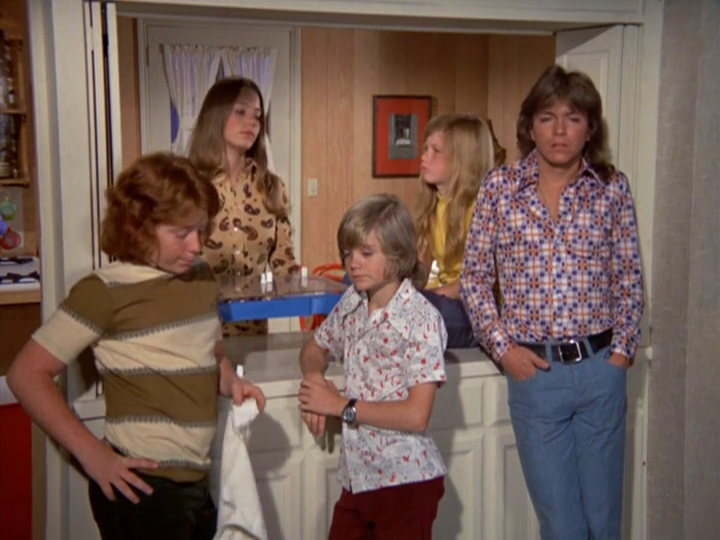
Let Your Love Go is a song about surrendering to feeling before the moment slips away, and in the hands of The Partridge Family it becomes a bright, graceful little time capsule of early-1970s pop optimism.
Some songs arrive like headlines, while others stay with us like a familiar afternoon light. Let Your Love Go belongs to the second kind. Though it is not usually the first title mentioned when people remember The Partridge Family, it carries a charm that has only grown more vivid with time. Written by David Gates and first recorded by Bread, the song reached No. 28 on the Billboard Hot 100 in 1970 in its original version. When The Partridge Family took it into their own world, the result was not simply a cover. It became something softer, sunnier, and more inviting, shaped for the golden hum of AM radio and for listeners who loved melody without complication.
That small piece of history matters, because it tells us exactly why the song feels so special. David Gates had a gift for writing melodies that moved with ease while carrying a quiet emotional pull underneath. In the Bread version, Let Your Love Go has a restless, rhythmic energy, almost as if the song is urging itself forward. The Partridge Family reading keeps the heartbeat of the composition, but it leans more fully into warmth. Instead of sounding urgent, it sounds encouraging. Instead of pushing, it opens up. That change in tone is the secret of the performance.
It also helps explain why the song fits The Partridge Family so naturally. Beneath the television premise and the cheerful family-band image, the group’s recordings were often crafted with real pop intelligence. Producer Wes Farrell understood how to package brightness without making it feel empty, and the records were supported by top Los Angeles studio professionals who gave them polish, drive, and melodic balance. The lead vocal presence most listeners immediately connect with is David Cassidy, and that voice is central to why this version lingers. Cassidy had a rare ability to sound youthful and assured at the same time. On a song like Let Your Love Go, he never oversings the message. He lets the melody carry the emotion, which is exactly the right instinct for a song built on invitation rather than drama.
Lyrically, the song is simple, but that simplicity is part of its lasting appeal. At its heart, Let Your Love Go is about stepping past hesitation. It asks the listener, and perhaps the beloved within the song, not to hold back what is already there. That idea has always given pop music some of its most enduring moments. The language is direct, but the feeling is universal: there are times in life when affection is not meant to be analyzed endlessly, only trusted. In the early 1970s, when so much pop found its strength in clean hooks and emotional clarity, that message felt perfectly at home.
What makes the Partridge Family version especially memorable is the way it preserves innocence without sounding naive. There is motion in the arrangement, but also air. The rhythm moves forward easily, the harmonies brighten the edges, and the whole recording seems to smile without trying too hard. Many songs from that era were designed to be instantly likable, but not all of them kept their freshness. This one does, because its pleasure comes from craftsmanship as much as style. The chorus lifts in exactly the right way, and the melodic structure gives the song a natural bounce that still feels rewarding decades later.
It is also worth noting that Let Your Love Go was never among the very biggest signature chart smashes associated with The Partridge Family. That may be one reason it has aged so gracefully. Without the burden of overexposure, it now plays like a rediscovery. Listeners who return to the group beyond the obvious hits often find a deeper picture: this was not just a television phenomenon, but a remarkably efficient pop machine capable of delivering bright, emotionally appealing records week after week. Songs like Let Your Love Go remind us that the catalog still holds corners of real delight.
There is something deeply evocative about hearing it now. The sound immediately calls up a period when pop music could be hopeful, tuneful, and unguarded without apology. It recalls transistor radios, sunlit rooms, after-school television, and that distinctly American blend of polish and innocence that defined so much early-1970s popular culture. Yet nostalgia alone does not explain the song’s endurance. It lasts because the emotional idea is timeless. We all recognize the moment the song describes: the pause before someone finally lets affection show, the suspended second before reserve turns into openness.
In that sense, Let Your Love Go is more than a pleasant period piece. It is a reminder of how well-made pop can hold an emotional truth in a very small space. The Partridge Family did not need to reinvent the song completely to make it their own. They simply tilted it toward light, gave it a friendlier glow, and trusted the melody to do the rest. That is why the record still feels so easy to love. It asks for very little from the listener, only openness, and then rewards that openness with three minutes of pure melodic generosity.
For those who know The Partridge Family mainly through the biggest hits, this track offers a lovely second glance. And for those who already cherish the group’s deeper cuts, it confirms what they have long understood: sometimes the songs living just outside the spotlight tell the richest story. Let Your Love Go may have begun with David Gates and Bread, but in the world of The Partridge Family, it found another life entirely—lighter in touch, sweeter in mood, and still glowing all these years later.