
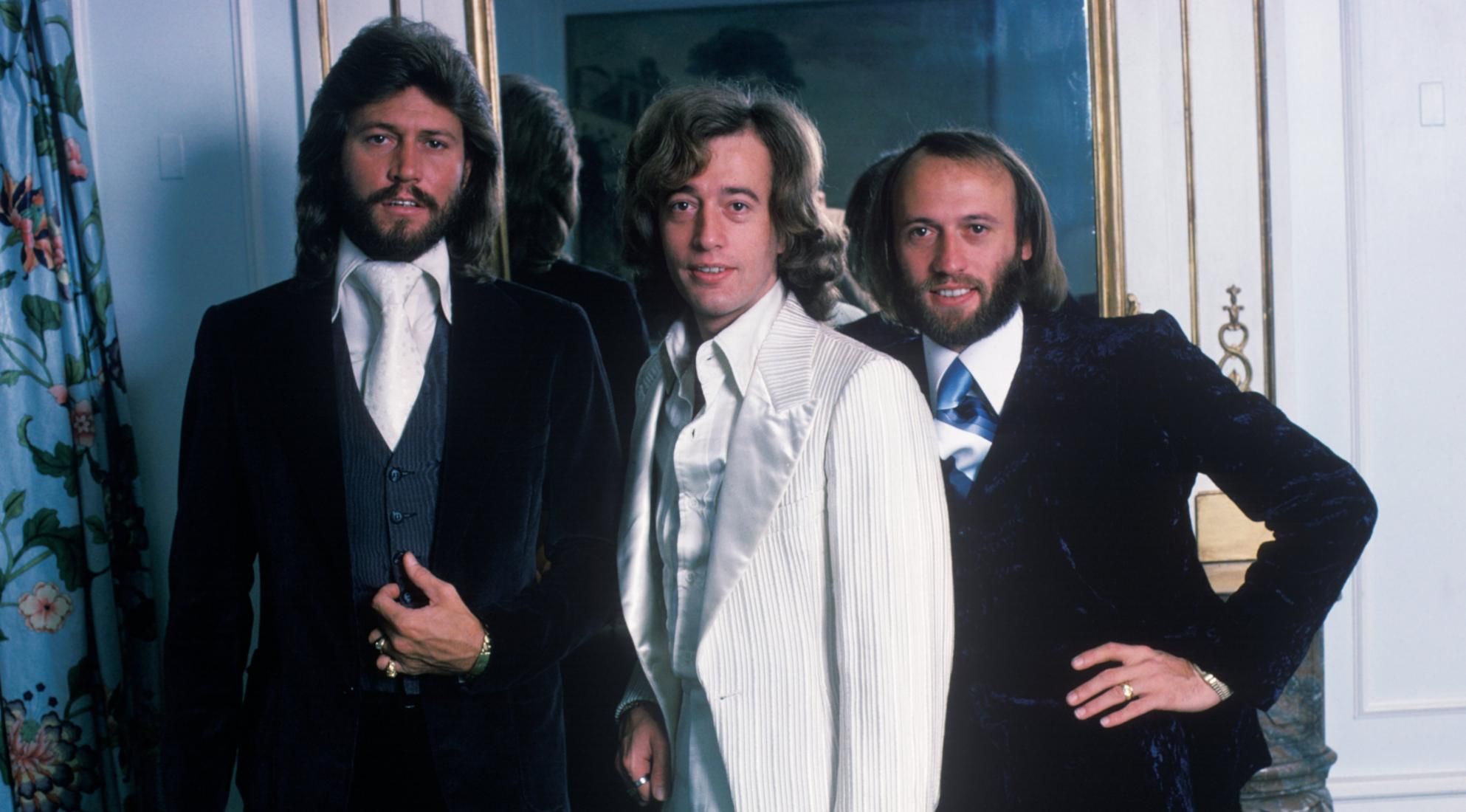
“I Can’t See Nobody” hurts in a different way from the Bee Gees’ grander hits—it is smaller, darker, and more exposed, the sound of young hearts discovering that loneliness can arrive all at once and change the color of the world.
Some Bee Gees songs were built to soar. “I Can’t See Nobody” feels built to ache. That is why true fans remember it so vividly. Released in 1967 as the B-side to “New York Mining Disaster 1941” and also included on Bee Gees’ 1st, it was never one of the group’s towering chart monsters. In the United States, it only reached No. 128 on Billboard’s Bubbling Under the Hot 100, while Bee Gees’ 1st itself did far better, peaking at No. 7 on Billboard’s Pop Albums chart and No. 8 on the UK Albums Chart. That contrast tells its own quiet story: the song lived more as a wound carried inside an album than as a big public triumph.
And perhaps that is exactly why it stays with people. “I Can’t See Nobody” is not polished in the way later Bee Gees classics would be. It shows a rawer side—young, bruised, and almost startled by its own despair. The title says everything with remarkable economy. This is not merely sadness. It is emotional isolation so sudden that the whole outside world seems to blur. The song’s power comes from that feeling of private collapse, the moment after love has altered you so completely that ordinary life no longer looks ordinary. Even passing faces, familiar streets, daylight itself—everything seems dimmed. That is a very old pain, but the Bee Gees caught it here with uncommon tenderness.
One of the most valuable details behind the song is that it was written by Barry and Robin Gibb in 1966, toward the end of the family’s time in Australia, before the group’s international breakthrough fully took hold. Robin later said it had been written in Brisbane, and the first version was not the one ultimately released. That matters because the song sounds like a threshold piece: the Bee Gees standing between one life and another, carrying with them all the sensitivity and uncertainty that would soon help define their early work. It is a song born just before the world knew their name, and one can hear that fragile in-between state in its sadness.
The second detail worth keeping close is the voice at its center. On the Bee Gees’ 1st sessions in March 1967, Robin Gibb took the lead on the verses, with all three brothers joining on the chorus. That was no small thing. Robin’s high, tremulous delivery gives the song much of its haunted character. He does not sing it like someone performing heartbreak for effect. He sings it as if heartbreak has made him newly solitary, newly inward, newly unable to trust the brightness around him. The result is one of the earliest and clearest examples of how the Bee Gees could turn sibling harmony into something far more vulnerable than mere prettiness.
That is why “I Can’t See Nobody” lingers long after flashier songs have had their moment. It belongs to the Bee Gees’ first great burst of melancholy pop, when they were still shaping the emotional language that would later make their ballads so unforgettable. But this one remains especially moving because it is less assured, less composed, more wounded. It does not seem to have learned the art of self-protection yet. It simply stands there, hurt and open, and lets the feeling speak. For listeners who love the Bee Gees not only for the hits but for the shadows behind them, that kind of honesty is impossible to forget.