
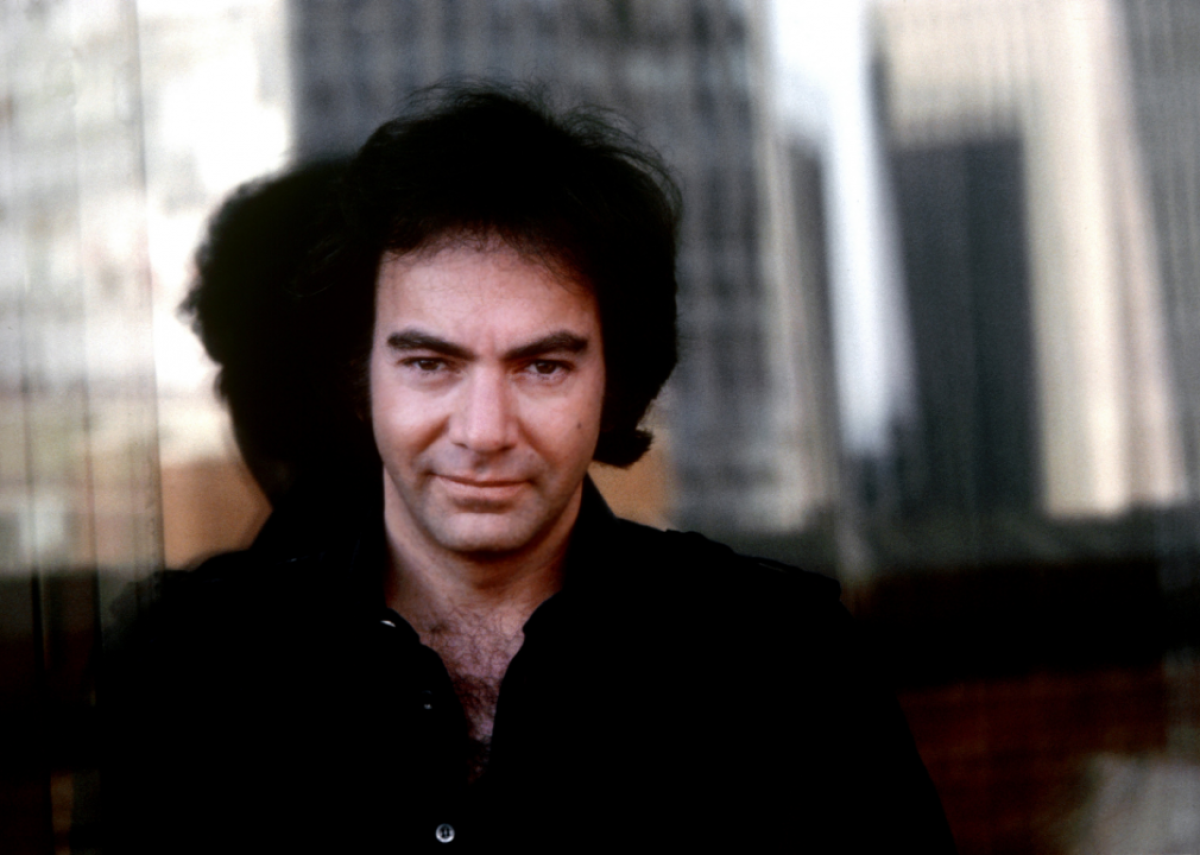
“Brooklyn Roads” is a homecoming you can’t actually go back to—an adult voice walking old streets in the mind, learning that memory can be both shelter and bruise.
Neil Diamond released “Brooklyn Roads” in 1968 as his first single for Uni Records (MCA’s Uni label), a meaningful change of scenery for an artist who was beginning to outgrow the tight commercial expectations of his earlier label life. On the Billboard Hot 100, the single debuted at No. 98 (debut chart date May 11, 1968) and reached a peak of No. 58. It wasn’t a massive hit—but it was a major statement. It announced the kind of songwriter Diamond wanted to become: more cinematic, more personal, more willing to trade easy hooks for the complicated texture of real recollection.
The song later anchored his Uni-era album Velvet Gloves and Spit, released October 15, 1968—an LP often described as a transitional work, with “Brooklyn Roads” singled out as one of the album’s low-charting but significant singles. What’s striking is that even industry writers at the time heard what Diamond was attempting. In Cash Box’s review (April 20, 1968), the record is framed explicitly as a nostalgia-filled glimpse of childhood, praising its vocal and lyrical impact. Record World went even further, calling it a stirring, autobiographical song with “Thomas Wolfe overtones”—language that places Diamond not just in pop, but in storytelling.
That “autobiographical” label isn’t critics projecting meaning onto a convenient title—“Brooklyn Roads” truly is Diamond writing from the inside of his own past. A later scholarly-style listening guide summarizes it plainly as an autobiographical tribute to growing up in Brooklyn, built from neighborhood details, family impressions, and early-life scenes. And in a thoughtful cultural essay, the song is described as opening like a cinematic flashback—childhood memory rendered through small, sensory images rather than grand declarations.
That’s the heart of why the song still lands: “Brooklyn Roads” doesn’t feel like a “retro” exercise. It feels like the mind doing what the mind always does when it’s tired, or lonely, or quietly proud—drifting back to the first places that formed you. Diamond doesn’t romanticize the past into a postcard. He treats it like a neighborhood you can still navigate with your eyes closed: the voices, the smells, the narrow hallways of memory where you can almost brush the wallpaper with your sleeve.
It also matters when he wrote it. Biographical accounts note that Diamond began to feel restricted by the earlier expectations placed on him, wanting to make more ambitious, introspective music—songs like “Brooklyn Roads.” So this track becomes more than childhood recollection; it becomes artistic self-definition. He is, in a sense, insisting: I can do more than chase the next single. I can build a little world in three minutes and invite you into it.
Musically, the song leans into that “mini-movie” approach. Even if you don’t analyze chords, you can feel how it’s staged: verse like a street scene, chorus like a widening camera shot, emotion swelling without turning melodramatic. It’s a pop record reaching toward literature—exactly what Record World seemed to recognize when they reached for Thomas Wolfe as a reference point.
And the meaning, ultimately, is both simple and devastating: the roads that raised you never quite leave you, but they also never fully return. “Brooklyn Roads” lives in that bittersweet space—where gratitude and ache share the same breath. It’s the sound of Neil Diamond learning that “home” is not only a place you can visit, but a place that visits you: in quiet hours, in sudden flashes, in the way a single melody can keep its promise long after the streetlights have changed.