
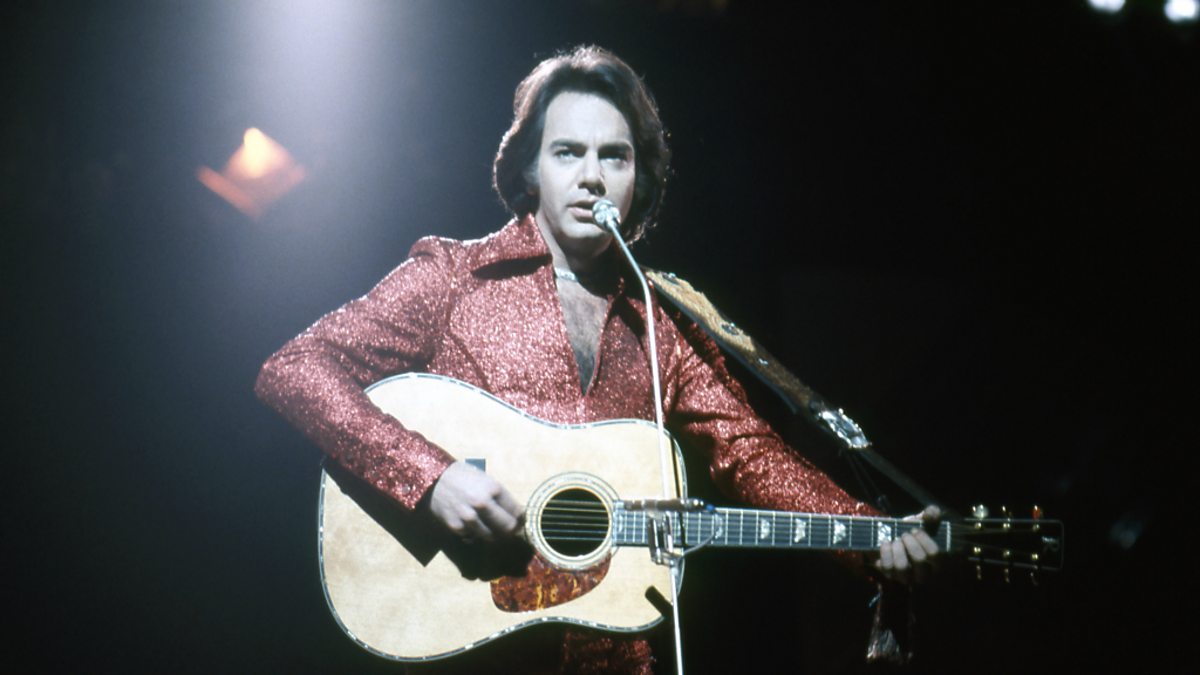
“Yesterday” in Neil Diamond’s later voice feels like a letter reopened after decades—proof that some regrets don’t fade, they simply learn to speak more quietly.
When Neil Diamond chose to record “Yesterday”, he wasn’t chasing a trend or borrowing a famous title for attention. He was making a personal visit to a song that already lived deep in the world’s collective memory—The Beatles’ “Yesterday”, written by John Lennon and Paul McCartney (credited to Lennon–McCartney) and first released on Help! in August 1965. Diamond’s version appears on his covers album Dreams, released November 2, 2010, where “Yesterday” is listed as track 11 (running 3:31). The album’s reception gave the recording a clear, measurable “arrival”: Dreams debuted at No. 8 on the Billboard 200 (debut chart date November 20, 2010) and peaked at that same position. In the UK, it reached the Top 10, peaking at No. 7 (first chart date November 13, 2010).
It helps to say plainly what this song is—and what it is not. This is “Yesterday” (the Beatles classic), not Diamond’s earlier hit “Yesterday’s Songs.” The similarity of titles can confuse the story, but the emotional worlds are different: “Yesterday” is the ache of something already lost, while “Yesterday’s Songs” is its own, later Diamond chapter. Here, the heart of the matter is that Diamond steps into one of the most enduring pop laments ever written and sings it as a man who has lived long enough to understand how time changes the taste of memory.
The original Beatles recording is famously intimate—Paul McCartney’s vocal and acoustic guitar, joined by a string quartet, a sound that was startlingly spare for 1965. Released as a U.S. single on September 13, 1965, it reached No. 1 on the Billboard Hot 100, beginning a four-week run at the top starting October 9, 1965. It’s a song built like a sigh: simple chords, an unforgettable melody, and lyrics that don’t argue their case—they simply confess it. Love was “an easy game to play,” and now the singer is left with the blunt mystery of loss: why did she go?
So what does Neil Diamond do with a confession that famous?
He makes it older—without making it heavier.
That is the subtle magic of Dreams, a record Diamond produced himself and described as a collection of songs he loved—mostly covers, with the notable inclusion of his own “I’m a Believer” revisited. The album’s premise isn’t reinvention through spectacle; it’s reinvention through sincerity. Diamond doesn’t approach “Yesterday” like a museum piece to be preserved under glass. He approaches it like a memory you carry in your pocket: worn at the edges, still strangely sharp.
In Diamond’s hands, the song’s meaning tilts. The Beatles’ version often feels like youth encountering regret for the first time—astonished that something so bright can vanish so quickly. Diamond’s version, by contrast, sits in the regret as if it has been there awhile. The sadness becomes less surprised and more reflective, as though the singer has learned that the past doesn’t return in full color—it returns in fragments: a phrase, a scent, a chord change that suddenly makes your chest tighten. This is where Diamond’s late-career voice matters: it doesn’t need to “perform” longing. It has already lived beside it.
And perhaps that is why a 2010 cover of a 1965 song can still feel emotionally current. “Yesterday” isn’t really about one relationship; it’s about the universal human moment when time divides your life into “before” and “after.” Diamond’s recording arrives decades into his career—on an album that debuted in the U.S. Top 10 and reached the UK Top 10—yet the track itself refuses any victory pose. It doesn’t celebrate endurance. It quietly admits the cost of it.
In the end, “Yesterday” as sung by Neil Diamond becomes less a cry and more a companion—music for the hours when you realize the hardest part of memory is not that it hurts, but that it can still feel tender. The past, the song reminds us, doesn’t always return as pain. Sometimes it returns as beauty—soft, unavoidable, and just close enough to touch.