
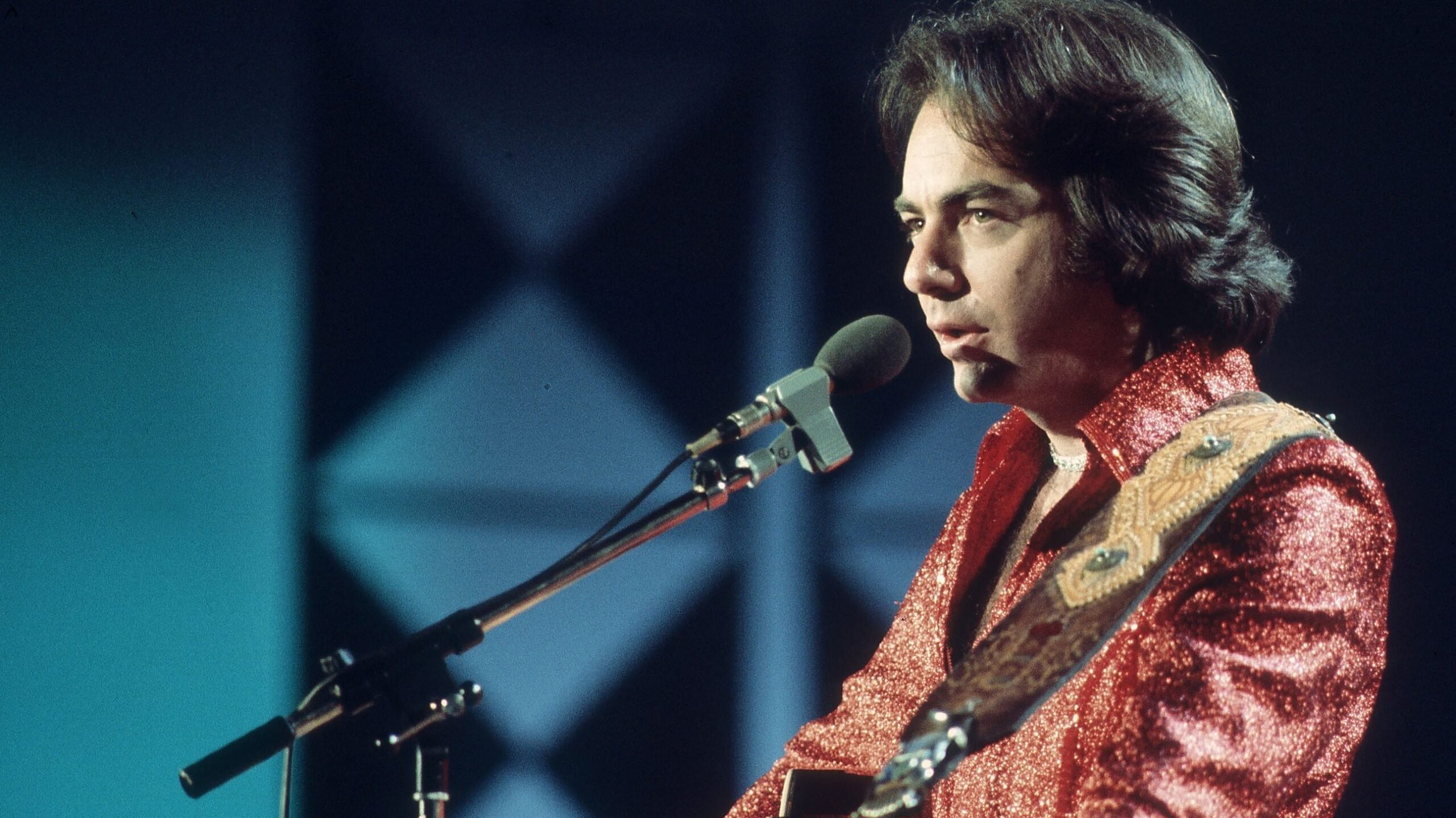
A humble plea dressed as a promise—“Let It Be Me” asks for devotion without theatrics, like a hand held a little tighter when the world turns cold.
When Neil Diamond recorded “Let It Be Me” for his 2010 album Dreams, he wasn’t chasing the roar of a new hit—he was choosing the comfort of an old truth. The album was released on November 2, 2010, built as a set of cover versions of songs he openly described as personal favorites. In that light, “Let It Be Me” lands less like a “track” and more like a confession: a seasoned voice returning to a love song that doesn’t try to be clever, only sincere.
The most important chart fact is about the album rather than the individual song. Dreams debuted and peaked at No. 8 on the Billboard 200, a Top 10 showing that quietly underlined something many listeners already felt—Diamond could still invite a wide audience into a more reflective room, decades into his career. And on that album’s track list, “Let It Be Me” appears as track 12 (running about 3:19), nestled late in the sequence, like the moment in a long evening when the conversation stops skimming the surface and finally tells the truth.
What makes this choice especially poignant is the song’s long, elegant lineage. “Let It Be Me” began life in French as “Je t’appartiens,” recorded and popularized in 1955 by Gilbert Bécaud, with lyrics by Pierre Delanoë—a song whose very title translates as a kind of surrender: I belong to you. The English adaptation came through Manny Curtis, and in 1960 it found its most famous early pop form as a hit for The Everly Brothers, recorded in late 1959 and released as a single in 1960. That version was a top-ten success in the U.S. (often cited at No. 7), and it helped cement the song as a standard—one that keeps reappearing whenever an artist wants to say “choose me” without making it sound like a demand.
So what does Diamond do with it in 2010?
He gives it the gravity of a voice that has already lived through the seasons the lyric hints at. “Let It Be Me” is not about the first rush of romance; it’s about the fear that tenderness can be taken away—about that quiet panic that arrives when you realize love is not guaranteed just because it once felt inevitable. The lyric’s central plea—don’t take this heaven from one, if you must cling to someone…—isn’t a romantic trick. It’s the oldest human bargain: If you’re going to love, love here. If you’re going to stay, stay with me. (Not shouted, not dramatized—simply asked.)
There’s a particular sweetness in placing this song on Dreams, an album essentially built out of listening—out of an artist saying, “These are the songs that raised me, steadied me, moved me.” Diamond’s career has always balanced two instincts: the showman who can fill an arena with choruses, and the storyteller who knows that the most lasting lines are often the plainest. “Let It Be Me” belongs to the second instinct. It’s a slow light. A steady gaze. A reminder that love is not proven by grand gestures, but by the willingness to be chosen—and to keep choosing back.
And perhaps that’s why the song continues to endure across decades and voices: it doesn’t promise perfection. It promises presence. When Diamond sings it, you hear the romance of maturity—the kind that understands how easily people drift, how quickly time moves, and how precious it is to say the simplest thing before the moment passes:
Let it be me.