
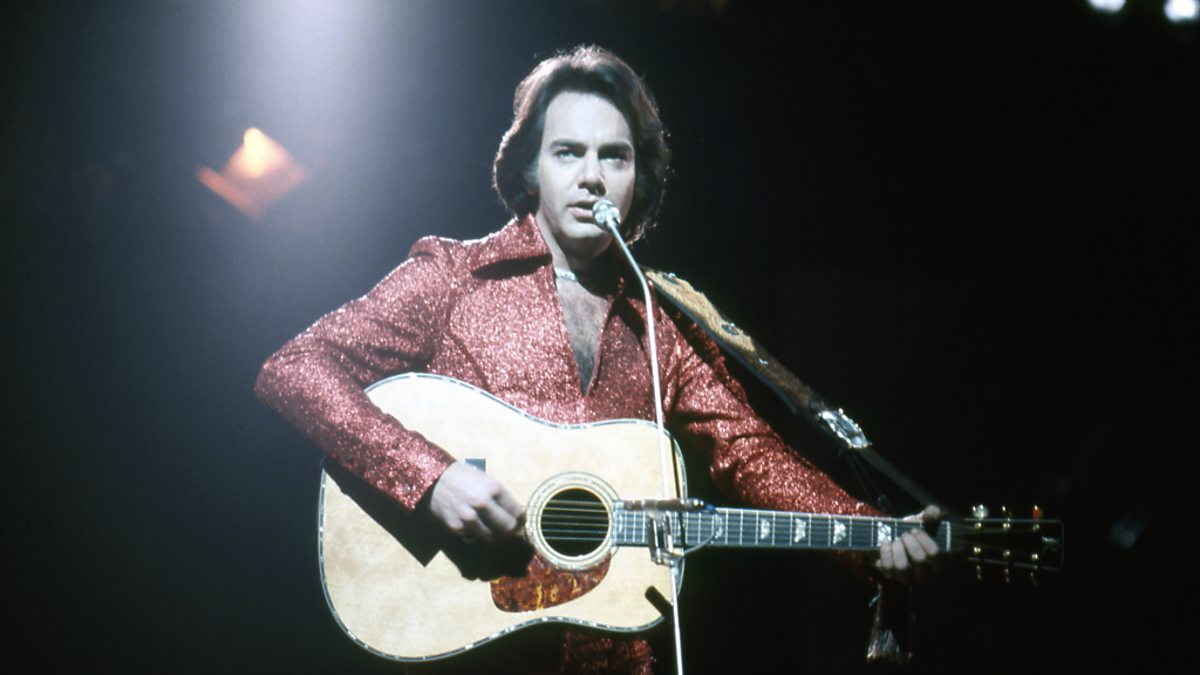
A Quiet Ascent from the Noise of the World—Finding Solace in Solitude Above the Streets
When Neil Diamond released his rendition of “Up On The Roof” on his 1993 album Up On the Roof: Songs from the Brill Building, it was less a bid for chart domination and more a love letter to a bygone era of songwriting craft. Originally a hit for The Drifters in 1962, the song already carried with it an aura of tender escapism and urban melancholy. Diamond’s version, though not a major chart success upon release, resonated deeply with listeners who understood that this was an artist returning home—to the very place where his own musical journey began. The Brill Building was not merely a landmark on Broadway; it was the cradle of American pop songwriting, and Diamond had once been one of its young craftsmen. His interpretation of “Up On The Roof” thus became both homage and confession: a rediscovery of simplicity amid decades of spectacle.
Diamond approaches “Up On The Roof” not as a cover but as a reflection—a revisiting of youthful aspiration through the lens of maturity. The song’s architecture is simple yet profound: an escape narrative, an ode to height as sanctuary. Beneath its lilting melody lies the universal yearning to rise above life’s turbulence, to find, if only for a few moments, clarity in isolation. When The Drifters first sang those words in the early 1960s, they gave voice to city dwellers hemmed in by steel and noise; when Diamond sang them three decades later, he infused them with the gravity of age, turning adolescent longing into adult meditation.
His arrangement respects the gentle doo-wop lilt of the original while bathing it in his signature warmth—acoustic guitars hum softly under his grainy baritone, which carries both weariness and wonder. There is something deeply human about how Diamond sings this song: he inhabits the space between memory and dream, between what once was and what might still be reclaimed. You can almost see him standing alone atop a Manhattan rooftop at dusk, watching the lights blink to life as he exhales years of experience into each phrase.
In this performance, Neil Diamond reasserts a timeless truth—that solace is often found not in grandeur but in elevation; that sometimes all we need is distance from the street-level chaos to remember who we are. “Up On The Roof” becomes more than nostalgia; it becomes testimony to survival through reflection. By returning to his roots—both literally and musically—Diamond transforms a familiar classic into something achingly personal. It is not just about escaping the world below; it is about ascending toward one’s truest self, suspended for a moment between heaven and heartbreak.