
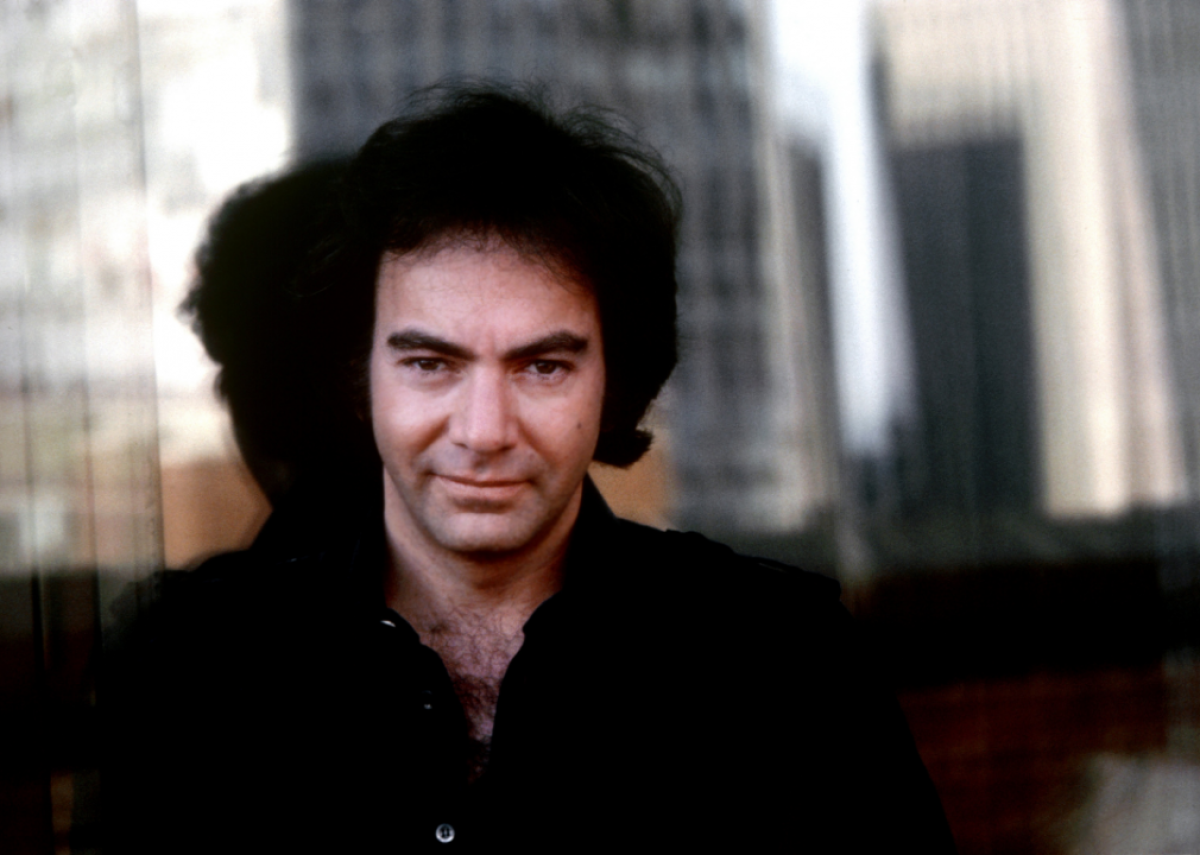
A boy with no riches, no grand gift, only a rhythm from the heart—Neil Diamond sings Little Drummer Boy as if that simple offering were enough to carry an entire Christmas.
Neil Diamond recorded Little Drummer Boy for his 1992 holiday release The Christmas Album, and that detail is important from the start. This was not one of his big standalone pop singles, and it did not become a notable Billboard Hot 100 chart hit in its own right. Instead, it arrived as part of a full Christmas collection, where its power was never meant to come from chart drama. Its strength came from something quieter: mood, memory, reverence, and the unmistakable warmth of Diamond’s voice meeting one of the most beloved carols of the season.
The song itself has a long life before Neil ever touched it. Little Drummer Boy was written in 1941 by Katherine K. Davis, originally under the title Carol of the Drum. Over the decades, it became part of the shared musical language of Christmas, carried forward by many artists in many styles. The story is simple and enduring: a poor boy comes before the infant Jesus with no gold, no rare gift, nothing that would impress a royal court. All he can offer is what he has—his music, his rhythm, his presence. That idea, humble as it is, has always been the song’s true heartbeat.
What makes Neil Diamond’s version special is that he does not overstate it. He does not turn the song into a theatrical display. He does not crowd it with vocal flourishes that would distract from its meaning. Instead, he leans into its humanity. His voice, already known for carrying both strength and vulnerability, gives the carol a grounded, deeply personal feeling. In his hands, Little Drummer Boy sounds less like a formal pageant and more like a private meditation—something heard late in the evening when the room is quiet, the lights are low, and old memories rise without warning.
That restraint matters. By the time The Christmas Album arrived, Neil Diamond was already a towering figure in American popular music, a songwriter and performer whose catalog had long been woven into the emotional lives of listeners. He had no need to prove himself through volume or spectacle. What he could do—perhaps better than almost anyone—was step inside a lyric and make it sound lived in. On Little Drummer Boy, he brings that exact gift. He sings as if he understands the quiet embarrassment of having little to give, and the quiet grace of discovering that sincerity may be enough.
That is the deeper meaning of the song, and it is probably why it never fades. At the center of Little Drummer Boy is a truth that outlasts any season: worth is not measured by extravagance. The boy’s offering is small in the eyes of the world, but it is complete because it is honest. Neil Diamond seems to recognize that truth instinctively. He does not perform the carol as a singer standing above it. He performs it as a storyteller standing inside it. The result is moving in a way that feels unforced.
There is also something fitting about Diamond singing a song like this later in his career. So many Christmas recordings by major stars can feel like ornaments hung on a catalog—pleasant, polished, and easy to admire. But this one feels connected to the deeper current that always ran through the best of his work: yearning, gratitude, loneliness, hope, and the search for something real beneath the noise. Even in a traditional carol, those qualities remain. His phrasing carries patience. His tone carries memory. And the familiar “pa rum pum pum pum” refrain, which can sound almost childlike in lesser readings, becomes gently reflective here, as though it were echoing across many winters.
Another reason the recording stays with people is that it understands Christmas not only as celebration, but as tenderness. Some holiday songs sparkle. Some entertain. Some invite a singalong. Little Drummer Boy, especially in a reading like this, asks for something else: stillness. It reminds us that the season is not only about brightness and abundance, but also about humility, mercy, and the quiet offering of whatever love we can carry into the room. Neil Diamond gives the song exactly that kind of emotional room to breathe.
If there is a hidden strength in this version, it lies in how natural it feels. Nothing sounds forced. Nothing sounds ornamental for its own sake. The arrangement supports the song rather than competing with it, and Diamond’s voice remains at the center—warm, familiar, reassuring. For listeners who have lived with his music for years, that voice alone can unlock a flood of feeling. On a Christmas song built around simple devotion, it becomes especially affecting.
In the end, Neil Diamond’s Little Drummer Boy endures because it honors the oldest lesson in the carol: the most meaningful gift may be the one that comes without pretense. No glittering gesture, no grand display—just a song, offered sincerely. And perhaps that is why this recording lingers so deeply. It reminds us that what matters most at Christmas, and perhaps all year long, is not how much we bring, but how truthfully we bring it.