
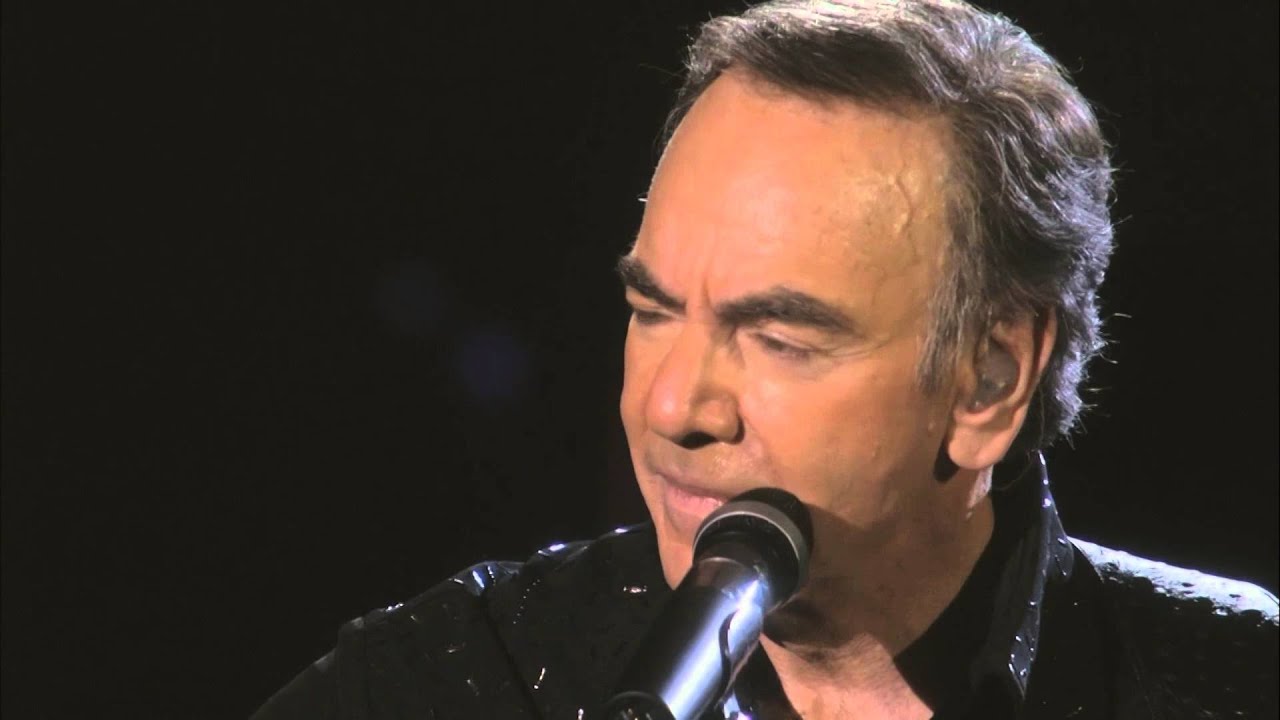
A hushed self-portrait set to melody, The Story of My Life reveals a more inward-looking Neil Diamond than the world usually celebrates, and its honesty seems to deepen as the years pass.
Among the towering sing-alongs, the arena-sized choruses, and the instantly recognizable hooks that made Neil Diamond one of the defining voices of his era, The Story of My Life occupies a quieter corner. That may be exactly why it lingers. Released in 1986 from the album Headed for the Future, the song was never one of Diamond’s biggest crossover triumphs, but it did reach No. 28 on Billboard’s Adult Contemporary chart. Commercially, that placed it in the category of a modest hit. Emotionally, however, it feels much larger than its chart run suggests. In many ways, it is one of those songs that seems to wait for the listener to catch up to it.
By the time The Story of My Life arrived, Neil Diamond no longer needed to prove he could write a hit. He had already filled the public memory with songs that sounded as if they had always existed: Sweet Caroline, Cracklin’ Rosie, Song Sung Blue, America, Hello Again. Those records carried confidence, sweep, and the unmistakable dramatic instinct that made Diamond such a singular performer. But this song steps away from the spotlight rather than chasing it. It does not roar. It reflects. It does not try to seize the room in one gesture. Instead, it sits down and speaks in a lower voice.
That is the first reason the song feels more personal with every passing year. The Story of My Life is not built like a grand autobiography, even though the title might suggest something expansive and declarative. It is more intimate than that. It sounds like someone sorting through memory, not for mythmaking, but for understanding. There is a difference. In a catalog full of songs that often aim for uplift, romance, longing, or emotional release, this one feels unusually self-aware. It carries the tone of a man looking back without pretending that every chapter fits neatly together.
The background of the song matters. Headed for the Future arrived during a period when Diamond was navigating the polished production style of the mid-1980s while still trying to preserve the emotional directness that had always been his greatest strength. Some songs from that period were dressed in the era’s sheen, but beneath the production there was still the same writer who had always understood loneliness, yearning, memory, and resilience. The Story of My Life benefits from that tension. It is unmistakably a record of its time, yet the emotional center feels older, deeper, and more durable than any trend surrounding it.
What makes the song quietly remarkable is that it seems to resist vanity. Many artists with long careers eventually circle back to themselves in ways that sound self-congratulatory, or at least carefully staged. Neil Diamond does something different here. The song feels less like a monument and more like an admission. Its power lies in that restraint. He sounds like a man aware that a life cannot be reduced to headlines, hit records, applause, or public image. The real story, the song suggests, is carried in the private reckonings: the roads taken, the moments lost, the hopes that survived, and the questions that never entirely go away.
That is why the title becomes more moving with age. When listeners are young, a title like The Story of My Life can sound almost decorative, another elegant phrase in a pop song. Later, it lands differently. It begins to feel weightier. Every year adds a little more meaning to the idea that a life is not a single event but an accumulation of choices, compromises, joys, disappointments, and memories that return unexpectedly. Diamond taps into that truth without preaching it. He leaves room for the listener’s own history to enter the song. That may be the deepest kind of songwriting there is.
Musically, the song’s gentle, adult-contemporary frame serves the material well. Rather than overpowering the message, the arrangement supports a reflective mood. This is not one of Diamond’s big chest-out performances. It is more measured, more interior, almost conversational in spirit. That vocal approach is essential. He sounds less like the showman commanding a stage and more like the songwriter standing just behind the public figure, letting something real slip through. For listeners who know his catalog well, that shift is striking. It reminds us that beneath the celebrated voice was always a writer of uncommon emotional intelligence.
There is also something poignant about where the song sits within his broader career. Neil Diamond has often been remembered for spectacle and familiarity, for songs that gather people together and turn memory into communal experience. The Story of My Life does the opposite. It narrows the frame. It turns memory inward. And because of that, it can feel almost startlingly personal, especially when heard after decades of living. What once may have sounded simply mature now sounds confessional. What once seemed understated now feels brave.
Perhaps that is the quiet miracle of the song. It does not age by becoming quaint or frozen in its original moment. It ages by revealing more. Each return to it can uncover another shade of feeling: gratitude, regret, tenderness, unfinished longing, and the calm acceptance that no life is ever as simple as it appears from the outside. In that sense, The Story of My Life stands as one of the most human recordings in Neil Diamond’s catalog. Not the loudest. Not the most famous. But maybe one of the truest.
And that truth is what stays behind after the song ends. Long after the major hits have done what they do so well, this quieter piece keeps speaking in its own patient way. It reminds us that the most revealing songs are not always the biggest ones. Sometimes the deepest confession arrives almost softly, as if the singer trusts the listener enough not to raise his voice. That is exactly what Neil Diamond does in The Story of My Life, and with every passing year, it feels less like a performance and more like a companion.