
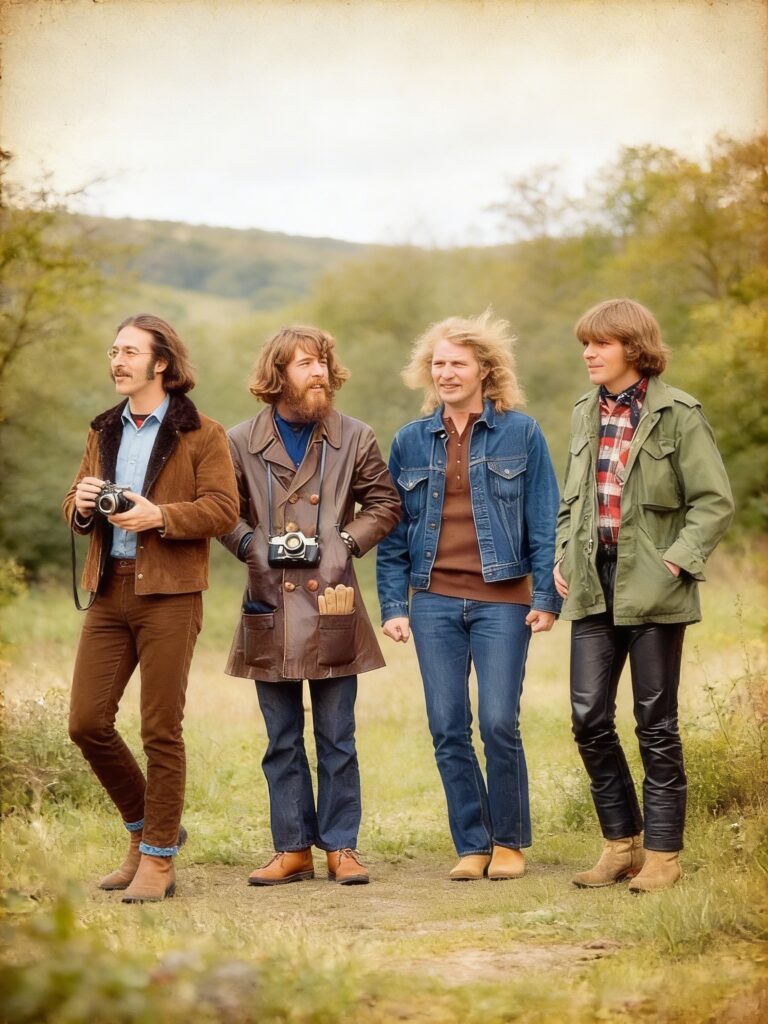
A shadowy warning wrapped in swamp rock, “Sinister Purpose” shows how Creedence Clearwater Revival could turn a simple groove into something quietly menacing and unforgettable.
There are songs that announce themselves in a burst of melody, and then there are songs like “Sinister Purpose”, which seem to creep in through a side door, carrying a mood more than a message at first. Released in 1969 on Creedence Clearwater Revival’s remarkable album Green River, this John Fogerty composition was never one of the band’s major hit singles, yet it remains one of the group’s most intriguing recordings. It is lean, tense, and filled with the kind of low-burning unease that CCR could summon better than almost anyone of their era.
To understand where the song sits in the band’s story, it helps to remember what a towering moment 1969 was for Creedence Clearwater Revival. That year alone, they released three albums: Bayou Country, Green River, and Willy and the Poor Boys. Green River, issued in August 1969, became a major commercial triumph, reaching No. 1 on the Billboard album chart in the United States. It also carried some of the band’s best-known songs, including “Bad Moon Rising” and “Green River”, both of which peaked at No. 2 on the Billboard Hot 100. In the middle of such instantly memorable material, “Sinister Purpose” was not designed as a chart contender. It was something else: an atmosphere piece, a warning song, a dark corner on a bright and successful album.
Written by John Fogerty, “Sinister Purpose” captures one of his lesser-discussed strengths as a songwriter. He was celebrated for vivid Americana, working-man grit, and songs that sounded ancient and immediate at once, but he also knew how to write suspense. This track rides on a stalking rhythm and a clipped, blues-rooted guitar attack. The sound is spare, almost skeletal, which only makes it more effective. Nothing is overplayed. Nothing is wasted. The band leaves room for the song’s threat to breathe.
Lyrically, the song does not tell a detailed story in the way a ballad might. Instead, it circles around a sense of danger. The central idea is simple but potent: someone is coming, and that someone does not come with good intentions. That phrase, “sinister purpose,” is itself the key to the song’s power. It is formal, almost old-fashioned wording, and that makes it feel even more ominous. Fogerty does not rely on elaborate poetry here. He relies on suggestion. The listener fills in the blanks, and that is often where a song becomes most haunting.
What makes “Sinister Purpose” linger is the way CCR avoids drama in the theatrical sense. There is no explosion, no oversized arrangement, no attempt to force the darkness. Instead, the band plays with restraint, as if confidence alone can carry the mood. That confidence came from a group at its peak. John Fogerty’s voice sounds clipped and alert, like a man trying to warn you before it is too late. The rhythm section keeps everything grounded, while the guitar lines move like flickers in poor light. Even now, the recording feels stripped of decoration, and that is exactly why it holds up so well.
In the larger emotional landscape of Green River, the song provides a fascinating contrast. Elsewhere on the album, there is nostalgia, motion, radio-ready energy, and that uniquely American blend of country, blues, and rock that Creedence Clearwater Revival made their own. But “Sinister Purpose” reveals another face of the band: not celebratory, not sentimental, but watchful. It is the sound of trouble sensed before it fully arrives. If “Bad Moon Rising” turned dread into a catchy prophecy, then “Sinister Purpose” makes dread feel more intimate, more personal, and somehow closer to the ground.
There has always been something compelling about the contradiction at the heart of CCR. They were a California band who sounded as though they had risen out of Southern mud, jukebox smoke, and old American myths. “Sinister Purpose” is one of the clearest examples of that gift. It does not belong to the psychedelic excess that surrounded much of late-1960s rock, nor does it chase studio grandeur. It is direct, earthy, and unsettling. In many ways, it sounds like a warning from an older world.
That may be why the song continues to attract devoted listeners even without the fame of the band’s biggest titles. Not every great album track needs to dominate the airwaves. Some songs earn their place by deepening the emotional world of a record. “Sinister Purpose” does exactly that on Green River. It reminds us that Creedence Clearwater Revival was never just a singles band. Beneath the hits was a group capable of atmosphere, tension, and storytelling through texture as much as words.
More than five decades later, the song still feels effective because its fear is timeless. It does not depend on a trend, a slogan, or a moment in youth culture. It depends on something older and more durable: that uneasy feeling that danger can be sensed before it is seen. And few bands ever translated that feeling into rock music with the economy and conviction of Creedence Clearwater Revival.
For listeners returning to Green River, “Sinister Purpose” is often the track that reveals itself more deeply over time. It may not have the immediate recognition of the album’s best-known songs, but it offers something just as valuable: mood, mystery, and the unmistakable sound of a great band understanding how much power there is in holding something back.