
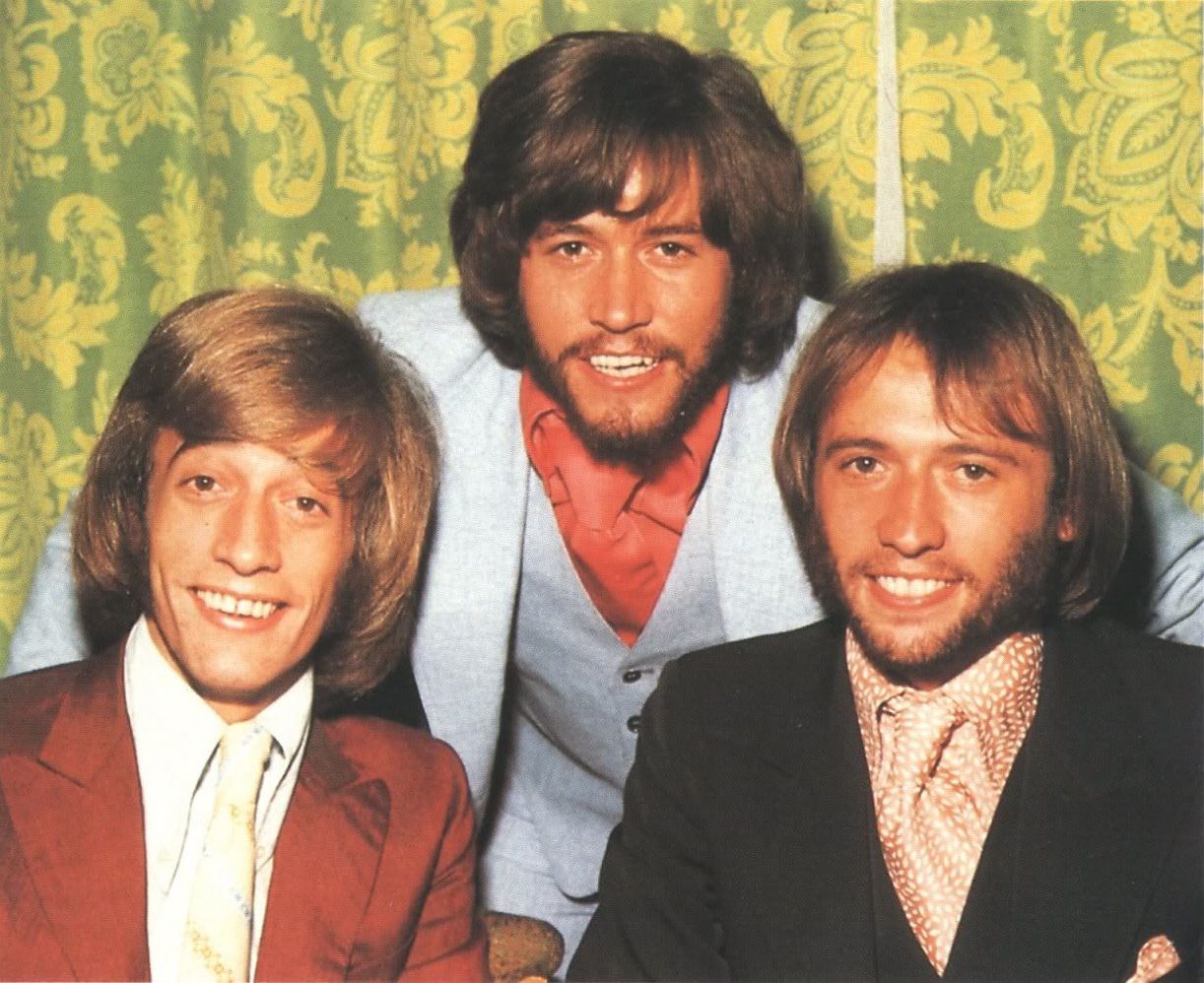
“I Started a Joke” remains one of the Bee Gees’ most quietly devastating achievements because it turns private shame into melody, letting sorrow arrive not with spectacle, but with the soft, irreversible sadness of a wound no one can quite explain.
When the Bee Gees released “I Started a Joke” in December 1968, they were still years away from the sleek, world-conquering sound that would later make them symbols of the disco era. This song belonged to a different Bee Gees altogether—more inward, more fragile, more haunted by loneliness than by rhythm. It came from the album Idea and was issued as a single on December 21, 1968 in markets outside the UK, where it was notably not released as a Bee Gees single at the time. The song was recorded on June 20, 1968, written by Barry, Robin, and Maurice Gibb, produced by the group with Robert Stigwood, and sung in that unmistakably vulnerable lead by Robin Gibb. On the charts it became a major international success, reaching No. 1 in Canada, Australia, New Zealand, and Denmark, while climbing to No. 6 in the U.S. Cash Box chart and No. 5 in Record World. Those figures matter because they remind us that this was never merely a cult favorite discovered later; it was a profound early Bee Gees hit whose emotional force was recognized in its own time.
Yet chart positions alone cannot explain why listeners never truly got over it. “I Started a Joke” sounds less like a conventional pop single than like a confession drifting in from some private place where guilt and bewilderment have already taken hold. The lyric is simple enough to remember after one hearing, but elusive enough to haunt for years. Someone speaks, laughs, cries, and somehow brings ruin into the room without ever fully meaning to. That is part of the song’s lasting mystery: the pain is clear, but the offense remains strangely undefined. The singer seems trapped not only by sorrow, but by the inability to understand how he became the cause of it.
That emotional uncertainty is one reason the song endures so powerfully. According to later accounts, Robin Gibb said the song’s melancholic melody came to him on an aeroplane, inspired by the sounds of the flight itself, while Barry Gibb later reflected on the era’s psychedelic spirit—how songs could sound almost absurd on the surface and yet invite endless interpretation. Even contemporary reviewers sensed that openness. Cash Box described the Bee Gees here as working in their “softer” style and praised the song’s “paradoxical imagery” for offering a kind of magnetic mystery. In other words, the very qualities that made the song difficult to pin down were part of its appeal from the start.
And perhaps no Bee Gees song of that period depends more completely on Robin Gibb than this one. His voice on “I Started a Joke” does not merely carry the melody; it gives the song its entire moral weather. There is a tremor in it, a feeling of distance and hurt that makes the lyric sound less like a story being told than like a realization unfolding too late. The arrangement around him is delicate but unforgettable: Barry Gibb on acoustic rhythm guitar and backing vocals, Maurice Gibb shaping the texture with mellotron, organ, piano, and bass, Vince Melouney adding lead guitar in what would be his last Bee Gees single appearance, and Bill Shepherd providing the string arrangement that helps the whole record float with such wounded elegance.
What makes the song quietly devastating is that it never overstates its misery. It does not collapse into melodrama. It moves with the calm of someone who already knows the damage is done. That is far harsher, in the end, than a louder heartbreak song. Many sad records ask the listener to witness pain in the moment of explosion. “I Started a Joke” feels as if it begins after the explosion, when the room has gone still and the singer is left staring at what cannot be undone. The joke of the title is not funny, of course. It is one of those bitter ironies life sometimes creates, when a careless action or misunderstood word keeps echoing long after its moment has passed.
There is also something poignant in where the song sits in the larger Bee Gees story. To many casual listeners, the group will always be associated first with glittering dance floors, falsetto hooks, and the brilliance of their late-1970s reinvention. But “I Started a Joke” reminds us that long before that public image hardened, the Bee Gees were already masters of melancholy. They could write songs that seemed to tremble with emotional isolation. They understood how to make sadness feel not theatrical, but intimate. This song may be one of the clearest examples of that gift.
Its afterlife only deepens the ache. One of the most moving details attached to the song came decades later, after Robin Gibb’s death in 2012, when his son said he played “I Started a Joke” on his phone and placed it on his father’s chest in the moments after he passed. That memory gives the song an added poignancy now, though it hardly needed one. It had already become one of those records listeners carried with them because it seemed to understand something difficult and universal: that regret often arrives without perfect explanation, and that some of the saddest wounds in life are the ones we can never fully name.
So “I Started a Joke” remains a Bee Gees classic people never truly got over not because it was louder than their other ballads, or more ornate, or more obviously tragic. It remains because it speaks in a hushed, bewildered voice that feels painfully human. It is the sound of remorse without clarity, sorrow without resolution, and loneliness made almost unbearably beautiful. Before disco ever reshaped their legend, the Bee Gees had already given the world this: one of pop music’s softest heartbreaks, and one of its most enduring.