
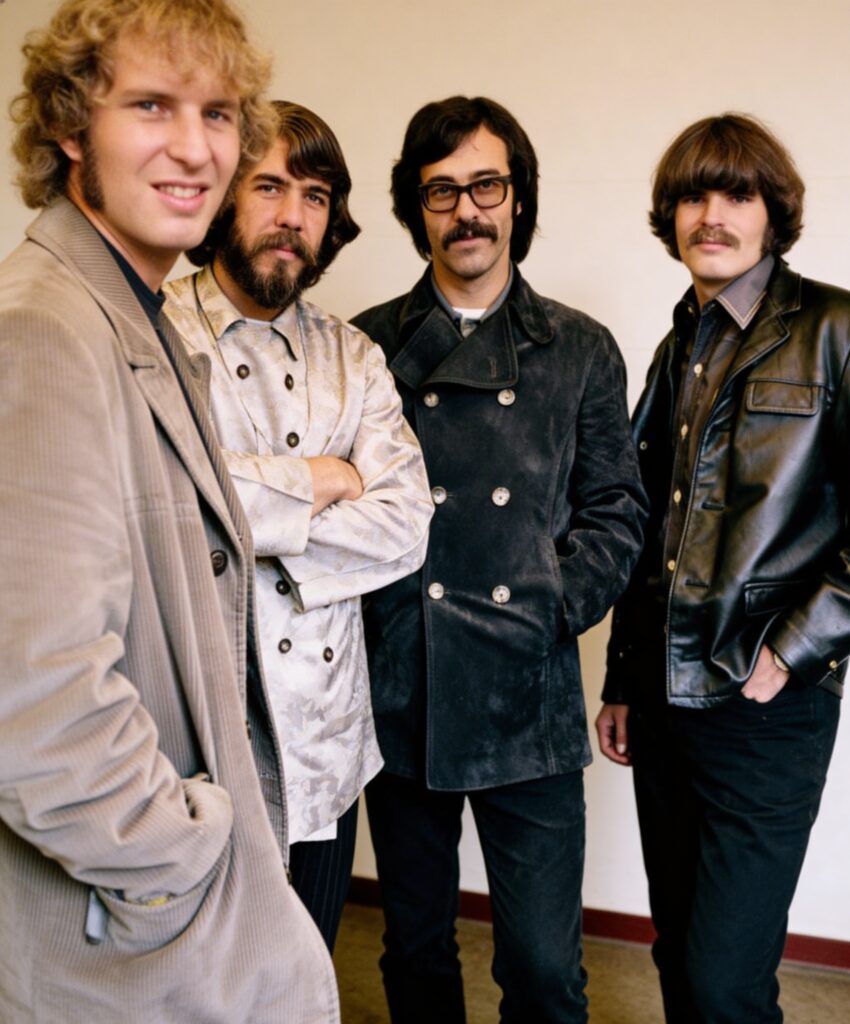
Ninety-Nine and a Half (Won’t Do) shows how Creedence Clearwater Revival could take a fiery soul standard and make it feel like dusty road music, restless, raw, and utterly their own.
There is something especially revealing about Creedence Clearwater Revival when they are not singing one of John Fogerty’s own classics, but stepping into a song already rich with history. “Ninety-Nine and a Half (Won’t Do)”, included on the band’s 1969 album Willy and the Poor Boys, is one of those recordings that tells you exactly what made CCR more than just a hit-making rock group. They were students of American music, deep listeners, and brilliant interpreters. While the track was not released as a major standalone hit single by CCR, its parent album Willy and the Poor Boys climbed to No. 3 on the Billboard album chart, and that matters, because this cover sits inside one of the most impressive runs any American band ever had.
The song itself began before CCR touched it. Wilson Pickett first turned “Ninety-Nine and a Half (Won’t Do)” into a standout soul hit in 1966, a recording associated with the powerful Stax sound and written by Steve Cropper, Eddie Floyd, and Wilson Pickett. Pickett’s version reached the Top 20 of the Billboard Hot 100 and became one of the defining statements of romantic urgency from that era. Its message was plain and unforgettable: almost enough is still not enough. Love, effort, devotion, honesty, all of it had to be complete. That central idea is one reason the song has lasted. It is not complicated, but it is emotionally exact.
When Creedence Clearwater Revival recorded it, they did not try to out-sing the original in pure soul terms. That would have missed the point. Instead, they translated the song into the language they knew better than anyone: stripped-down American rock shaped by blues, country, swamp rhythm, and working-man directness. John Fogerty’s voice does not glide through the lyric; it grips it. The band does not polish the arrangement into something delicate. They lean into groove, drive, and grit. In doing so, they preserve the demand at the center of the song while giving it a different emotional weather. Where Pickett’s version feels like heated Southern soul, CCR’s feels like a band playing hard under bare lights, with the sound of the road still on their clothes.
That is part of what makes the recording so satisfying. It belongs naturally on Willy and the Poor Boys, an album that balanced originals like “Down on the Corner” and “Fortunate Son” with respectful returns to older American forms. CCR were never embarrassed by tradition. In fact, tradition was one of their great engines. They understood that rock and roll was not strongest when it forgot its roots, but when it remembered them. On this album, a song like “Ninety-Nine and a Half (Won’t Do)” becomes more than a cover. It becomes a quiet statement of lineage. Here was a California band, at the height of its fame, looking back toward Southern soul and rhythm and blues with admiration rather than irony.
The meaning of the song remains timeless. At its heart, “Ninety-Nine and a Half (Won’t Do)” is about the last small distance between appearance and truth. It tells us that near-commitment cannot replace real commitment. Near-faithfulness cannot replace faithfulness. Near-love cannot carry the weight of love. That is why the lyric lands so hard even after all these years. Everyone understands the feeling of being offered almost enough and knowing, deep down, that it will never satisfy. CCR recognized the universal quality of that message, and their version emphasizes its stubborn honesty.
Musically, the track also reminds listeners how disciplined Creedence Clearwater Revival really were. Beneath the apparent looseness is a band with remarkable control. Doug Clifford keeps the beat moving with a firm, unshowy pulse. Stu Cook gives the song body and momentum. Tom Fogerty helps lock in the rhythm texture, while John Fogerty steers the whole performance with that unmistakable voice and sharply focused guitar sense. Nothing is overplayed. Nothing is wasted. The song moves forward with the kind of economy that defined CCR at their best.
There is also a deeper pleasure in hearing a group as famous for original anthems as Creedence Clearwater Revival pause to honor a song like this. It tells us they were never confined by their own success. Even in 1969, when they could easily have relied only on the power of new John Fogerty material, they still made room for songs that had shaped the musical world they loved. That humility gave their records depth. It made them feel connected to a larger American songbook.
For many listeners, “Ninety-Nine and a Half (Won’t Do)” may not be the first CCR title that comes to mind. It does not carry the immediate cultural thunder of “Bad Moon Rising” or “Proud Mary”. But that is exactly why it remains such a rewarding listen. It reveals the band in a more intimate way: reverent, sharp, and joyfully rooted in the music that came before them. It is a reminder that Creedence Clearwater Revival did not just write great songs. They knew how to recognize one when they heard it, and how to pass it along without draining it of its original fire.
And that may be the lasting beauty of their recording. In the hands of CCR, “Ninety-Nine and a Half (Won’t Do)” becomes both tribute and transformation. It keeps the song’s demand for wholeness intact, yet dresses it in the lean, weathered sound that made the band unforgettable. Some covers merely revisit the past. This one keeps it moving.