
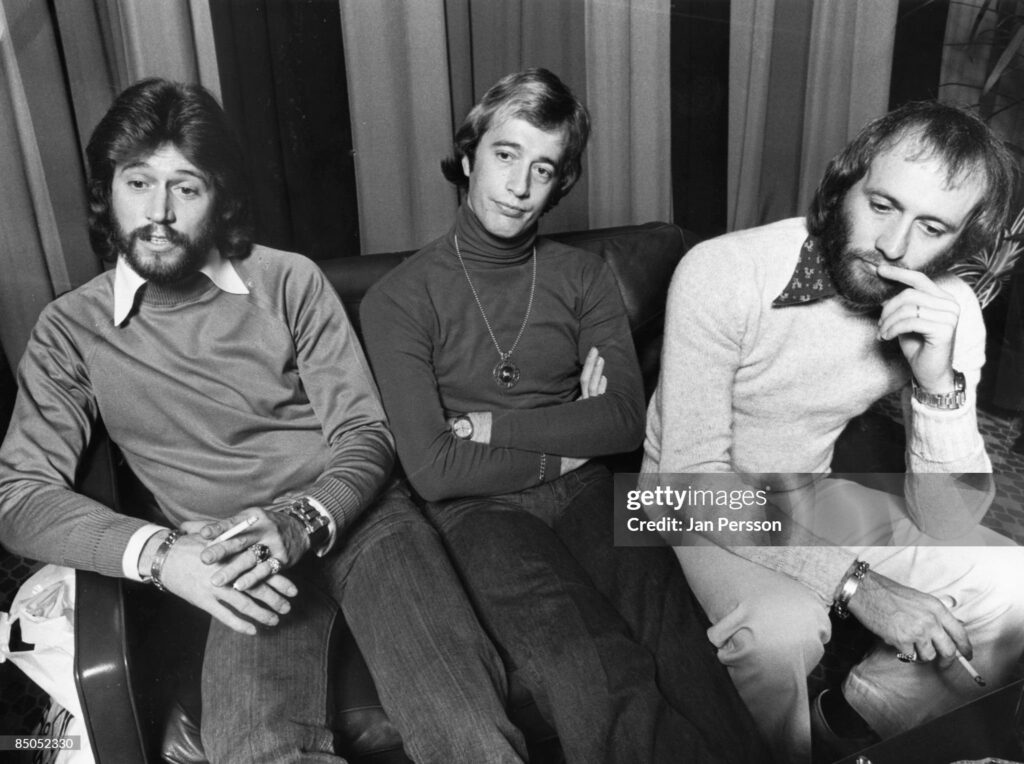
The title became their farewell, and “This Is Where I Came In” now carries the strange, aching weight of a doorway that turned out to be the last one.
There are song titles that grow heavier with time, not because they were written that way, but because history quietly settles inside them. Bee Gees’ “This Is Where I Came In” is one of those titles. When it appeared in March 2001 as the lead and only single from the album of the same name, it could be heard as something reflective, even elegant—a glance backward, perhaps, from a group that had already traveled farther than most careers ever dream of going. In Britain, the single reached No. 18 on the Official Singles Chart, while the album itself climbed to No. 13, giving the Bee Gees yet another late-career reminder that they could still command attention without leaning on nostalgia alone.
But the title does not sound the same once you know what followed. This Is Where I Came In became the Bee Gees’ final studio album, released on 2 April 2001, less than two years before Maurice Gibb died in January 2003 after complications following surgery for a twisted intestine. After that loss, the Bee Gees as a recording trio were over, and the title began to feel less like an artistic choice than an accidental farewell. It is one of those rare cases in pop history where a phrase written in one emotional key is later heard in another entirely.
That is what makes the song so affecting now. It does not sound funereal. It does not announce itself as an ending. In fact, part of its beauty lies in how alive it still feels. There is movement in it, and confidence, and a kind of self-awareness the Bee Gees had earned many times over by then. The brothers were not pretending to be young men again, nor were they embalming their own legend. They were making a record that looked both backward and forward at once, with Barry even saying the album was meant to return to an earlier Bee Gees formula while still feeling like a new beginning. Knowing that only deepens the ache. What they heard as a return now sounds, to later ears, like a final circle closing.
The song itself helps carry that feeling. Robin and Barry share the lead in a way that feels almost symbolic now, as if the Bee Gees’ whole story were being passed between voices that had traveled through every reinvention together. There is no excess in the performance, no desperate attempt to inflate the moment. That restraint is part of what gives the song its dignity. A lesser group might have tried to sound monumental. The Bee Gees sound knowing instead. They let the melody and the title do the deeper work.
And what a title it turned out to be. “This Is Where I Came In” suggests origin, return, recognition. It sounds like someone pausing in the middle of a long life and suddenly seeing the shape of the road behind him. For a group whose career stretched across decades, styles, eras, and identities, that kind of title already carried unusual resonance. The Bee Gees had been many things to the world—young harmony group, baroque-pop craftsmen, soft-rock romantics, disco titans, elder statesmen of melody. This song seemed to gather those lives into a single glance, almost as if they were standing at the edge of their own history and speaking with calm rather than ceremony.
Then time changed the meaning.
Once Maurice was gone, listeners could no longer hear the song innocently. The title had become prophetic without intending to be. That may be why it still lands with such force. Not because the Bee Gees were consciously writing their own goodbye, but because they were not. There is something more haunting in an unplanned farewell. It catches life the way life really is—unfinished, still in motion, unaware of how near the last page may be.
That is why “This Is Where I Came In” feels heavier now than it did in 2001. Back then, it sounded like a veteran band reasserting itself with intelligence and grace. Now it sounds like something richer and sadder: a final chapter that did not yet know it was final. The Bee Gees had always understood how memory can sharpen music, how harmony can hold both sweetness and loss. In this case, history completed the song for them.
So the title became their farewell, even if it was never written as one. And that is what gives the song its lasting weight. It stands there now like a last doorway still open in memory, with Barry, Robin, and Maurice together on the threshold, singing as if the story were simply continuing—while the listener, knowing what came after, hears something more tender, more fragile, and infinitely harder to forget.