
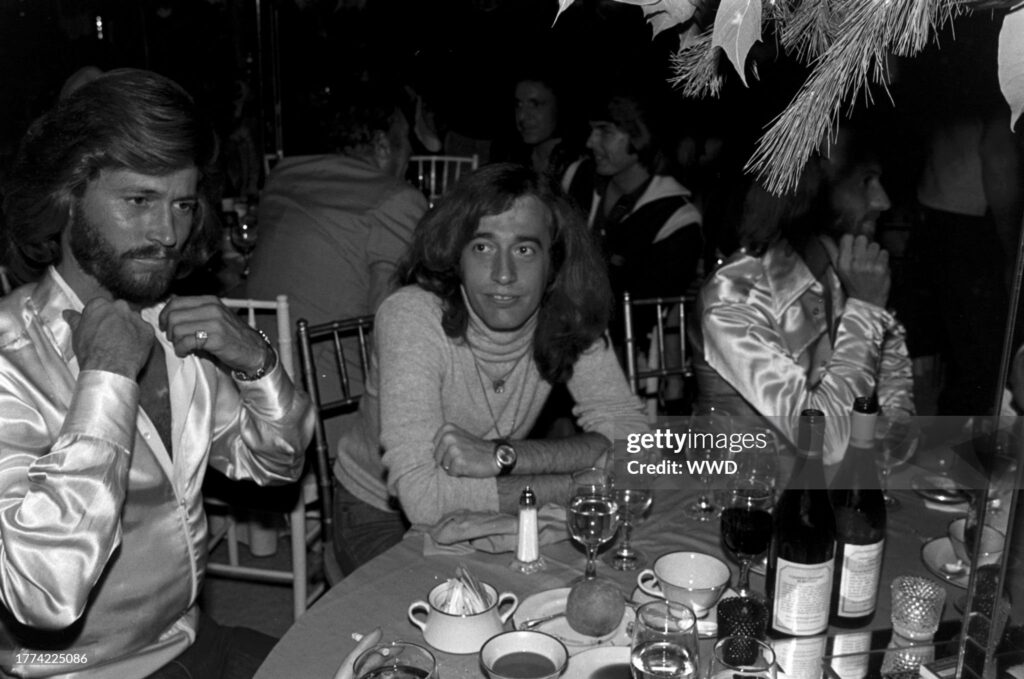
Written by the Gibb brothers but made famous in another voice, “Emotion” carries the bittersweet kind of backstory fans never stop returning to — a Bee Gees song that became legendary from a distance.
Some songs feel unmistakably like an artist even when that artist is not the one the public first remembers singing them. “Emotion” has always had that strange, beautiful fate. Written by Barry and Robin Gibb in 1977, it was given to Samantha Sang, an old friend from Australia, and in her hands it became the version the world embraced first. Released in November 1977, Sang’s recording rose to No. 3 on the Billboard Hot 100 in the United States, reached No. 11 in the UK, and became by far her signature hit. Barry did not disappear from the record entirely — he sang harmony and backing vocals — which only deepened the feeling that the Bee Gees were haunting the song from within rather than standing openly at the front of it.
That alone is enough to give the song its lingering mystique. Fans have always been drawn to the idea of the Bee Gees writing something so deeply in their own emotional language, then letting someone else carry it into immortality. And “Emotion” is unmistakably theirs in spirit. It has that ache they understood so well — elegant, melodic, vulnerable without ever losing composure. Even in Samantha Sang’s voice, with its softness and delicacy, you can feel the Gibb brothers’ emotional handwriting all over it. The song does not sound handed off in any ordinary sense. It sounds entrusted.
The backstory fans never forget has a lovely twist to it. Sang arrived at Criteria Studios in Miami expecting to record a different song, “(Our Love) Don’t Throw It All Away,” but Barry instead offered her a new composition: “Emotion.” In other words, one of the most memorable songs ever associated with the Bee Gees was born not from some long public campaign, but from a moment of instinct in the studio. That makes the song feel even more personal somehow — as though it entered the world almost quietly, only to become unforgettable.
And perhaps that is why the song’s history has always felt a little bittersweet. During the Bee Gees’ imperial late-1970s era, when their own voices were everywhere and their songs were reshaping popular music almost by the month, “Emotion” became one of those rare cases where their artistry reached the charts most powerfully through someone else’s name. That did not diminish the song. If anything, it enlarged its legend. It proved how strong the Gibb gift really was — so strong that even when they stepped back, the feeling remained unmistakable.
The story gained another layer years later, and this too is part of what fans remember. The Bee Gees did record their own version in 1994, but it was not released until 2001 on Their Greatest Hits: The Record. By then, the song had already lived a long public life elsewhere, which gave the Bee Gees’ own version a different emotional weight. It no longer sounded like a first claim. It sounded like a return — the writers stepping back into a room their song had occupied for decades without them. That kind of delayed homecoming is rare in pop music, and it gives “Emotion” a tenderness beyond the lyric itself.
Then history added yet another turn. In 2001, Destiny’s Child turned “Emotion” into a major hit all over again, taking it back into the top ten of the U.S. Hot 100 and into the top five in the UK. By then, the song had become one of those pieces of musical inheritance that keep moving from voice to voice while never losing the shape of the original ache. And still, underneath all those versions, the backstory stayed the same: this was a Gibb song, one of the most unmistakably Gibb songs of all, but its first great public life belonged to someone else.
That is why “Emotion” continues to feel so special. Not because its path was straightforward, but because it was not. The song lives in that unusual space where authorship, performance, and memory do not line up neatly. Samantha Sang made it famous. The Bee Gees made it possible. Barry’s voice lingers in the background like a ghost of ownership. And when the brothers finally recorded it themselves, the song had already become part of a much larger emotional history.
So yes, “Emotion” carries a backstory fans never forget, and the reason is simple. It is one of those rare songs where distance made the feeling stronger. The Gibb brothers gave it away, but they never quite stopped being heard inside it. That is the kind of musical afterlife most writers only dream of — a song that leaves home, conquers the world, and still sounds, somehow, as though it belongs to them forever.