
“I Would Have Loved You Anyway” aches because it speaks from that cruelest corner of the heart—the place where love is already true, but the moment for it has somehow passed before it could fully begin.
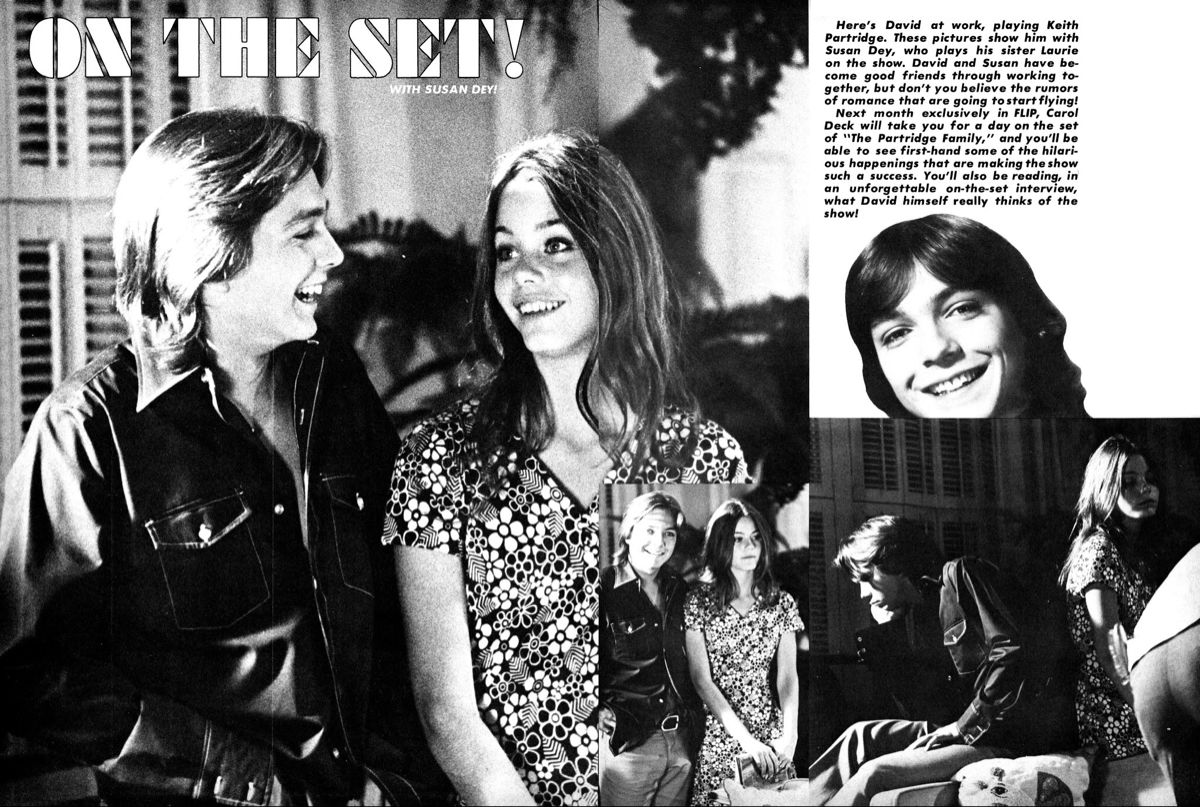
Some songs are sad because something ended. “I Would Have Loved You Anyway” is sadder than that. It lives in the softer, more haunting space of what never quite had its chance. That is what gives the song its lingering ache. With The Partridge Family, people often remember the bright surfaces first—the television smiles, the polished hooks, the buoyant pop energy that made so many of their records feel instantly welcoming. But this song reveals another side. It shows how, beneath all that sunshine, they could carry a surprisingly tender bruise.
The first detail worth bringing close to the front is that “I Would Have Loved You Anyway” was not a hit single chasing radio glory, but an album track from Sound Magazine, released in August 1971. That album became one of the group’s biggest successes, reaching No. 9 on Billboard’s Top LP’s chart, and many listeners now regard it as the Partridge Family’s strongest pop album. The song was recorded on May 4, 1971, tucked into a record that otherwise gave the world the much brighter “I Woke Up in Love This Morning.” That contrast is part of what makes “I Would Have Loved You Anyway” so memorable: it feels like one of the album’s quiet shadows, a private sigh inside a famously accessible pop world.
The second precious detail is the songwriter. Tony Romeo, the man who wrote “I Think I Love You,” also wrote “I Would Have Loved You Anyway.” That matters because it creates a beautiful emotional echo. One song gives us love in its bright first bloom; the other gives us love as regret, after time has already placed its hand over what might have been. Even years later, writers looking back at David Cassidy’s catalog singled this one out for its “minor key overtones,” sensing that it rose above ordinary bubblegum pop by carrying more shadow in it.
And that shadow is the real heart of the song. “I Would Have Loved You Anyway” does not cry out. It does not collapse into melodrama. It moves with a quieter kind of sorrow—the sorrow of honesty arriving too late. There is something deeply human in that. Many love songs are built on certainty: I love you, I need you, don’t leave, come back. This one is built on a gentler and perhaps more devastating thought: even if life had taken another turn, even if the timing had been kinder, the feeling would have been real. That is a difficult emotion to carry because it offers no rescue. It does not ask for reunion. It merely admits the truth.
That is where the song becomes more affecting than its setting might lead one to expect. In lesser hands, such material could have become syrupy or vague. But The Partridge Family had a knack, at their best, for making polished pop feel emotionally immediate. Here, the arrangement remains graceful, melodic, approachable—but the feeling underneath is older than the group’s cheerful image. It is the pain of looking at a closed door and knowing that what stood behind it once mattered more than anyone said aloud.
There is something especially moving about hearing this kind of ache in the voice associated so strongly with youthful longing and romantic excitement. David Cassidy’s presence gives the song a certain softness, but also a vulnerability that serves it well. He does not oversell the heartbreak. He lets the regret remain suspended, almost as if saying too much would damage it. That restraint is part of why the song stays with true admirers. It trusts the listener to recognize that some of the deepest emotional truths are spoken quietly.
Perhaps that is why “I Would Have Loved You Anyway” feels so real. It understands that love is not always measured by what happened. Sometimes it is measured by what would have been given, if life had only opened the door a little wider. There is enormous sadness in that idea, but also dignity. The song does not beg fate to reverse itself. It simply bears witness to a feeling that never got to grow in daylight.
So yes, the title says nearly everything. Too late, too honest, too real—that is exactly the mood it leaves behind. Not the sharp pain of a dramatic goodbye, but the quieter ache of a love that existed in possibility and sincerity, yet never found its hour. And because that kind of sorrow is so common in life and so rarely expressed with such gentleness, “I Would Have Loved You Anyway” remains one of those Partridge Family songs that reaches deeper than people expect. It does not shout its heartbreak. It simply lets it linger.