
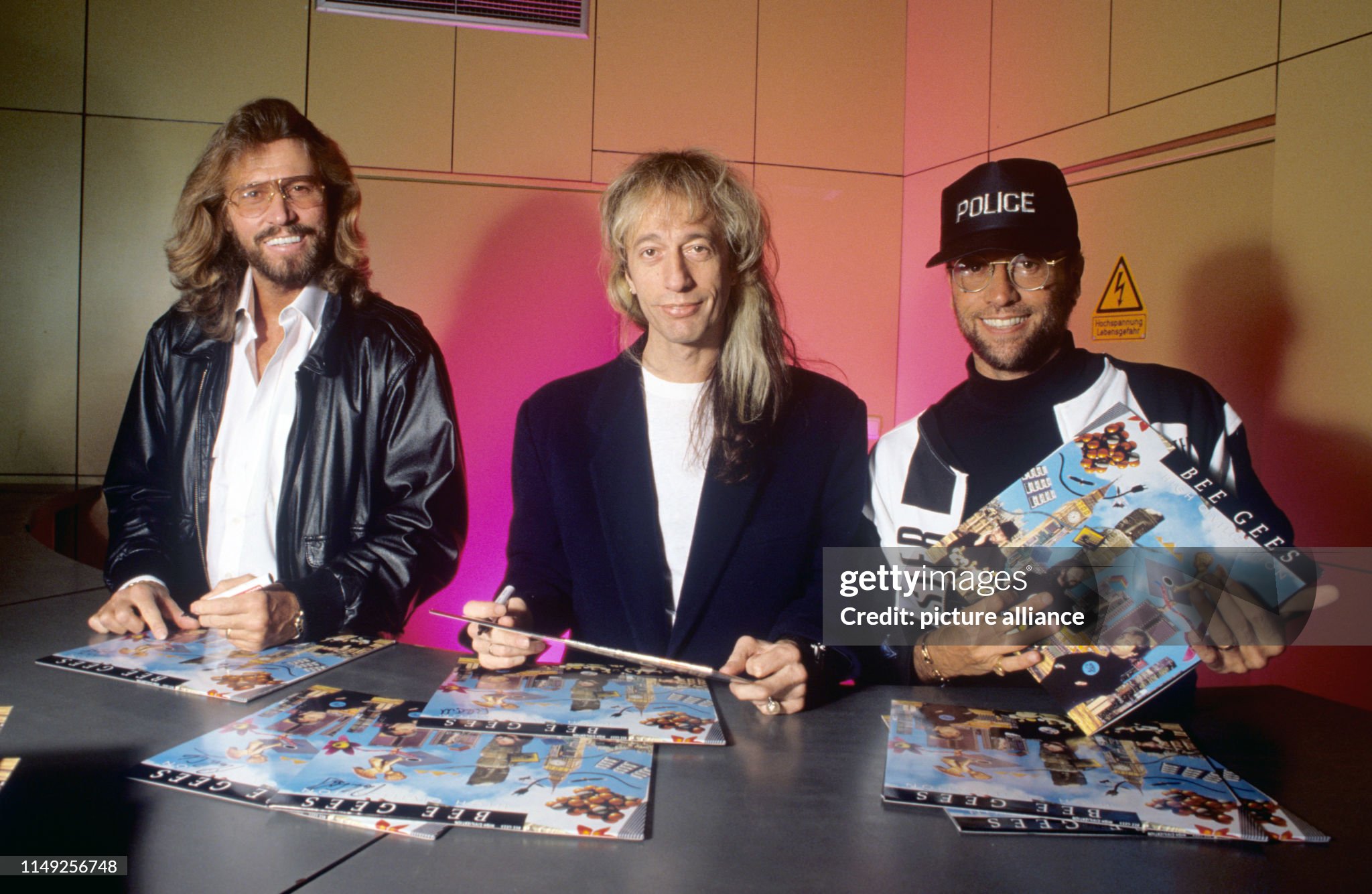
In “Love Me,” the Bee Gees sound as if pride has already fallen away. What remains is not seduction, not drama, but naked appeal—the trembling voice of someone asking for love from so near the edge of loss that even hope sounds fragile.
Some songs hide their pain behind elegance. “Love Me” does not, not really. It is polished, beautifully arranged, and unmistakably crafted with the Bee Gees’ usual melodic care, but beneath that sheen there is something unusually exposed. The song appeared on Children of the World, released on 13 September 1976, at a moment when the group was moving with enormous confidence into the rich, rhythmic sound that would soon make them untouchable. The album topped the U.S. Billboard 200, and it gave them major hits like “You Should Be Dancing” and “Love So Right.” Yet “Love Me” reaches for something very different. It does not strut. It does not sparkle. It pleads. And that may be why it still feels so piercing.
The first detail that makes the song so affecting is simple, but crucial: Robin Gibb sings the lead. In the Bee Gees’ mid- to late-1970s run, Barry Gibb often dominated the group’s most famous lead vocals, especially on the more rhythm-driven material. But “Love Me” belongs to Robin, and that changes the emotional temperature of the song completely. Robin’s voice had always carried a distinct ache—less commanding than Barry’s, perhaps, but more immediately wounded, more human in its uncertainty. On “Love Me,” that vulnerability becomes the whole center of the record. He does not sound like a man trying to persuade through charm. He sounds like a man who has run out of defenses. That is what makes the song feel too vulnerable to hide.
And then there is the second precious fact: despite not being remembered today as one of the group’s biggest signature songs, “Love Me” was a real hit. It reached No. 6 in the UK, No. 14 on the U.S. Billboard Hot 100, and No. 5 on the U.S. Adult Contemporary chart. Those chart positions matter because they remind us this was not some obscure emotional side note buried in the catalogue. Listeners heard it then. They responded to it. But over time, it has lived more quietly in the shadow of the group’s larger cultural monuments. That shadow may actually deepen its power now. Stripped of overexposure, the song can be heard again for what it is: one of the Bee Gees’ most direct emotional pleas.
What gives “Love Me” its heartbreak is not simply sadness. It is dependence. The title itself is so bare, so almost dangerously plain, that it risks sounding generic—until the performance reveals how much is at stake inside those two words. This is not the language of romance in full bloom. It is the language of someone who feels love slipping beyond reach and can think of nothing more elaborate, nothing safer, than to ask for it one more time. That simplicity is devastating. It leaves the singer nowhere to hide, and the listener nowhere to retreat.
The arrangement helps, too, because it does not harden the song into melodrama. Instead, it gives Robin room to ache. The production on Children of the World was part of the early Gibb-Galuten-Richardson era, a collaboration that helped shape the Bee Gees’ late-’70s sound, but “Love Me” uses that polish in service of tenderness rather than spectacle. The record glows, but softly. It supports the voice without rescuing it. The result is a song that feels suspended between pop beauty and private collapse.
That is why “Love Me” still sounds like a plea from the edge of heartbreak. It does not come after the fall, when grief has settled into reflection. It comes just before, while feeling is still reaching outward, still asking, still hoping to be answered. The wound is close enough to be sensed, but not yet fully accepted. And that emotional position is one of the most painful in all of love: not the certainty of loss, but the terrible possibility of it.
There is something almost old-fashioned about how openly the song asks. Modern songs often protect themselves with irony, with attitude, with self-conscious distance. “Love Me” does none of that. It dares to be sincere in the most exposed way possible. That is one reason it endures. The Bee Gees were masters of sophistication, but here they let sophistication fall back just enough for the raw need underneath to be heard.
So yes, “Love Me” remains deeply moving because it is not merely beautiful. It is defenseless. In Robin Gibb’s voice, the song becomes a portrait of someone standing at the edge of emotional ruin and still finding the courage to ask for tenderness instead of turning bitter. That is a rare thing in popular music, and perhaps an even rarer thing in life. And decades later, that is why the record still lingers: not as a grand statement, but as a human one. A plea. A tremor. A heart still hoping not to be left alone.