
A Dreamer’s Lament Beneath the Cosmic Veil of Ambition and Memory
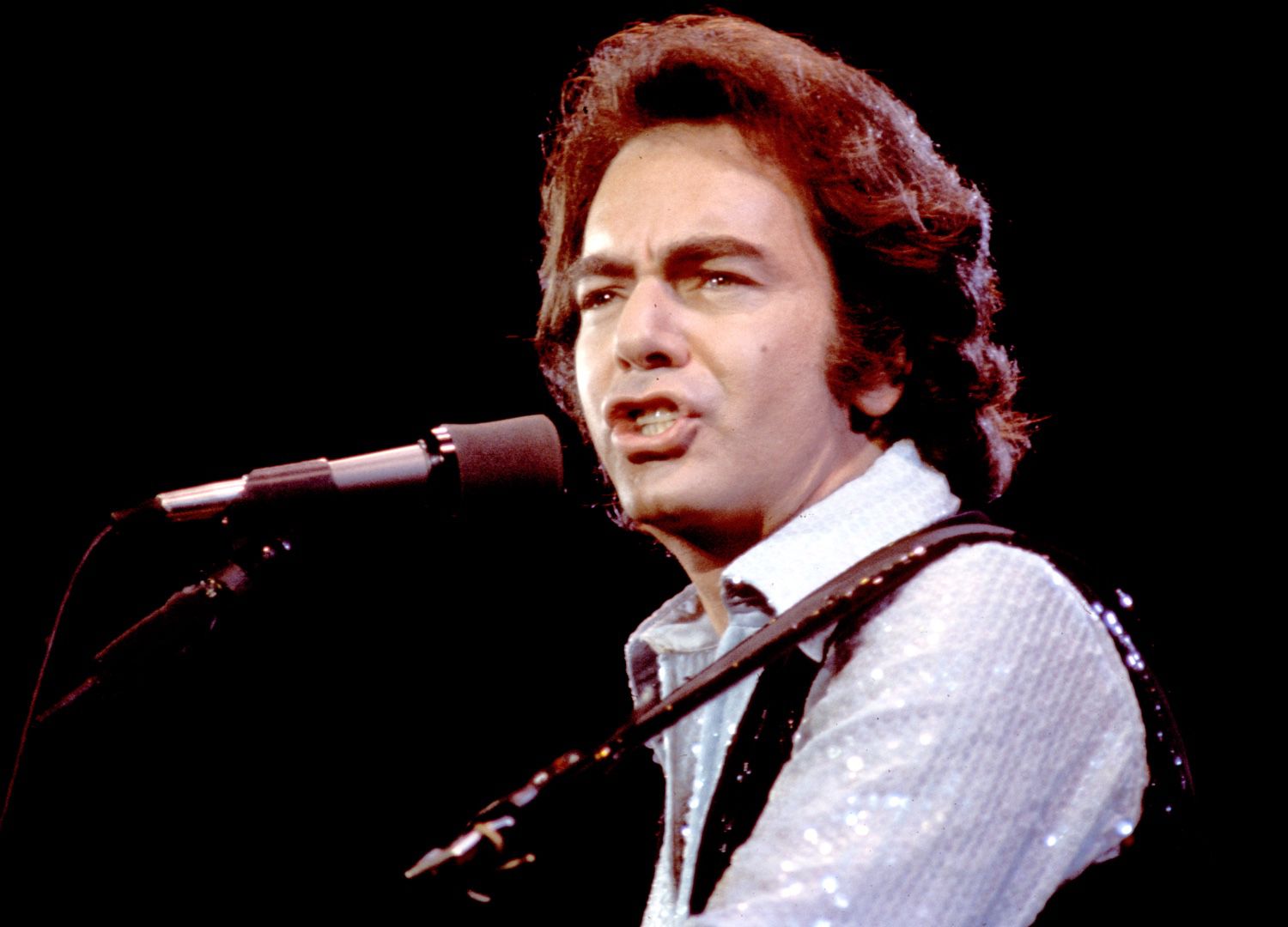
When Neil Diamond released “Stargazer” as part of his 1976 album Beautiful Noise, the song stood as one of the quieter revelations in a record that captured both critical acclaim and commercial success. Produced by Robbie Robertson of The Band, the album reached the Top 10 on the Billboard 200 and represented a creative rebirth for Diamond—a songwriter reconnecting with the poetic grit of urban life while exploring the vast emotional range that had always defined his work. Although “Stargazer” was never issued as a standalone single, it became one of the album’s most evocative deep cuts, beloved by those who found in its gentle melancholy a mirror for their own restless yearning.
“Stargazer” is not merely a song about looking to the heavens; it is an intimate portrait of longing itself—of a soul caught between the gravity of lived experience and the boundless expanse of imagination. Diamond, ever the dramatist of human emotion, threads his narrative through imagery that balances wonder with weariness. The stargazer is both dreamer and exile, watching the celestial vault for signs of hope while standing firmly on earth’s uncertain ground. It is this tension—the aching distance between what we desire and what we possess—that gives the song its enduring resonance.
The sonic landscape crafted by Robertson is integral to that resonance. His production cloaks Diamond’s voice in warm analog textures: acoustic guitars shimmer like constellations just out of reach, while subtle orchestral swells suggest both cosmic vastness and human frailty. Diamond’s baritone—rich, burnished, and slightly world‑worn—carries an intimacy that makes the listener feel as though he is confiding his most private reveries. There is grandeur here, yes, but it is filtered through humility; a recognition that beauty often resides not in fulfillment, but in pursuit.
Lyrically, “Stargazer” belongs to Diamond’s long lineage of songs about outsiders and seekers—characters who live on faith in something larger than themselves. In earlier works he celebrated romantic devotion or spiritual renewal; here, he contemplates aspiration itself as a kind of sacred act. The stargazer gazes upward not out of arrogance but necessity: to dream is to survive. This theme echoed powerfully in the mid‑1970s, an era when many artists—Diamond included—were reevaluating fame, purpose, and identity amid cultural change.
In retrospect, “Stargazer” feels like both confession and benediction—a song that gathers together the dust of city streets and scatters it across the night sky. It reminds us that art’s truest magic lies not only in what it describes but in what it dares to imagine: that somewhere beyond our reach, perhaps just past the next horizon or star, our better selves are still waiting to be found.