
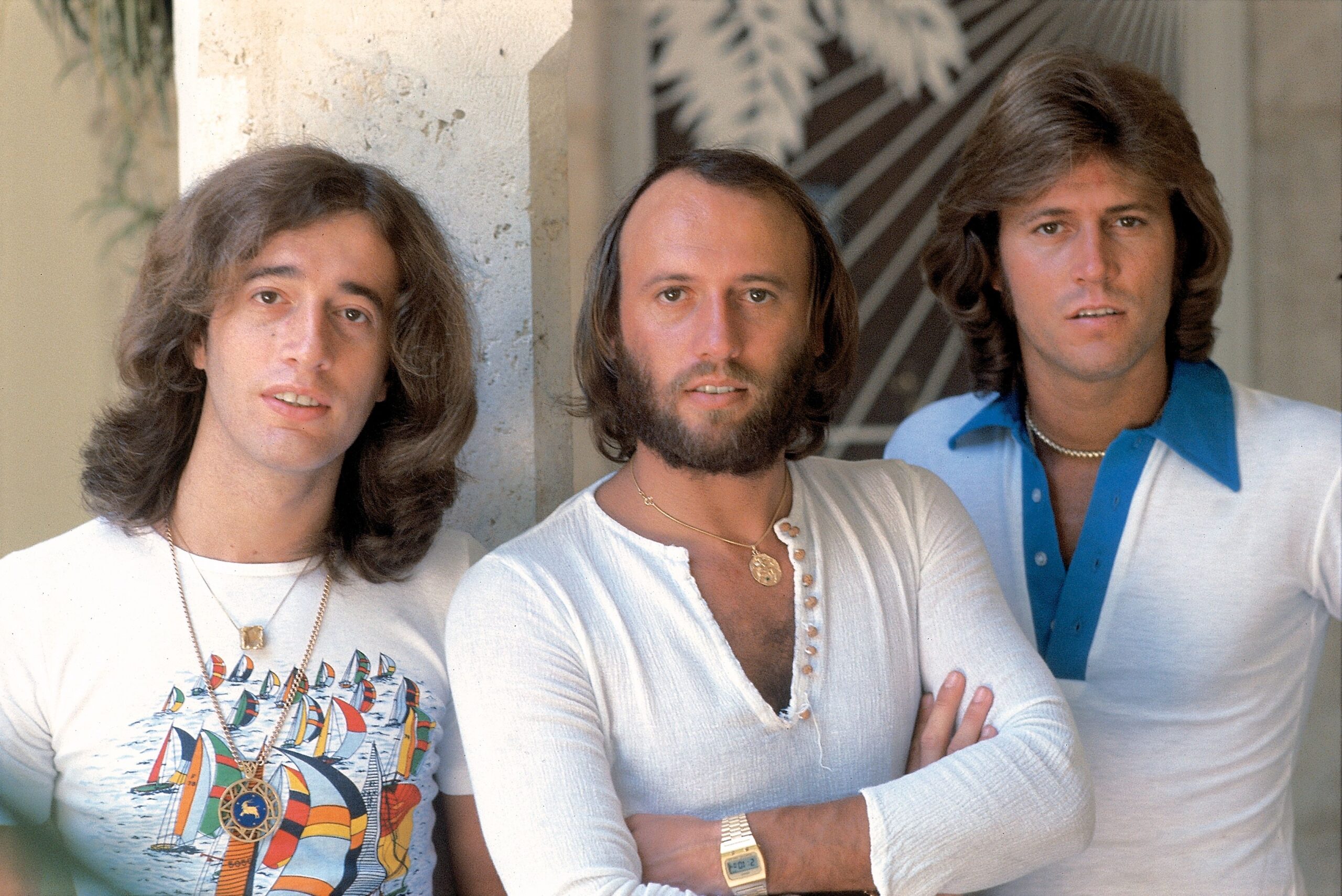
“Harry Braff” is the Bee Gees at their most mischievously human—turning a made-up racer into a little parable about hope, noise, and the sweet foolishness of believing in a winner.
Before the world learned to picture the Bee Gees under mirror balls, they were already master craftsmen of character and atmosphere—three brothers with a novelist’s eye and a melodist’s instinct, writing pop songs that could behave like short stories. “Harry Braff” sits right in that fascinating early chapter, tucked inside their 1968 album Horizontal (released January 1968). It was not released as a single, so it didn’t have a Hot 100 “debut position” of its own. Instead, it traveled on the back of the album’s momentum—an album that climbed impressively to No. 12 on the US Billboard 200 and No. 16 on the UK Albums Chart. (One chart archive also lists Horizontal debuting at No. 197 on February 10, 1968 and peaking at No. 12 on March 16, 1968, a neat snapshot of how fast the record caught on in America.)
What’s striking is how odd the subject is—joyfully odd. The song is, on the surface, a roaring vignette: the crowd is there, the race is on, and Harry Braff is the name on everyone’s lips. That alone tells you something about the brothers’ writing confidence in 1967–68: while so many pop acts were locked into romance and heartbreak, the Bee Gees were willing to build a whole track around a fictional sporting hero, letting the chorus behave like chanting spectators. A music magazine looking back at their 1965–1975 deep cuts points to “Harry Braff” as a prime example of the group’s taste for storytelling about unexpected topics.
The “why” behind the song is even more charming than the song’s premise. In a later interview, the group explained that “Harry Braff” was essentially a joke—built from slang they’d picked up, and centered on a non-existent speedway racer. They even mention the playful, cheeky origins of the name and the way the demo’s spirit carried straight into what became the finished track. That’s the real heartbeat of “Harry Braff”: it isn’t mythology carved in stone; it’s three brothers amused by language, rhythm, and the sheer fun of making a crowd appear out of thin air.
Historically, it also anchors neatly to a specific moment in their studio life. According to documentation around Horizontal, the Bee Gees recorded “Harry Braff” on July 30, 1967, during the album’s early sessions in London. That date matters because you can hear a band stretching—leaning into a heavier, more muscular sound than their previous international album, while still keeping that unmistakable Gibb gift for melody and turn-of-phrase. Horizontal itself is often described as darker in tone and heavier in feel than Bee Gees’ 1st, with the band’s lineup and arrangements pushing more assertively into rock textures.
And yet, “Harry Braff” doesn’t feel “heavy.” It feels alive. The track’s meaning isn’t really about racing—it’s about what racing symbolizes when you’re young enough (or simply open enough) to believe in a figure larger than your daily life. The crowd in the lyric becomes all of us: people who want, just for an afternoon, to attach our hopes to a name and shout it until it sounds like destiny. There’s something tender in that, even when it’s wrapped in humor. A made-up champion still gives real people permission to feel real excitement.
That’s why the song endures as a cult favorite rather than a radio statistic. “Harry Braff” is the Bee Gees showing that pop can be witty without being cold, theatrical without being fake. It’s a reminder that not every classic has to arrive dressed as a “hit.” Some classics slip in sideways—painted in bright, jangling colors—then stay for decades because they captured a truth that charts don’t measure: the sound of a roomful of people wanting to believe, together, in one small bright victory.