
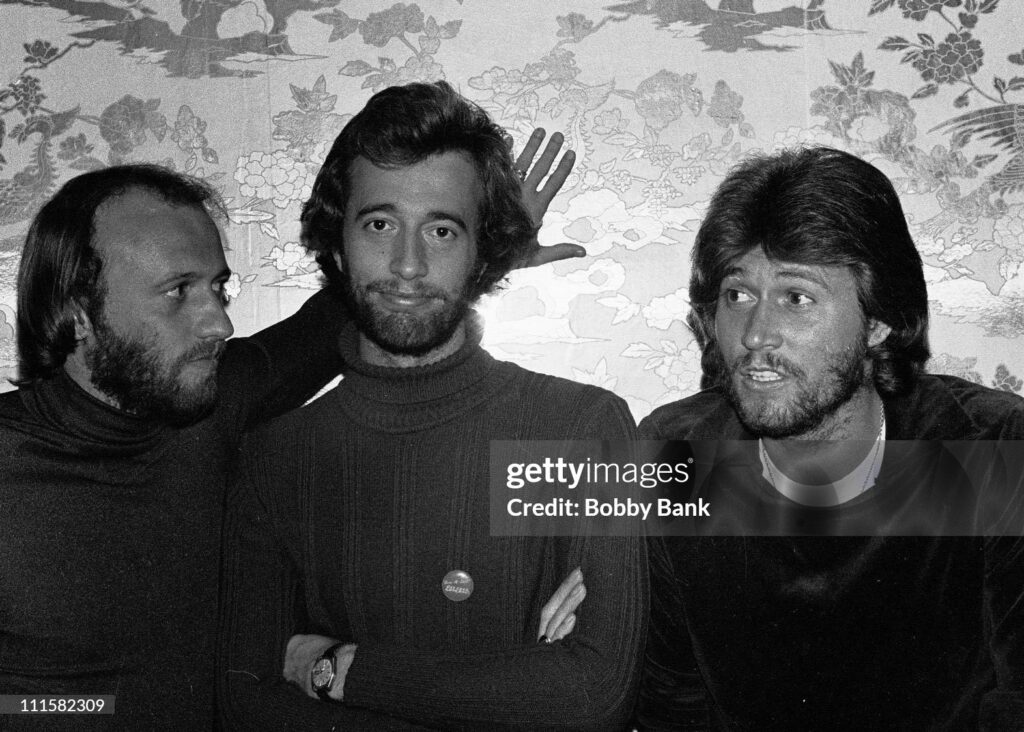
A velvet-smooth late-period Bee Gees gem, Closer Than Close captures the kind of love that no longer needs to shout to be felt.
Released in 1997 from the album Still Waters, Closer Than Close stands as one of the most elegant and underrated recordings in the later career of the Bee Gees. Written by Barry Gibb, Robin Gibb, and Maurice Gibb, the song reached No. 23 on the UK Singles Chart, a respectable showing in a decade when many heritage acts struggled to sound relevant without losing themselves. What makes the record special is not merely where it charted, but how naturally it carried the Bee Gees into the late 1990s. There is maturity in it, polish in it, and above all, a kind of emotional ease that only artists with a lifetime of melody behind them could deliver.
By the time Still Waters arrived, the Bee Gees had already lived through several musical lives. They had been baroque pop craftsmen, tender balladeers, architects of the disco era, and survivors of the backlash that followed. By 1997, they no longer needed to prove their place in history. Yet that is exactly why a song like Closer Than Close feels so rewarding. It is the sound of a group writing from experience rather than ambition alone. Instead of trying to recreate the fever of their biggest dance records or the sweeping ache of their 1970s ballads, they leaned into something more intimate. The result was a song with a modern groove, but an old soul.
Musically, Closer Than Close is built on restraint. It glides rather than rushes. The production has the smooth texture of late-1990s adult pop and R&B, but the heart of the song is unmistakably the Bee Gees: carefully shaped melody, close harmonies, and a gift for making desire sound graceful rather than overstated. There is a quiet confidence in the arrangement. Nothing is pushed too hard. The rhythm settles in gently, the vocal blend stays warm and controlled, and the mood remains elegant from beginning to end. That subtlety is precisely why the song lingers. It does not demand attention in one dramatic burst; it draws the listener closer with every passing line.
The meaning of Closer Than Close lies in its title. This is not a song about infatuation in its loudest form. It is about intimacy that has deepened into something almost instinctive, something lived in rather than merely imagined. The Bee Gees had always understood romance from the inside out. Even in their most famous love songs, there was usually some trace of vulnerability, some awareness that love is precious because it can never be taken for granted. Here, that sensitivity returns in a more mature shape. The song suggests a kind of connection beyond spectacle, beyond grand declarations, beyond the need to impress. It is about two people moving so naturally toward one another that language itself seems to fall short.
That emotional maturity gives the song much of its power. Younger artists often sing about love as discovery; the Bee Gees, by this stage, could sing about it as recognition. That is a different kind of poetry. In Closer Than Close, affection is not fragile, but settled. Tenderness is not theatrical, but real. The performance carries the assurance of musicians who understood that the strongest feelings are often expressed most beautifully in quiet tones. For listeners who had grown up with the Bee Gees across multiple decades, that quality made the song feel especially rich. It was not the sound of a band chasing the past. It was the sound of a band carrying its emotional identity forward.
It is also worth remembering the place this song held within the wider story of Still Waters. The album itself marked a strong late-career return for the group, reminding audiences that their songwriting and vocal chemistry remained intact long after their most commercially explosive years. While Alone became the album’s biggest international hit, Closer Than Close revealed another side of the record: smoother, more private, and perhaps even more durable with time. Some songs win immediately through scale. Others stay with people because they feel lived-in. This is one of those songs.
There is a special pleasure in returning to lesser-celebrated records by legendary artists, because they often reveal the part of the story that the biggest hits leave out. With Closer Than Close, the Bee Gees were not trying to relive Saturday Night Fever, nor were they leaning entirely on nostalgia. They were showing that elegance, emotional intelligence, and melodic instinct could still make a contemporary song feel timeless. That may be why the track continues to resonate with listeners who find their way back to it. It feels less like a forgotten single and more like a private conversation that somehow made it onto a record.
In the end, Closer Than Close remains one of those songs that grows more moving with age. It may not be the first title mentioned when people list the essential works of the Bee Gees, but that is part of its charm. It waits patiently to be rediscovered. And once it is, it reminds us that some of the finest music a great group ever makes comes not at the height of frenzy, but in the calm after it, when every note carries memory, wisdom, and heart.