
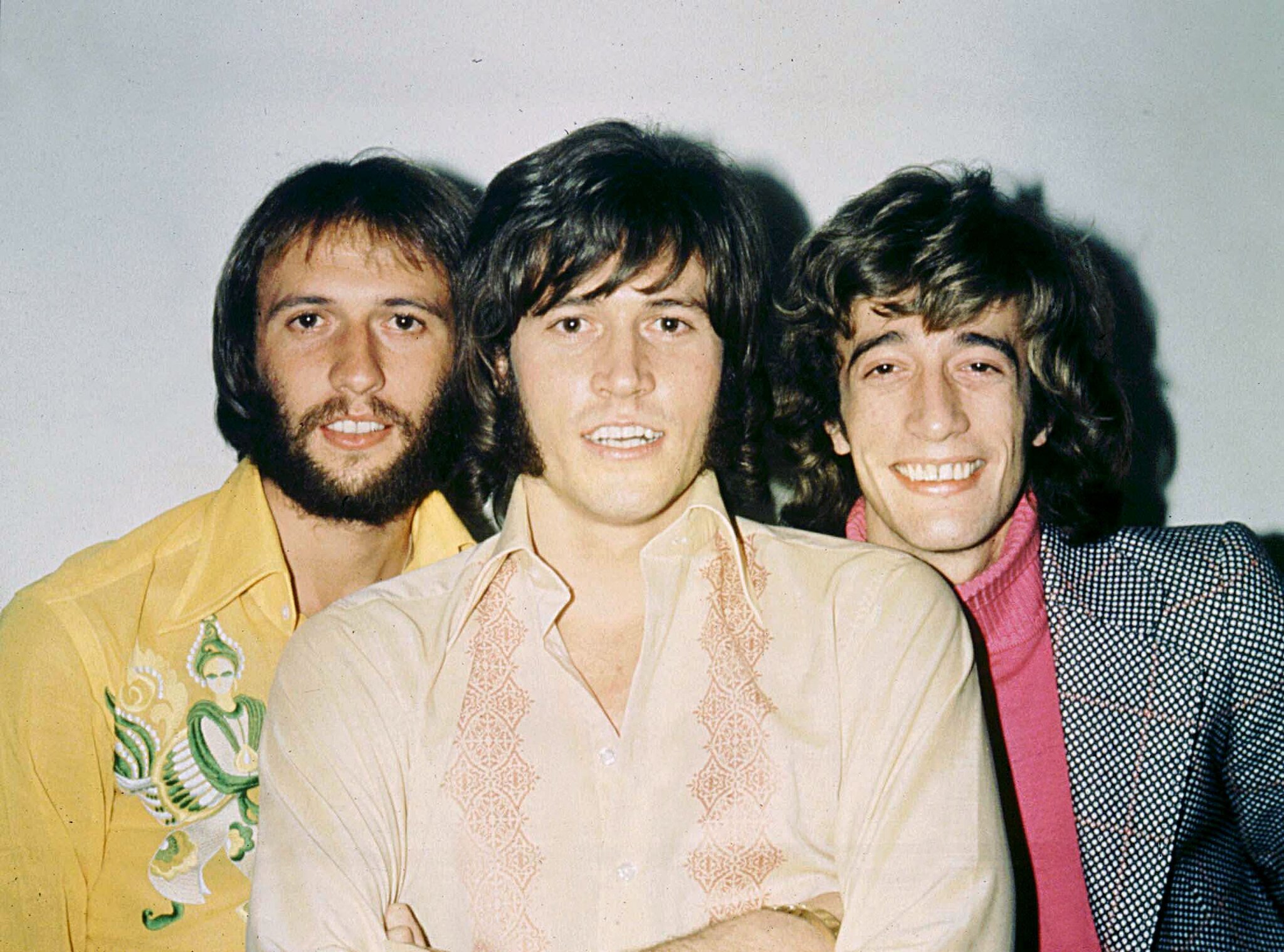
“Boogie Child” captures the Bee Gees at the thrilling moment they stopped looking back and stepped fully into a new sound—restless, rhythmic, and alive with possibility.
There are songs that become era-defining anthems, and then there are songs that reveal the turn before the triumph—the sound of a great group feeling the ground shift under its feet and moving with it instead of resisting. “Boogie Child” belongs to that second category, and that is precisely why it remains such a fascinating record in the Bee Gees story. Released in late 1976 as the second single from Children of the World, it may not always receive the same instant recognition as “You Should Be Dancing”, but it stands as one of the clearest signs that Barry, Robin, and Maurice Gibb were no longer merely adapting to a changing decade—they were helping define it.
Commercially, the song performed solidly, reaching No. 12 on the Billboard Hot 100 in the United States. That chart placing matters because it shows that “Boogie Child” was not simply an album cut admired in hindsight; it was a genuine hit during a crucial period when the Bee Gees were reshaping their public identity. Coming from the album Children of the World, released in 1976, the single arrived during a creative rebirth that would soon carry the brothers to a level of fame few groups ever experience. If “Main Course” had opened the door, and “You Should Be Dancing” kicked it wider, then “Boogie Child” walked confidently through it.
The backstory is part of what makes the song so rewarding to revisit. By the mid-1970s, the Bee Gees had already lived several musical lives. They had been delicate craftsmen of baroque pop, masterful harmony singers, and writers of aching, melodic ballads. But the industry had changed, radio had changed, dance floors had changed, and the brothers understood that survival in popular music required not just talent, but nerve. Working in the wake of their revitalized sound, they leaned into tighter grooves, more pronounced rhythm, and the falsetto phrasing that would become one of Barry Gibb’s most recognizable signatures. “Boogie Child”, written by Barry, Robin, and Maurice Gibb, reflects that transformation beautifully: it is playful, syncopated, and built for movement, yet still unmistakably theirs.
What gives the record its special character is that it never feels cynical or calculated. This is not a veteran act awkwardly chasing a trend. It sounds instead like three gifted musicians discovering a new kind of freedom inside the beat. The bass moves with real purpose, the rhythm section has a snap and strut that feel immediate, and the vocal arrangement carries the unmistakable family blend that had always set the Bee Gees apart. Even when the group was moving closer to disco and funk, they never lost that sense of melodic architecture. Their songs still had shape. They still had emotional lift. They still carried the elegant discipline of brothers who had spent years learning how to sing around one another rather than over one another.
Lyrically, “Boogie Child” is less about storytelling in the old ballad tradition and more about atmosphere, motion, and persona. It lives in the electric world of nightlife, flirtation, rhythm, and self-invention. That was part of the Bee Gees genius in this period: they understood that dance music did not have to be emotionally empty. Even a groove-driven song could suggest longing, confidence, mischief, and escape. In “Boogie Child”, the appeal is not simply in what is said, but in how the song feels—urgent, stylish, a little mysterious, and fully committed to the pulse of the moment.
It is also worth remembering that this period was essential in setting up everything that followed. Without songs like “Boogie Child”, the leap to the massive cultural impact of Saturday Night Fever would feel less inevitable. This track shows the Bee Gees sharpening the tools they would soon wield with astonishing power: the falsetto lead, the elastic rhythm, the precise layering of voices, and the instinct for songs that could live both on radio and on the dance floor. In that sense, “Boogie Child” is not a side note. It is part of the blueprint.
There is something especially moving about hearing it now, decades later. Time has a way of flattening history, of making artistic reinventions look obvious after the fact. But they are never obvious in the moment. They involve risk, uncertainty, and the willingness to disappoint those who want you to stay the same forever. The Bee Gees did not stay the same. That is one reason their catalog remains so rich. “Boogie Child” preserves the sound of that bravery—a group with a glorious past choosing not to live inside it.
And perhaps that is why the song still carries such charm. It is not merely a disco-era curiosity, nor just the follow-up to a bigger hit. It is the sound of motion, of reinvention, of seasoned artists trusting their instincts and finding fresh life in rhythm. For listeners who know the Bee Gees only through their biggest late-1970s landmarks, this song offers a deeper reward: the chance to hear the transformation happening in real time. Not after the victory lap, but in the very midst of becoming.
That makes “Boogie Child” more than a catchy record from Children of the World. It is a document of artistic courage, wrapped in groove, harmony, and the gleam of a changing musical age. And once you hear it that way, the song no longer feels like a lesser chapter. It feels like an essential one.