
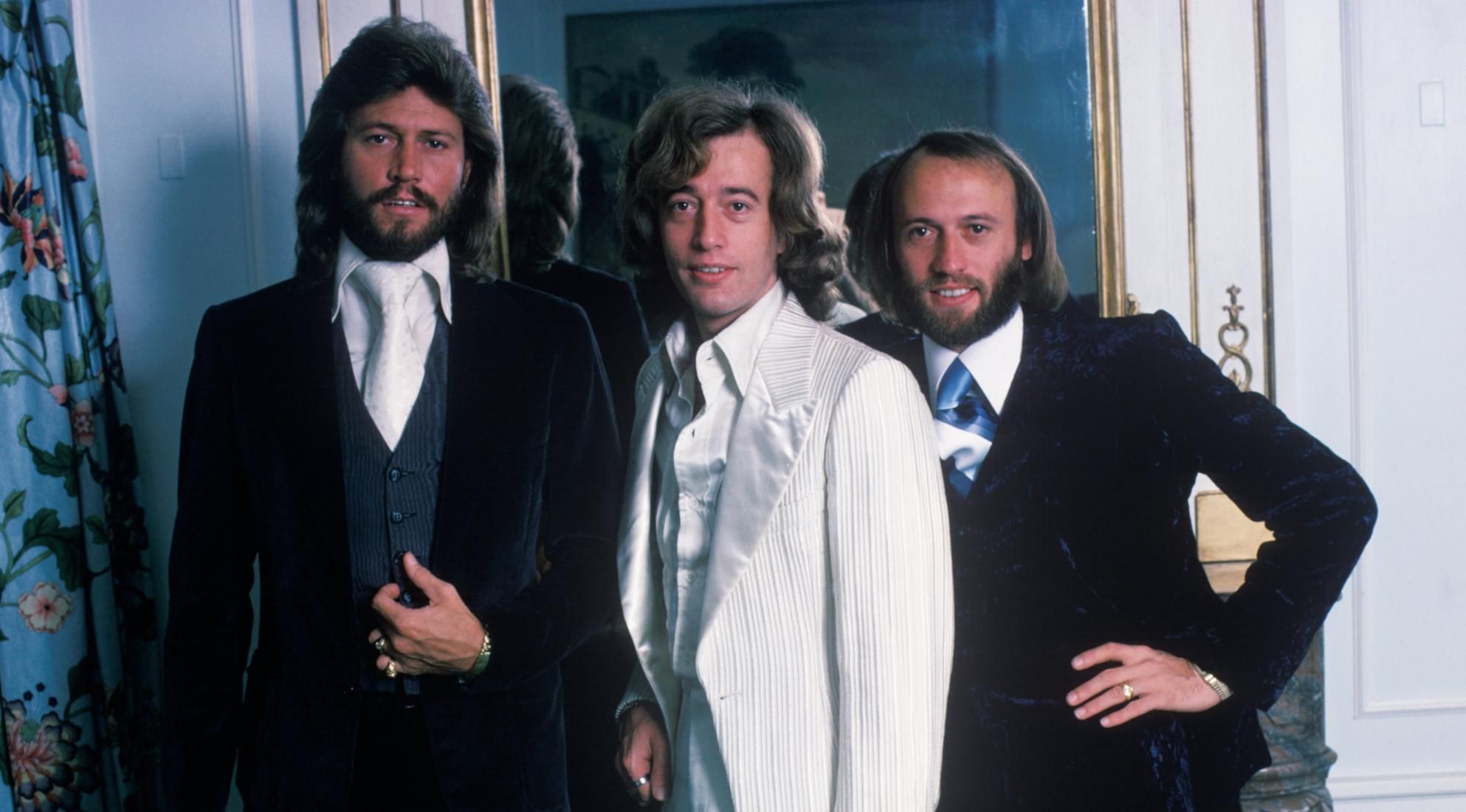
Immortality is one of the Bee Gees’ most tender reflections on memory, devotion, and the deep human hope that something true can outlast time.
Among the many songs written by the Bee Gees, “Immortality” occupies a special place. It does not arrive with the flash of their disco classics, nor with the immediate radio familiarity of their biggest 1970s anthems. Instead, it moves with the calm, deliberate grace of a confession. First appearing on the 1997 Bee Gees album Still Waters, the song revealed just how powerful the Gibb brothers could be when they turned away from spectacle and wrote from a quieter, more reflective place. Although the group’s own version was not pushed as a major chart single, the song soon gained wider recognition when Celine Dion recorded it for her 1997 album Let’s Talk About Love; her version later reached No. 5 on the UK Singles Chart, helping bring the composition to an even broader audience.
That alone tells us something important. A song does not travel that far unless there is real feeling inside it. And “Immortality” has feeling in abundance. Written by Barry Gibb, Robin Gibb, and Maurice Gibb, it carries the kind of emotional maturity that only seasoned songwriters can give a ballad. By the time Still Waters was released, the Bee Gees were no longer proving they could write hits. They had already done that many times over. What they were doing here was something more difficult: writing about what remains when fame, noise, and passing trends fall away.
The album itself marked a strong late-career moment. Still Waters reached No. 2 in the UK Albums Chart and No. 11 on the Billboard 200 in the United States, a reminder that the Bee Gees were still capable of making work that mattered in the 1990s. Within that album, “Immortality” stood out not because it demanded attention, but because it deserved it. The arrangement is gentle, the melody patient, and the lyric full of yearning without becoming sentimental. That balance is one of the song’s greatest achievements.
What is the song really about? On the surface, “Immortality” speaks in the language of farewell, longing, faith, and endurance. But its deeper meaning lies in the idea that love and memory do not simply vanish when a moment ends. The lyric suggests that identity is shaped by what we carry forward: dreams, promises, and the imprint of those who changed us. The famous refrain does not feel boastful or grand. In the hands of the Bee Gees, “immortality” is not about conquering the world. It is about leaving behind something honest enough to last.
That is why the song feels so moving within the Bee Gees catalog. This was a group often celebrated for elegance, harmony, rhythm, and melody, but not always given full credit for the emotional seriousness of their writing. “Immortality” reminds us that they could write with extraordinary delicacy. There is a spiritual hush in the song, yet it never loses its human warmth. It speaks not as a grand statement from legends, but as a private realization shared softly. For listeners who have lived long enough to understand how memory can comfort and ache at the same time, that tenderness lands especially deeply.
The song’s history with Celine Dion also adds another beautiful layer. Her recording, with the Bee Gees contributing vocals, brought out the song’s stately, almost hymn-like quality. But even when another great singer carried it into the charts, the emotional DNA remained unmistakably Gibb. The melody, the phrasing, the bittersweet restraint, the sense that every line is reaching for permanence without raising its voice too much—all of that belongs to the songwriting character that made the Bee Gees unique.
There is also a quiet irony in the title. Few artists have earned the word “Immortality” more naturally than the Bee Gees themselves. Their music has crossed generations, styles, and eras. Yet this song does not celebrate legacy in a self-congratulatory way. It treats endurance as something fragile and precious. That is what makes it so beautiful. It understands that what lasts is rarely the loudest thing in the room. More often, it is the melody that stays in the heart, the lyric that returns years later, the voice that seems to know exactly what cannot be said any other way.
In the end, “Immortality” remains one of the most graceful examples of late-period Bee Gees songwriting. It may not be their most famous song, but it is one of their most revealing. It shows the brothers not as trendsetters or hitmakers, but as poets of feeling—men writing about continuity, remembrance, and the part of love that refuses to fade. And perhaps that is the song’s quiet miracle: it does not merely speak about what endures. It endures.